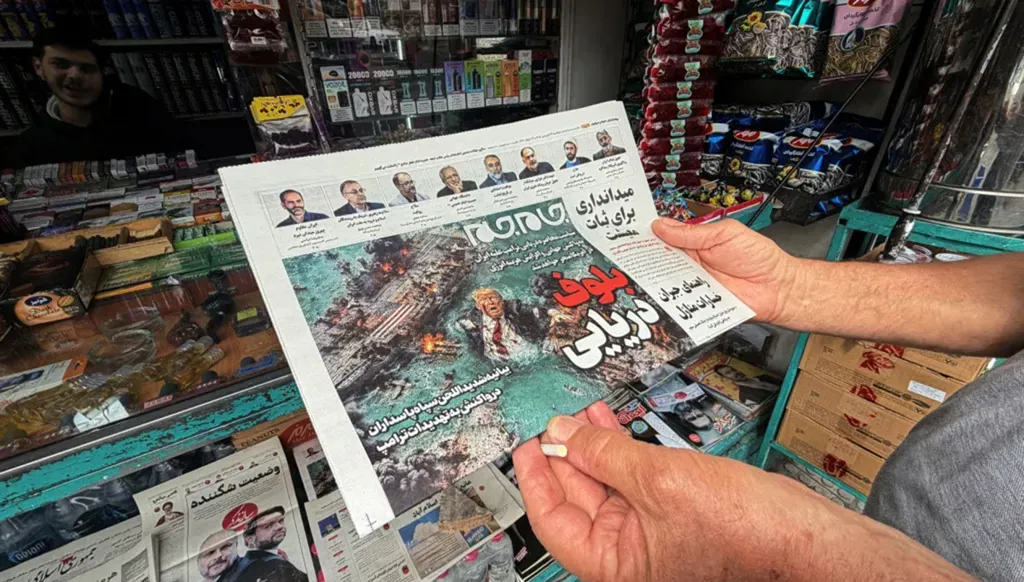
But blocking Iranian ports and closing the Strait of Hormuz by the U.S. Navy would mean depriving global markets of about 1.6 million barrels of oil per day. This expectation immediately pushed prices above the $100 mark, while American stocks experienced a decline.
The bet is now on who can endure more damage: Iran or the global markets. Factories in several Asian countries have begun reducing production to save energy, while fuel stations have started rationing, and shortages of aviation fuel have been recorded at some Asian and European airports, amid expectations of a contraction in GDP in several countries.
In this context, a notable position was expressed by the Chinese Foreign Ministry, which urged all parties not to disrupt navigation in the Strait of Hormuz, and announced Beijing’s readiness to work with all sides to safeguard energy security and ensure the stability of supplies.
If Trump seeks to prevent Iran from using the Strait of Hormuz as a bargaining chip in future negotiations, he simultaneously risks reigniting the war and entering a prolonged conflict. Reuters has quoted experts as saying that the blockade amounts to a large-scale military operation with no clear timeframe, which could prompt Iran to respond and place tremendous pressure on the already fragile ceasefire.
Washington and Tehran exchanged accusations over the failure of the Islamabad negotiations. Trump said the main reason was Iran’s refusal to make a clear commitment to abandon its pursuit of nuclear weapons, while Tehran argued that the U.S. delegation put forward extreme demands.
For the first time, Trump acknowledged that gasoline prices in the United States could continue to rise until the midterm elections in November, at a time when Republicans fear losing both houses of Congress due to inflation.
To preempt this scenario, some suggest that the measures announced by the American president, along with his statement that he “doesn’t care” whether Iran returns to negotiations or not, are part of a negotiation tactic aimed at forcing adversaries to reconsider and soften their positions.