

Precautionary security measures taken across Lebanon, aiming to avoid street tensions
Officials stress over the need of a secure Beirut, while security forces monitor potential unrest and diplomatic missions reinforce precautions amid regional tensions.




 Messenger
 Whatsapp
 Threads
 Email
Email
 Print
Print
 X
X
 Facebook
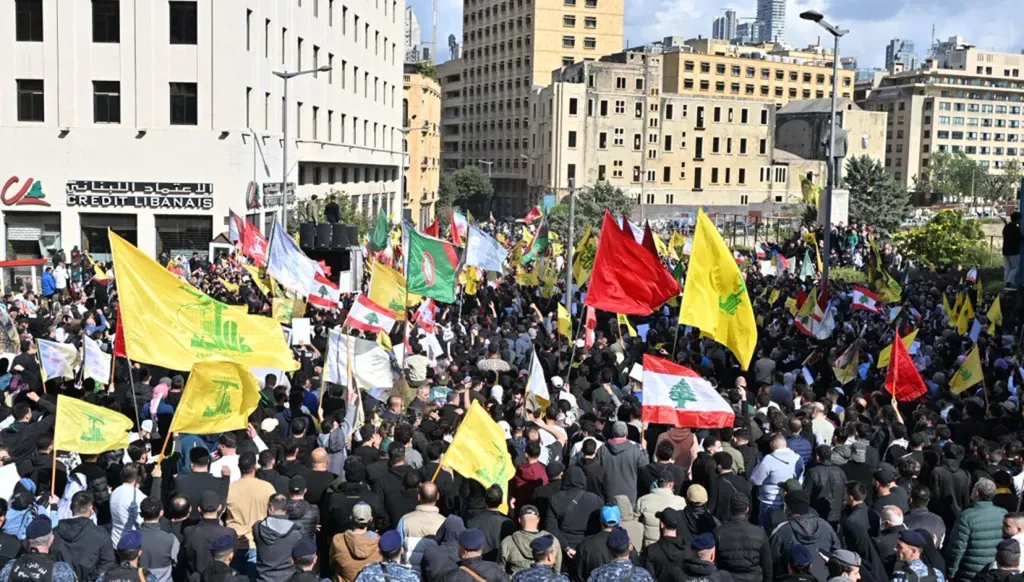


Security agencies do not underestimate the risks threatening Beirut and other regions due to ongoing challenges, while also taking into account political divisions between different parties. Close monitoring is being carried out of movements and street activity that are described as “not reassuring,” according to a security source involved in a range of missions.
At the forefront are the dangers posed by Israeli aggression and the expansion of its attacks, which have destroyed southern towns, disrupted daily life across various districts, and increased the number of displaced people. This comes especially after Israel succeeded in pushing the Lebanese army away from more than 70 percent of its positions south of the Litani River, and after it managed to hinder the movement of UNIFIL units, even going as far as threatening its headquarters in Naqoura.
According to the source, it is also notable that Israel has targeted the Lebanese army, striking it in multiple air raids that resulted in martyrs and wounded, in a clear message aimed at pushing it out of the south, or at least from the border towns.
The source adds that Israel has not only restricted the army and targeted ambulances and medical teams but has also deliberately carried out the killing of 13 security personnel in a clearly defined attack on the State Security apparatus in Nabatieh, in order to prevent any official institutional presence in the city.
While awaiting the initial results of US Iran talks in Islamabad, attention is turning to the upcoming direct Lebanese Israeli meeting under American sponsorship, noting that the diplomatic outcome of the first round in Pakistan did not meet expectations.
Meanwhile, security forces remain on high alert, especially in Beirut and Mount Lebanon, tracking any potential street clashes. Communications over the past 48 hours indicate that Parliament Speaker Nabih Berri reviewed the army’s statement emphasizing the preservation of security, and he did not hide his objection to motorcycle rallies, reiterating his rejection of sectarian slogans that do not reflect the true nature of the community they claim to represent.
According to information reported by Annahar, Berri warns against any street disturbances, especially in Beirut, whose residents have not failed to receive displaced people, on the basis that the capital remains a space of support and refuge for all Lebanese.
In parallel, security reports have reached the President of the Republic, the Speaker of Parliament, and the Prime Minister, emphasizing the need to take a series of precautions to prevent any clashes in the streets. According to the security source, Shiyyah, Ain al-Remmaneh, and some densely populated neighborhoods in Beirut that host displaced people have been identified, and preventive measures have been taken. However, reports from other areas, especially in the north and in several towns in Mount Lebanon, are said to be calm and not cause for concern.
The source confirms that Hezbollah is not intending to carry out any major street mobilization, as its focus remains in the south. While it does not hide its objections to negotiations with Israel and organizes some movements opposite the government Serail, these will not go beyond certain limits.
He adds that despite all the tensions in the streets, the majority of citizens are acting with a high level of understanding and awareness, and no serious incidents have been recorded, although precautionary measures remain necessary.
In addition to all the measures taken, attention has also been given to the premises of Western and Arab diplomatic missions as a precaution, following a reduction in the number of diplomats and staff there. It has been noted that these missions have not proceeded with evacuations of their nationals, including Lebanese citizens holding Western passports, unlike what happened during the July 2006 war.