

Iran’s internal divide and the uncertain path after negotiations
Reformists and conservatives clash over strategy, trust, and Iran’s future relations with external actors and the region



 Messenger
 Whatsapp
 Threads
 Email
Email
 Print
Print
 X
X
 Facebook
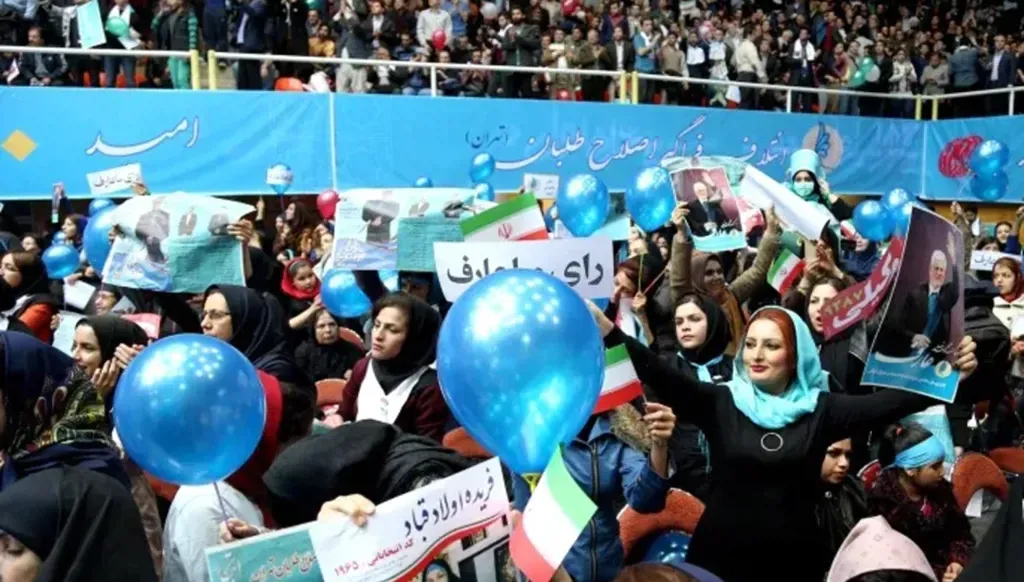


The disagreement between moderates and hardliners inside Iran reflects a deeper structure of political and strategic conflict. It goes beyond internal debate to include the nature of the regime’s relationship with its regional and international environment. The issue is no longer limited to the question of whether a truce between the United States and Iran is the end of conflict or merely a pause for regrouping. The more important question is what comes next. Moderates focus on a step that is followed by another step in order to build trust with the other side, while hardliners do not accept this logic and think only in terms of victory through force.
This difference was previously reflected in the way the nuclear agreement of 2015 was handled. Conservatives sought to undermine it through escalatory regional policies that increased doubts about Tehran’s intentions. The same pattern is being repeated today, with conservatives dominating decision making, amid regional concerns about a possible agreement with Washington that might ignore the interests of Gulf countries and fail to address the root causes of current tensions.
The regime tries to present an image of internal unity in its political discourse, but reformist voices continue to express concern about the unanswered question of what comes next. For this reason, the reformist politician and former foreign minister Javad Zarif asked the Iranian negotiating team to reach an agreement as long as it is possible. In contrast, the hardline conservative and director of the Kayhan newspaper Hossein Shariatmadari, who is one of the most vocal opponents of reformist efforts and is consistently pessimistic about any opening to the outside world, believes that Iran’s proposals to the United States serve Washington more than Tehran. This is especially because they did not include Israel or some Arab countries, which leaves the door open to military strikes by United States allies. This means that hardliners are seeking to gain everything at once, which explains part of the failure of the first round of ceasefire negotiations hosted in Pakistan.
In contrast, reformists appear to have a clearer understanding of the realities surrounding Iran. They fear settling for temporary financial gains in exchange for stopping the war and reopening the Strait of Hormuz, instead of reaching a comprehensive agreement that ensures long term regional stability and serves as a foundation for change and dialogue with the outside world. This was also highlighted by the reformist politician and former negotiator Hossein Mousavian, who argued that the success of any agreement depends on several factors, including a clear negotiating framework, genuine willingness from Washington, the continuation of direct dialogue, as well as the role of Israel, the positions of Arab countries, and internal developments in Iran. In other words, any agreement must take into account the interests of the broader regional environment surrounding Iran. This cannot be achieved under the fundamentalist mindset currently dominating Iran. It requires reformists and structural changes within the system that would ensure the sustainability of foreign policy change. However, this appears unlikely in light of the sense of triumph currently experienced by hardliners in Iran.
The disagreement between reformists and conservatives remains over how to assess the results. Conservatives summarize their perceived victory by saying: “Trump did not achieve any of his goals in this war.” In contrast, reformists have a clear understanding of the foundations of international relations and believe that a lasting agreement cannot be reached without building a minimum level of mutual trust, meaning the creation of an initial starting point that binds both sides to continue the process. This starting point does not necessarily mean resolving all disputes, but rather agreeing on a shared framework for dialogue, which is precisely the point that hardliners have consistently sought to undermine.
The reformist vision, which represents a broad current within Iran, suggests that the problem is not limited to conflict with external actors but is also tied to the nature of the system itself and its ability to maintain a path of dialogue. This helps explain why Arab countries remain cautious toward Iran, as they are waiting for genuine signs of a change in Iranian behavior that would lead to more balanced and sustainable regional stability.
Disclaimer: The opinions expressed by the writers are their own and do not necessarily represent the views of Annahar.