

Ceasefire or return to war? Uncertain negotiations between Washington and Tehran
As talks in Islamabad unfold, tensions over the Strait of Hormuz, Lebanon, and Iran’s nuclear and missile programs reveal a fragile diplomatic process shaped by pressure, shifting alliances, and unresolved regional conflicts.



 Messenger
 Whatsapp
 Threads
 Email
Email
 Print
Print
 X
X
 Facebook


A truce or a return to war? A setback in negotiations or a final failure? Is a two-week deadline enough time to save the situation, or will Donald Trump decide that waiting is pointless?
The Pakistani foreign minister called for maintaining the temporary ceasefire, but the US vice president leaving Islamabad was seen as a negative sign. However, JD Vance left some room for hope, referring to a “very simple proposal,” a mechanism of understanding that he described as their final and best offer, and said they would see whether Iran would accept it. The proposal is about Iran’s long-term commitment not to pursue nuclear weapons. Does this mean that the nuclear issue is the main and only sticking point, and that twenty-one hours of talks focused only on it? Or is it being used as the test that Washington set as a starting point to resolve the other issues?
Earlier expectations had considered the nuclear issue to be the easiest part, given the war and its consequences. There are more complicated matters, such as guarantees that the war will not resume, that there will be no attempt at regime change or destabilization through inciting minorities, as well as sanctions and the possibility of lifting them, among other urgent and difficult issues. However, what happened showed that the negotiating approach of both sides has not changed. The US under Trump does not negotiate as an equal but through power balance, and to demonstrate this it sent two warships to the Strait of Hormuz at the start of talks in Islamabad without coordination with Iran. As for Iran, which as a state and military has suffered major damage that has not yet been fully revealed, it was not expected to admit weakness from the war, but it still wanted through its negotiating terms to show that it retains power and influence that the other side must take into account.
Trump did not agree to a ceasefire because he was convinced by Iran’s points, but because he saw an opportunity he had been seeking to stop the war, then end it, and pursue his goals through negotiations. He was not focused on the content of the messages, but on what he could achieve through pressure. The Strait of Hormuz was Iran’s strongest bargaining chip, and the threat to strike energy facilities and ports, and even to “wipe out Persian civilization,” was a prelude to a US move to break through the strait and reopen it by force. However, the expected consequences would not create confidence or security for countries and companies to resume the movement of commercial ships and oil and gas tankers.
Trump welcomed Iran’s willingness to open the Strait of Hormuz, while Iran said it was determined to impose transit fees, possibly in exchange for dropping compensation demands. He even spoke about a “joint” project with Iran to secure maritime navigation. However, he was not genuinely committed to this idea; rather, he wanted to push the ceasefire through. Once negotiations began, he confronted the Iranians with a fait accompli: either accept the mine clearing operation already started by the two warships, or the talks would collapse, meaning a possible return to war. The Iranian negotiating team had aimed to secure recognition of Iran’s permanent control over the Strait, but instead they were surprised to see their “Hormuz card” losing its strength.
On another front, Iran tried to impose the condition of stopping attacks on its regional allies, starting with its group in Lebanon. Trump did not reject this demand, which led Pakistan’s Prime Minister Shehbaz Sharif to confirm that Lebanon was included in the ceasefire agreement. However, the Israeli Prime Minister, already irritated by regional mediators whom Trump was listening to, moved to undermine the agreement, launching a violent military campaign that resulted in hundreds of Lebanese civilian deaths and injuries.
The massacres nearly jeopardized the Islamabad negotiations, as Tehran believed Trump had backtracked on what he had agreed to and had reaffirmed support for Israel as long as it was fighting Iran’s Lebanese ally. Trump later asked Benjamin Netanyahu to reduce the attacks, and the two eventually agreed to “direct negotiations,” a format that had previously been proposed by Lebanese President Joseph Aoun before renewed fighting in southern Lebanon. At that time, Israel rejected the idea and Washington was not enthusiastic about it. Returning to such negotiations would effectively mean Iran losing its leverage over the “Lebanon card,” and its ability to bargain for its ally’s retention of its weapons.
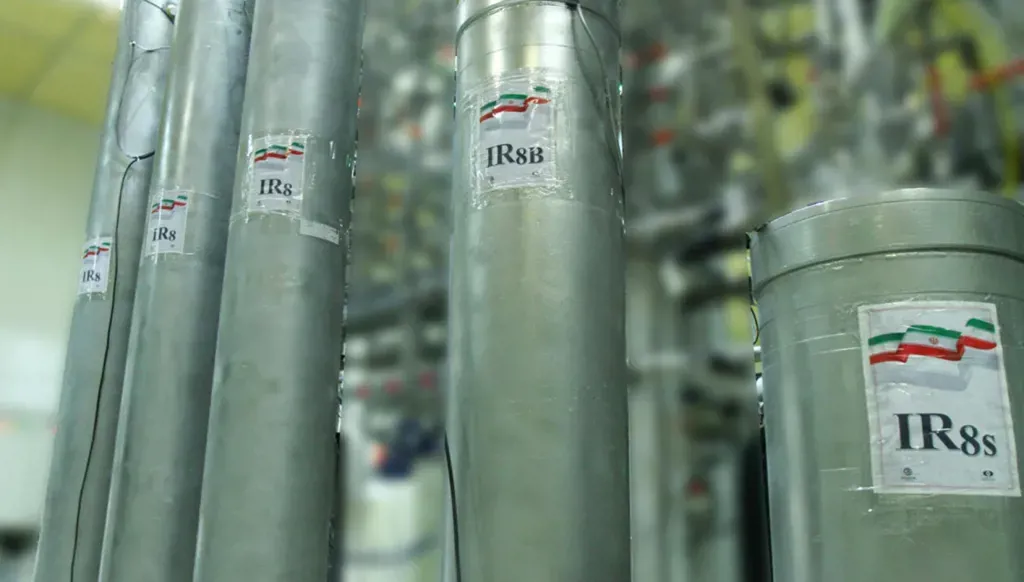
In practical terms, the Iranian side once again found itself facing the familiar US conditions it had previously described as “surrender terms,” whether regarding its nuclear and missile programs or its regional alliances. Various frameworks had been discussed for a new nuclear agreement, including handing over stockpiles of highly enriched uranium, completely stopping enrichment, or limiting it to low levels for civilian purposes, along with strict and continuous monitoring of all activities. However, these issues do not appear to have been seriously negotiated. As for missile capabilities, which are considered nearly as dangerous as nuclear weapons, the main restriction would be limiting their range so they would not threaten Israel or developing them into intercontinental missiles.
Disclaimer: The opinions expressed by the writers are their own and do not necessarily represent the views of Annahar.