Bint Jbeil: a significant escalation on the southern Lebanon front

Lebanon 13-04-2026 | 08:04

Bint Jbeil: a significant escalation on the southern Lebanon front

Southern Lebanon conflict intensifies as Bint Jbeil becomes focal point of military operations, cross-border escalation, and regional tensions.

Bint Jbeil: a significant escalation on the southern Lebanon front
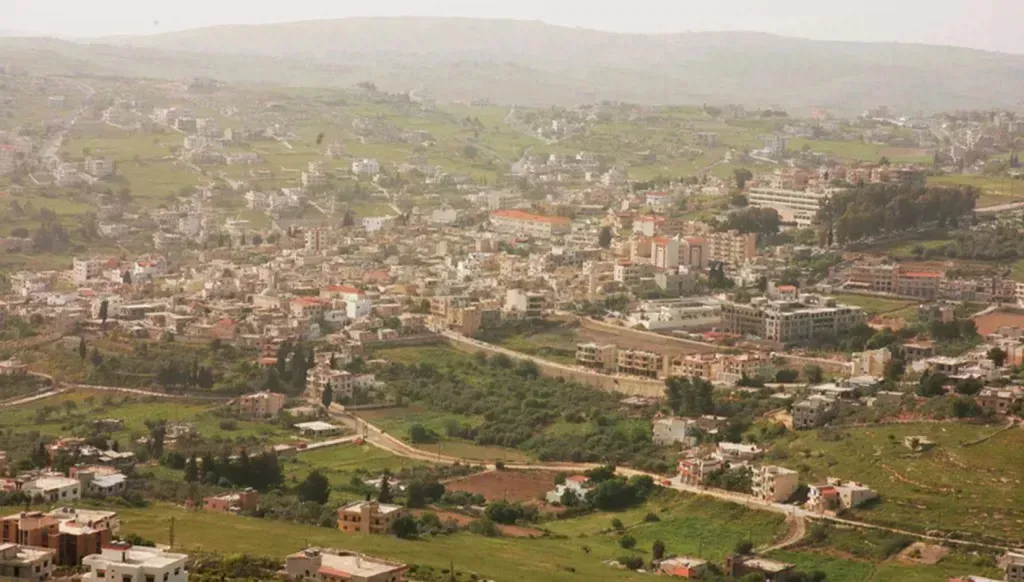
Bint Jbeil.
Smaller Bigger


The city of Bint Jbeil is experiencing a notable military escalation, marked by intensified raids and field operations in its vicinity, as efforts continue to seize control of the city. This comes as the situation awaits further developments on the ground and their potential impact on the upcoming political trajectory.


According to available information, the advance toward Bint Jbeil is proceeding along four to five axes, the most prominent originating from the town of Ainata, located northwest of the city. From Ainata, forces have also advanced toward the Saf al-Hawa area, the main northern entrance to Bint Jbeil, as well as toward the Musa Abbas Complex on the road linking Bint Jbeil and Ainata, extending to Aitaroun.


There was also an advance from Ainata toward the triangle linking Marun al-Ras, Ainata, and Bint Jbeil, known as the Maslakh neighborhood.


From the western direction, forces advanced from the town of Ain Ebel toward the Al-Aouaini area overlooking Bint Jbeil Stadium, as well as toward Tallet Masoud in the town of Taybeh, which, according to Hezbollah statements, is under rocket fire.


From the southern side, an advance was recorded from the town of Yaroun toward the Al-Dawra area, a neighborhood in Bint Jbeil adjacent to Yaroun.


In this context, Yedioth Ahronoth reported that the Israeli Air Force continues to drop dozens of heavy munitions on the city of Bint Jbeil, as part of what it described as “the battle to decisively control the town.”


Bint Jbeil has been a symbol for Hezbollah since the Second Lebanon War, adding that the military operations aim to encircle the town and carry out strikes from a distance using high firepower, while also relying on the technological superiority of the Israeli army, according to the report.


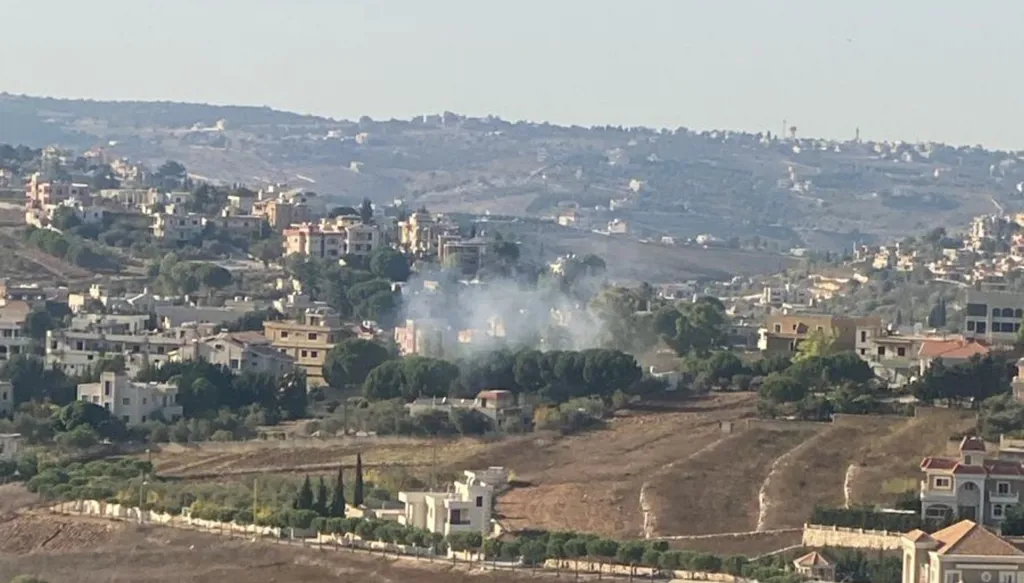
Strike on Bint Jbeil (Annahar).


In parallel, Channel 12 Israel reported that army forces have begun a ground incursion into the city following a siege that lasted several days, noting that military assessments suggest dozens of Hezbollah militants are trapped inside the area, with resistance expected.


The channel added that the Israeli army has intensified its presence on the northern front, coinciding with negotiations expected to begin between Lebanon and Israel next Tuesday. It also noted that its forces have started entering Bint Jbeil over the past twenty-four hours.


According to Israeli military estimates, the operation to control the city may “take several days, given the preparations to confront resistance from the remaining elements inside.”


In a related context, the Israeli army has enhanced its ground operations in southern Lebanon, with five military divisions (98, 36, 146, 162, and 91) operating to establish their presence in the region.


On the other side, Hezbollah announced that it targeted Israeli vehicles and soldiers on the outskirts of Bint Jbeil with rocket fire, in addition to striking a Merkava tank near Al-Ishraq School with a guided missile, confirming hits.


What Do We Know About Bint Jbeil?


Bint Jbeil is known as a key stronghold of Hezbollah, having served as an important rear base since Israel’s withdrawal from southern Lebanon in 2000. It is the closest city to the border, located only about 3 kilometers away, which gives it significant demographic and geographical importance.

2006: Legacy and "Legend"


Bint Jbeil gained its “legendary” status after the July 2006 War, which saw the failure of the Israeli army’s ground advance objectives, with elite units suffering significant losses. This legacy has made the city a persistent challenge, and it was used by the late former Hezbollah secretary-general Hassan Nasrallah as a platform to deliver his famous statement describing Israel as “weaker than a spider’s web.”


Israeli forces advanced in 2006 around Bint Jbeil Stadium, and despite Israel’s announcement of partial control and the raising of the Israeli flag in the city, they failed to establish a foothold and were ultimately forced to withdraw. 

Tags