When gold and the dollar rise together: What the market is really signaling

Business Tech 11-04-2026 | 16:07

When gold and the dollar rise together: What the market is really signaling

Behind this unusual pattern lies growing global uncertainty, where investors prioritize safety over returns and hedge against multiple risks at once 

When gold and the dollar rise together: What the market is really signaling
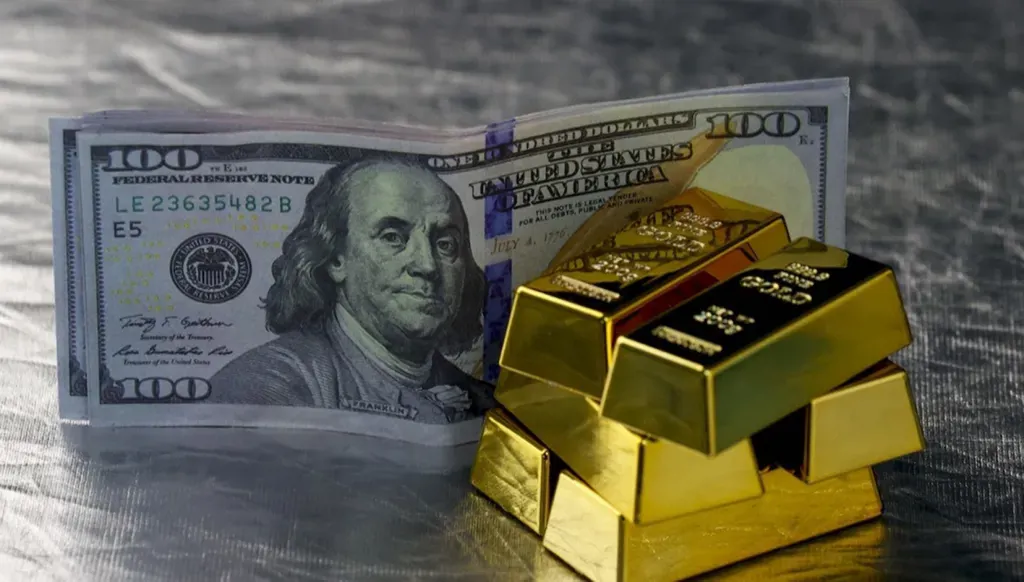
Dollar and Gold (AFP)
Smaller Bigger

The fact that the US dollar and gold prices are rising at the same time is no longer just a passing observation in the markets. It has become a phenomenon that is forcing economists to rethink the traditional relationship between them. This relationship used to be seen as almost fixed: when one rises, the other falls. However, this pattern sometimes breaks down under the pressure of repeated global crises.


An analysis published by CME Group describes what happened in 2023 and 2024 as an unusual phenomenon. Both gold and the dollar showed strength at the same time, driven by common factors, especially geopolitical tensions and investors’ demand for safe haven assets. This is significant because it comes from a major institution at the center of global markets, and it reflects a real change in investor behavior rather than a temporary market fluctuation.


According to the same analysis, the simultaneous rise of the dollar and gold signals global uncertainty. The main concerns are linked to US debt and monetary policy, which are pushing investors to hedge their risks in two directions at once. In other words, the market no longer fully trusts even the world’s strongest currency, yet it also lacks an immediate alternative.


From another perspective, this behavior reflects what can be described as a dual fear. On one hand, fear of financial crisis or recession supports the dollar because of its stability and liquidity. On the other hand, fear of inflation and loss of value supports gold as a store of wealth. During times of instability, investors quickly move into both assets, which creates simultaneous demand for them.
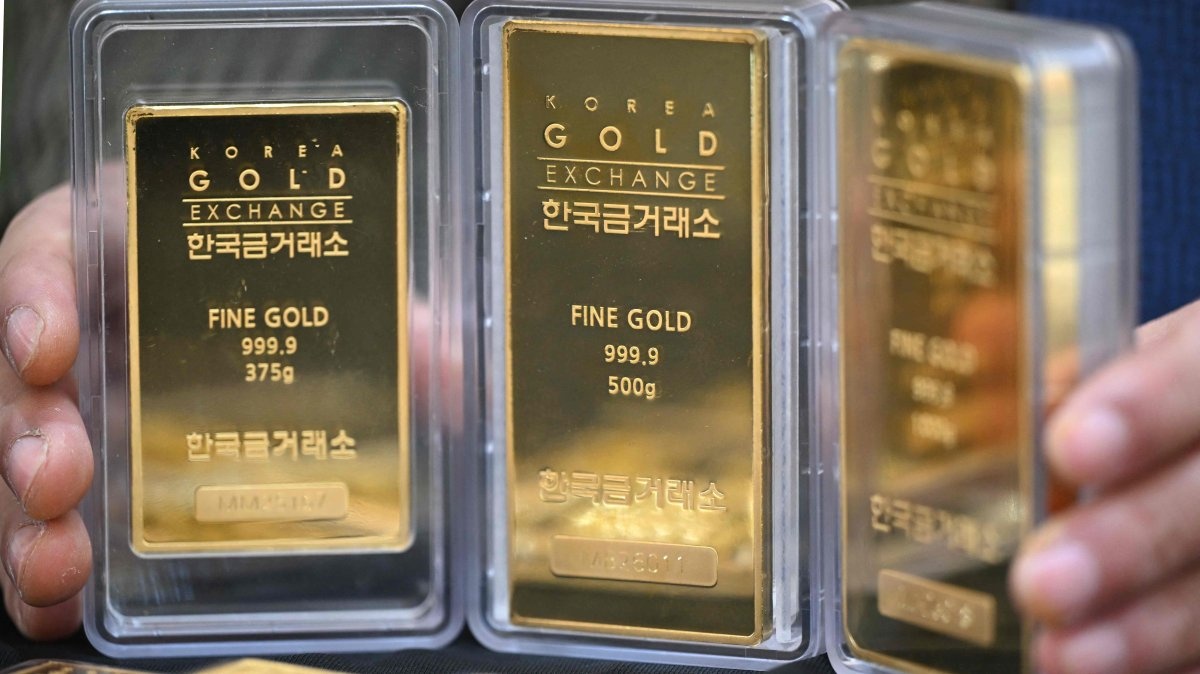
 

Gold bars in Seoul. (AFP)


One of the clearest examples of this appeared at the beginning of the COVID pandemic. As global markets collapsed suddenly, investors rushed toward the US dollar to secure liquidity, especially to meet their financial obligations. At the same time, gold rose significantly as a safe haven amid unprecedented uncertainty. In this case, fear was not driven by a single factor, but by the threat of a broad economic collapse.


A similar pattern appeared, though in a different form, after the outbreak of the Russia Ukraine war in 2022. During that period, the dollar strengthened due to tighter US monetary policy and rising interest rates, while gold also rose because of geopolitical tensions and global inflation concerns. Once again, two forces came together: a restrictive monetary policy that supports the dollar and geopolitical and inflationary risks that support gold.


At the level of investor behavior, what is happening can be compared to “eating both salad and dessert at the same time,” meaning that investors are trying to combine caution and ambition simultaneously. This image captures the situation: markets are not in full panic, but they are also far from confidence.


In the geopolitical context, international tensions reinforce this trend, as demand for safe assets increases regardless of their traditional relationship, pushing both gold and the dollar higher at the same time.


In conclusion, when the dollar and gold rise together, it does not indicate strong markets. On the contrary, it shows that investors are facing an uncertain future with multiple risks. They are not betting on a single scenario, but instead buying different forms of protection, even if those protections seem contradictory in theory.


Therefore, this behavior should not be read as a positive signal, but as evidence that the global financial system is going through a sensitive phase, where safety takes priority over returns, and the main goal of investors becomes protecting their capital rather than growing it.


Tags