Lebanon’s political formula under strain amid war and institutional deadlock
Debate over sectarian power sharing and political reform intensifies as calls grow for a neutral federal system and questions mount over who can change the system.



 Messenger
 Whatsapp
 Threads
 Email
Email
 Print
Print
 X
X
 Facebook
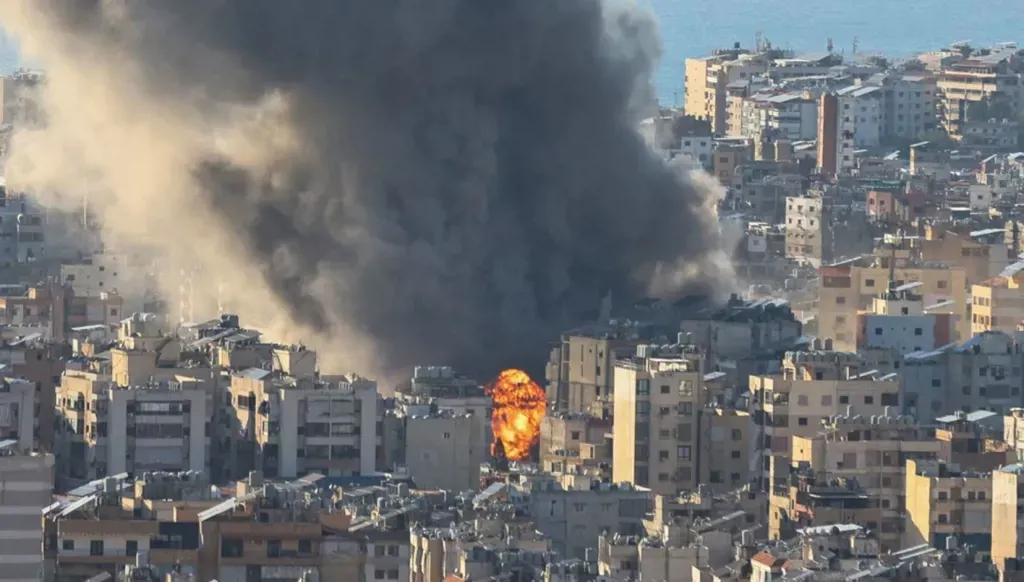


In light of the war on Lebanon and the profound political and security shifts it is producing, discussion has strongly returned to the “Lebanese formula” as one of the pillars of the Lebanese political system.
From here the question arises: has this formula become in need of development, and who is capable of taking such a step? In the past, the Lebanese war represented a bloody explosion of the Lebanese formula based on sectarian power sharing, and quickly the fragile balance between sects turned into a violent armed conflict fueled by foreign interventions.
Thus, the Lebanese formula is no longer merely a structure for a historical settlement, but rather a daily test of the Lebanese political system and its ability to endure and survive.
It has long been said that Lebanon is based on delicate balances between its components, yet at every critical moment the country faces an existential test, which raises a legitimate question: which formula can give this country stability and prevent it from collapsing in the face of wars? Does war reproduce the Lebanese formula, or does it place it on the edge of collapse?
Lebanese components
The writer and political researcher Dr. Michel Chammai states that the issue of the Lebanese formula cannot be approached through the question of which formula we want. In this case, each group or Lebanese component approaches the formula according to its own preferences and the formula it desires. In that situation, Lebanon turns into a collection of formulas, none of which rises to the level of becoming a state.
From a scientific perspective, he explains that every society is built in a complex way, whether ethnic, cultural, or geographical, and political science assumes that the system in such a pluralistic social composition should be a federal system.
It is true that the form of a federal system differs from one country to another, according to Chammai, either it takes the form of expanded political and administrative decentralization depending on the nature of the problem between the components, or it takes a confederal form.
He explains: regarding the Lebanese formula, there is a tendency toward expanded political decentralization as a minimum, reaching federalism as a maximum, if we want to preserve Lebanon as a country of 10452 square kilometers. This concerns the form of the political system.
With which formula does the Lebanese political system align?
Perhaps the discussion of the “Lebanese formula” does not stem from it being a rigid constitutional concept, but rather a real test of its ability to withstand major shocks and the recurring open wars that take place on Lebanese soil and are used to ignite conflicts.
So does war expose the Lebanese formula and impose its change? And fundamentally, what republic are we in today?