Macky Sall’s UN candidacy: Turning African debate into international momentum

Opinion 09-04-2026 | 11:59

Macky Sall’s UN candidacy: Turning African debate into international momentum

Amid African Union debates and shifting diplomatic stances, Senegal’s former president gains momentum toward global endorsement, turning initial opposition into strategic advantage.

Macky Sall’s UN candidacy: Turning African debate into international momentum
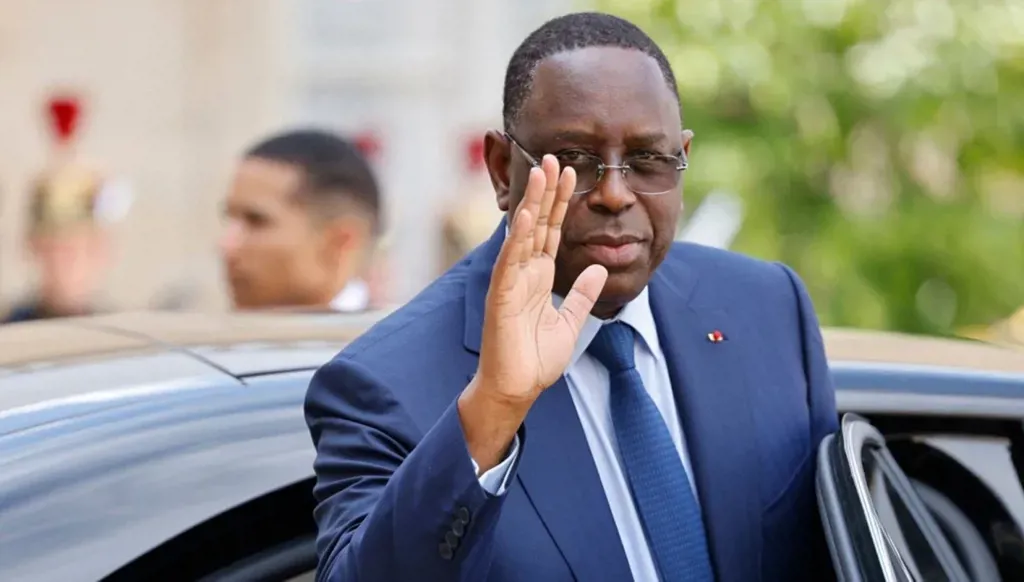
Former Senegalese President Macky Sall
Smaller Bigger

Amid the controversy surrounding the candidacy of former Senegalese President Macky Sall for the position of United Nations Secretary-General, succeeding Portuguese Antonio Guterres, two conflicting narratives have emerged: one highlights hurdles within the African Union, while the other views recent events as a sign of significant progress.


However, a close examination of the figures and evolving positions reveals that what transpired was more akin to a sweeping victory poorly marketed than a political failure.


In reality, the number of countries that outright opposed Macky Sall's candidacy is just 13, a modest figure within a continental organization of 54 countries. The other five countries often cited as part of the "opposing camp" did not reject the nomination but merely requested additional time for deliberation—a common diplomatic stance in sensitive matters, reflecting hesitation rather than outright opposition.


More importantly, this camp was far from stable; two prominent countries, Egypt and Liberia, quickly changed their positions—Cairo withdrew its request for an extension, while Liberia retracted its objection. This development reveals that the so-called "opposition front" was, in reality, a temporary and fragile coalition rather than a solid political alignment.


If we attempt to eavesdrop on what happens behind closed diplomatic doors, we find that most of the 13 opposing countries objected for formal reasons, with some citing a "lack of consultation" prior to the candidacy announcement. Their stance reflects diplomatic pride—a position that can be addressed in later stages, as it is directed not at the candidate or the idea itself, but at the process.


On the other hand, the main facts remain clear: 35 African countries did not object to the draft resolution. Within the context of the African Union, this number cannot be dismissed as mere "silence"; it represents broad acceptance of a candidate who faces no collective rejection. When countries oppose a nominee, they make it explicit, as the thirteen states did. Abstaining from objection generally signals an implicit readiness to move forward with consensus, or at least no intention to obstruct the process.


This is the paradox that defines this dossier: the influence of the countries that disrupted the "silent procedure" was exaggerated, portraying them as a resistance front, whereas the numerical and political reality indicates otherwise. The African majority, through their silence or positive neutrality, positioned Macky Sall advantageously, while the opposition remains small in number and fluid in stance.


More important than this debate, despite its intensity, is that it does not determine the real contest: the selection of the United Nations Secretary-General is not decided within the African Union, but in the Security Council, where the true power balances lie. Within this framework, the countries that opposed the candidacy in the Union do not hold decisive influence over the final decision, as they do not include the permanent members of the Security Council, who are the key players in the process.


In other words, the influence of these countries remains limited on the international stage, compared to the major power dynamics that will ultimately determine the nomination’s outcome in New York. This enhances President Macky Sall’s position, as he enjoys a broad, unopposed African base and faces no international coalition capable of blocking his path.


What occurred within the African Union can be seen as a transitional phase between "broad acceptance" and "formal endorsement." President Sall has succeeded in positioning himself as a continental candidate who is not rejected—a fundamental prerequisite in any international nomination—but he has not yet secured official consensus. Nevertheless, the overall trend suggests the potential to convert this acceptance into explicit support, particularly given the flexibility of certain countries’ positions.


In conclusion, breaking the "silent procedure" does not signify a political defeat as much as it indicates a misinterpretation of the results. The numbers clearly favor President Sall, the opposition remains limited, and the ultimate decision lies decisively beyond the African framework. In light of these factors, his nomination today appears more like a silent victory, gradually moving toward full international endorsement.