

Israel Pounds Lebanon Despite Truce, Raising Risk of Wider War
A sudden wave of Israeli strikes challenges the fragile two-week ceasefire, raising questions about Lebanon’s role, Tehran’s response, and the future of the agreement.




 Messenger
 Whatsapp
 Threads
 Email
Email
 Print
Print
 X
X
 Facebook
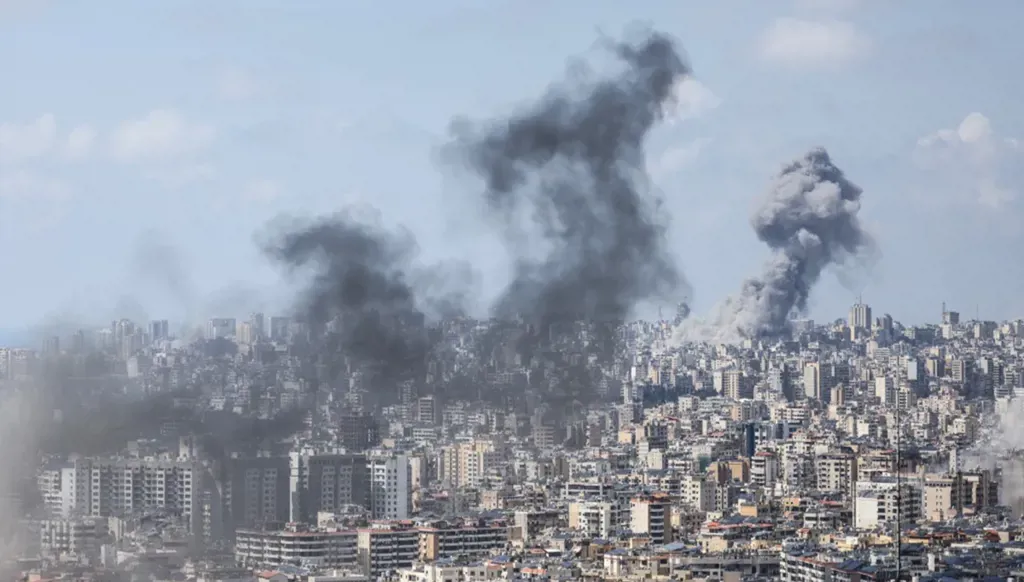


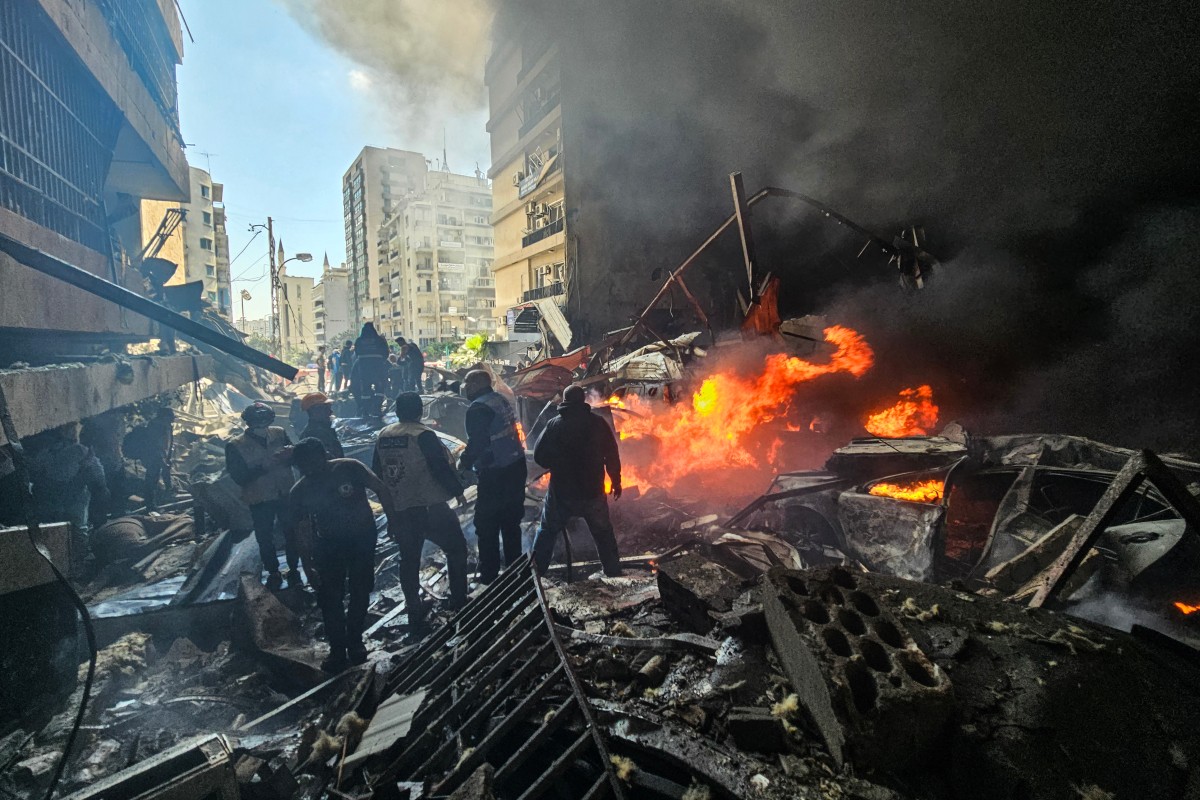
In one of the heaviest bombardments in a short period, possibly the most intense since the 1982 invasion, the Israeli army announced the launch of a new operation called "Eternal Darkness," targeting around 100 sites within ten minutes in the south, the Bekaa Valley, and Beirut. This unprecedented escalation in terms of intensity and coordination resulted in hundreds of civilian casualties according to preliminary reports.
This wave came just hours after the announcement of a two-week truce between the United States and Iran, putting the agreement to an immediate and severe test from its first hours. From the start, disagreements emerged over whether Lebanon was included in the understanding: Was the truce comprehensive or limited to the Iranian front?
In this sense, the debate is no longer only political but is being practically enforced on the ground through this escalation. Israel stated that the truce does not include Lebanon, while Pakistani Prime Minister Shehbaz Sharif affirmed that the understanding covers all fronts, including Lebanon.
The Core of the Dispute
So far, there are no signs that Tehran is moving to cancel the agreement, but its positions suggest that excluding Lebanon undermines the agreement at its core. According to Annahar’s sources, the announcement of the agreement was delayed by several hours due to Iran’s insistence that all fronts, especially Lebanon, be included.
In this context, additional signals have come from Tehran linking what is happening in Lebanon directly to the truce’s course. The Iranian Foreign Ministry announced that Minister Abbas Araghchi discussed with the Pakistani army chief the issue of “violations of the ceasefire in Iran and Lebanon,” clearly indicating that the two arenas are treated as interconnected fronts within a single strategic framework.
At the same time, an Iranian official, whose name was not disclosed, told an agency that Tehran “is considering strikes on Israel” in response to what it described as “violations of the truce in Lebanon,” reflecting an escalation in the level of threat beyond political warnings.
Hezbollah spokesperson Ibrahim Mousawi emphasized that Israel’s non-compliance means that “no one will comply,” warning of a response from the region and from Iran. Iranian Parliament Speaker Mohammad Bagher Qalibaf’s adviser also stated that any attack on Lebanon “would lead to renewed fighting on all fronts.”
These positions, together with the ongoing strikes, reflect a clear principle: from Tehran’s perspective, the truce cannot be divided.
This stance is not surprising, given Hezbollah’s role in Iran’s strategy. The party is Tehran’s long-time ally and primary proxy in Lebanon. Therefore, from the Iranian viewpoint, it does not make sense to freeze the Iranian front while leaving the Lebanese front open to Israel, as this would practically separate one of Iran’s most important regional leverage points from the core of the agreement.
Hezbollah Complies While Israel Escalates
On the ground, Hezbollah halted its operations after the truce was announced, reflecting its treatment of the agreement as one that includes Lebanon. However, the latest strike puts this commitment to a direct test.
The party urged residents not to return to the targeted areas until an official announcement of a ceasefire is made, warning of potential “treacherous attempts,” which practically means that the front remains open.
Meanwhile, Israeli Prime Minister Benjamin Netanyahu stated that the truce with Iran does not apply to Lebanon, with operations continuing. This reflects an attempt to impose Israel’s ongoing strategic logic that a truce with Iran does not mean a halt to strikes in Lebanon.
American Ambiguity
The U.S. position remains indecisive. Washington approved the truce and linked it to the reopening of the Strait of Hormuz but did not clarify whether Lebanon is included. This leaves room for two conflicting interpretations: an Iranian view that sees what is happening as a violation of the agreement, and an Israeli view that separates the two fronts.
Amid this contradiction, any escalation becomes a test of Washington’s ability to enforce a single interpretation.
No Withdrawal and Ongoing Operations
So far, there is no indication that the agreement includes an Israeli withdrawal from southern Lebanon. On the contrary, operations continue alongside ground activity, reinforcing the assumption that Israel treats the agreement as limited only to the Iranian front.
The scale of the latest strike does not seem incidental but rather a step to establish facts on the ground before any political settlement. At this precise point, the Lebanese issue emerges as a decisive factor in determining the course of the agreement.
Scenarios for the Coming Hours
After this development, the likely directions have become clearer:
1. Enforcing Separation by Force
Israel may continue to consolidate its interpretation: the truce does not include Lebanon, with strikes ongoing to impose a field reality.
2. Testing Patience
Iran and Hezbollah might refrain from responding immediately, maintaining the truce while waiting for a U.S. position, despite the cost to the balance of deterrence.
3. Reconnecting the Fronts
If what occurred is considered a direct violation, a response could come from Lebanon or even from Iran itself, especially given discussions about possible direct strikes on Israel, which could return the confrontation to a broader trajectory.
4. U.S. Intervention to Regulate the Pace
Washington might move to de-escalate if it sees that the current developments threaten the agreement itself, but this depends on a political decision that has not yet been clarified.
In Conclusion...
The truce is no longer merely an understanding between Iran and the United States; it is now directly linked to what unfolds in Lebanon over the coming hours, following the wide-scale strike that reshaped the scene from its first moments.
In light of recent Iranian signals, particularly the linking of events in Lebanon to the truce and hints at military options, the trajectory of the agreement will likely be affected not only by the level of Israeli escalation but also by how Tehran and its allies respond.
According to the reactions of the relevant parties—Iran, Hezbollah, and Israel—the direction of the agreement will become clearer, not only in terms of its continuity or exposure to pressure but also regarding its nature and scope: will it remain limited to the Iranian front, or will it expand to include other arenas, foremost among them Lebanon?
Amid this divergence, the coming hours appear open to either reaffirming the rules of engagement or adjusting them, depending on the positions that emerge and what becomes established on the ground simultaneously. This makes the next hours crucial for determining the path ahead, though they may not be sufficient to settle it definitively.