In a highly complex regional moment, the announcement of a ceasefire between the United States and Iran raises more questions than it answers, especially regarding the Lebanese front, which remains shrouded in ambiguity. So far, there is no clear indication of whether this agreement includes Lebanon or if it will remain an open arena for ongoing Israeli military operations.
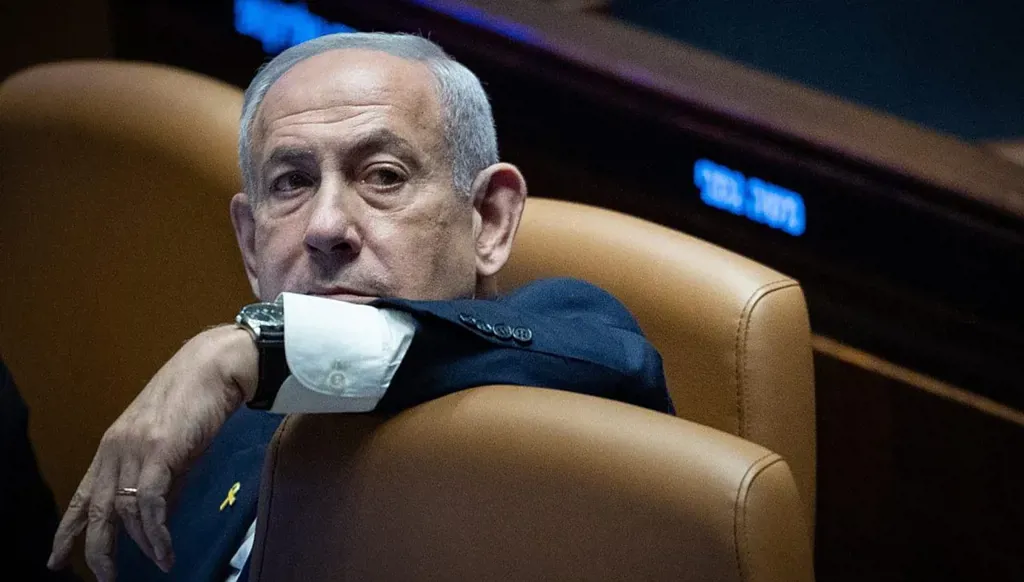
In this context, narratives appear to be conflicting. On one hand, Israeli Prime Minister Benjamin Netanyahu hastily suggested that the understanding does not include the Lebanese front, in a clear effort to separate tracks and preserve a margin for military maneuvering. On the other hand, international circles have rejected this claim, particularly through the Pakistani mediator, who affirmed that the agreement encompasses all fronts—reshuffling the cards and raising serious questions about what has truly been agreed upon.
This discrepancy cannot be separated from the political dilemma Netanyahu faces domestically, where criticism has intensified in the Israeli media over the failure to achieve previously stated objectives—whether related to disarming Hezbollah, pushing it away from the northern borders, or advancing the plan to establish a buffer zone up to the Litani River. Under this pressure, Netanyahu may find himself confronting two difficult options: either accepting a comprehensive ceasefire with its political costs or continuing escalation, with the associated risks of a widening confrontation.
On the ground, the facts do not yet reflect any clear commitment to a ceasefire. Israel continues its bombing operations and maintains evacuation warnings for residents in the south, as if the agreement does not directly concern it. Conversely, Iran has signaled that the Lebanese front is an integral part of the understanding, hinting at a reconsideration of its commitments if Israel does not comply—adding a new layer of complexity and leaving the coming hours open to multiple possibilities.
At the official Lebanese level, there does not appear to be any clear notification or final position so far, reflecting a state of waiting and anticipation regarding the outcome of ongoing international contacts. However, this ambiguity is opening a deeper internal debate in Lebanon about the next phase—particularly concerning the issue of restricting arms to the state—amid a reality in which the war has demonstrated the limited ability of the state to impose its security equations, especially after the army withdrew from the front lines in the early stages of the confrontation.
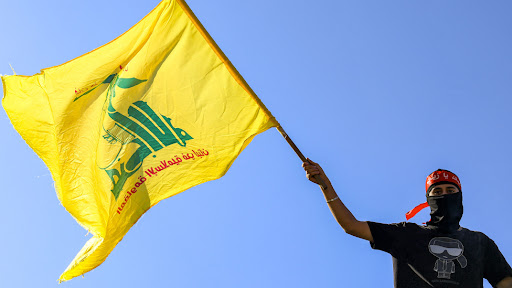
In contrast, Hezbollah is likely to treat any ceasefire—should it come into effect in Lebanon—as a strategic achievement, especially if Israel’s failure to meet its objectives is confirmed. This could be reflected internally through efforts to redraw political balances, bolstered by the prospect of renewed Iranian support, which may reopen previously frozen files and place its opponents before new challenges in navigating the post-war phase.
Simultaneously, the humanitarian factor emerges as a pressing element, with a growing desire among displaced people to return to their villages and properties after paying a heavy price during the escalation—making any delay in resolving the ceasefire issue on the Lebanese front an additional factor that further complicates the situation.
Ultimately, the ceasefire agreement, instead of providing clarity, has opened the door to a more ambiguous phase, where regional calculations intertwine with the internal crises of both Lebanon and Israel. As attention turns to the seriousness of American pressure on Netanyahu and the extent of Iran’s commitment to its understandings, the Lebanese front remains suspended between the potential for containment and the risk of chaos—awaiting what the coming hours and days will reveal.





 Messenger
 Whatsapp
 Threads
 Email
Email
 Print
Print
 X
X
 Facebook