The novel The Feast of the Goat by Mario Vargas Llosa is not merely a tale about a Caribbean dictator whose reign ends in assassination. It is a revealing model of how despotism forms, seeps into the veins of both state and society, and leaves behind a vacuum more perilous than its presence. Reading this magnificent work in light of the ongoing Iraqi experience—both before and after the fall of Saddam Hussein—brings into focus a striking paradox: a transition from absolute individual tyranny to the fragility of a state vulnerable to multiple tyrannies.
In recent weeks, the Iraqi chargé d'affaires in Kuwait has been summoned twice to the Kuwaiti Ministry of Foreign Affairs, and on each occasion, a memorandum of protest was delivered to the Iraqi government over drone and missile attacks launched by militants from Iraqi territory against Kuwait, without any reason or justification—yet without any notable response.
During Saddam Hussein’s era, the situation was clear and defined. Power was concentrated in a single individual, and the state, with all its apparatuses, revolved around him. Fear was institutionalized, repressive organs functioned efficiently, and loyalty was either bought or enforced at gunpoint. This mirrors the portrayal of Rafael Trujillo in the novel—a man who sees himself as the state and believes his survival is essential to the nation’s existence. In this model, brutality is explicit, the enemy is known, and decision-making is centralized, even when it leads to destruction.
A more complex Feast
However, post-2003 Iraq was not an exit from The Feast of the Goat, but a transition into a more complex feast. There was no longer a single “Rafael Trujillo” in Iraq, but multiple versions sharing influence under sectarian, political, and regional banners, contesting the state until they drained it of its essence and tied it to another state, Iran. Herein lies the paradox: despotism fell, but the state was never born. Instead, a vacuum emerged—one filled by armed groups and ideological parties disconnected from the interests of Iraq and its people.
In The Feast of the Goat, Mario Vargas Llosa shows that tyranny does not rely solely on an individual, but on a network of conspirators. This pattern reappears in the Iraqi case, though in reverse. During Saddam Hussein’s era, conspiracy ensured survival within a closed regime; afterward, it became a means to seize and divide the state, its wealth, and its power. Fear was no longer the sole governing force; it was accompanied by gain, extortion, and complicity.
Fragile structure
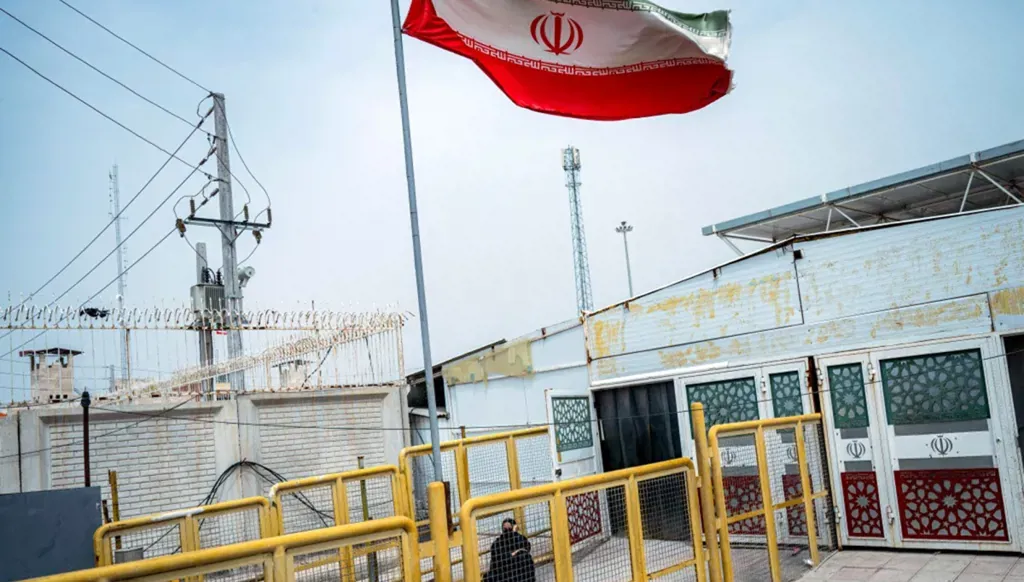
The most dangerous element in this comparison is the transformation of the very idea of the state—from what is depicted in The Feast of the Goat into a non-state. Despite the regime’s brutality, there existed a formally cohesive state and a centralized authority. But in Iraq today, the state appears as a fragile structure, torn by conflicting loyalties—regional, sectarian, and ethnic—held captive to its neighbors and their impositions. This has opened the door to the influence of Iran, which has penetrated not only politically, but also ideologically and economically, through systems of coercion and extortion, turning Iraq into an open arena for various armed groups, including those launching missiles at neighboring countries.
The mystical slogans raised after 2003 by loyalist groups, in the name of historical grievance or deferred justice, became political tools for reshaping sectarian power. Here we see another echo of The Feast of the Goat by Mario Vargas Llosa—how ideas, once detached from reality, can become a cover for oppression.
In Iraq, repression is no longer centralized but dispersed, practiced in multiple forms—sometimes in the name of religion, sometimes in the name of resistance, at other times in the name of protecting the sect, and often in the name of safeguarding the guardian state, in this case, Iran. Despite ongoing protests, the fragility of the Iraqi state and the manipulation of public consciousness allow this threat to persist, particularly from the neighboring power. The result is that the Iraqi citizen has moved from a single, identifiable fear to a multitude of fears.
Under Saddam Hussein, the source of threat was known. Today, the threat is scattered, undefined, and shifts with the changing balance of power on the ground. This kind of fear is more exhausting, as it does not even offer the illusion of stability. Just as the assassination of Rafael Trujillo in The Feast of the Goat did not lead to immediate stability but instead exposed a profound void, the fall of Saddam Hussein similarly revealed a structural fragility within the Iraqi state, as seen across many Arab dictatorships. The difference, however, is that while the novel hints at the possibility of rebuilding the state after the tyrant, in Iraq the struggle over defining the state itself continues.
The most dangerous aspect of the Iraqi “feast” is that the outside has become part of the inside. Iran’s influence did not merely cross borders—it penetrated through a political structure that allowed it to embed itself. When sovereignty becomes entangled with cross-border agendas, the state loses its capacity to define its own national interests. Here, the novel intersects with reality at a crucial point: despotism does not vanish instantly; its form transforms. The tyrant may disappear, but his legacy and culture are adopted by successors and continue to reproduce themselves in new ways.
In Iraq today, power remains a prize, fear remains a tool, and the state remains an incomplete idea. Between past and present, the question remains unresolved: is the problem the tyrant himself, or the conditions that allow him—or his successors—to reemerge? Is it the elites’ loss of direction in defining the principles of a responsible state?
Disclaimer: The opinions expressed by the writers are their own and do not necessarily represent the views of Annahar.





 Messenger
 Whatsapp
 Threads
 Email
Email
 Print
Print
 X
X
 Facebook