

Aoun warns of Lebanon’s vulnerability as Hezbollah challenges state authority
Speaking at Bkerke on Easter, President Joseph Aoun highlighted the need for Lebanon to regain control over its security and political decisions, confront Hezbollah’s influence, and prepare for the consequences of ongoing regional tensions.



 Messenger
 Whatsapp
 Threads
 Email
Email
 Print
Print
 X
X
 Facebook
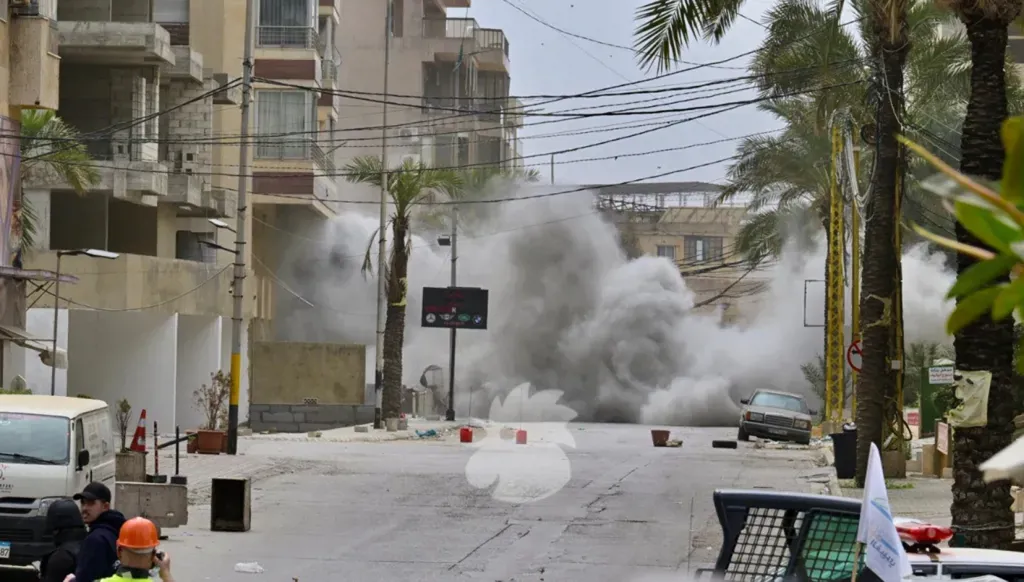


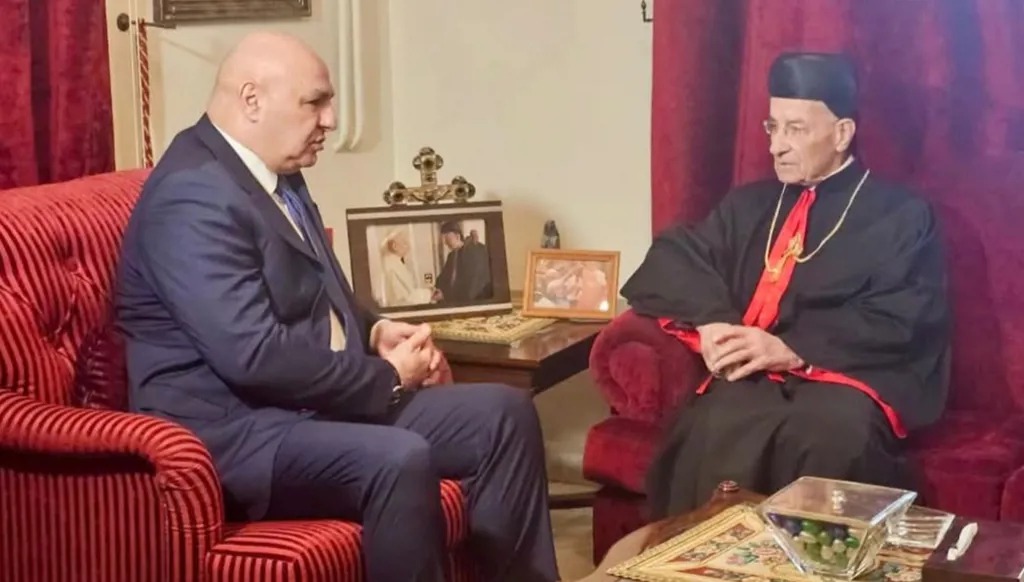
In his Easter speech in Bkerke, President Joseph Aoun expressed determination to implement the “small steps” recently taken by the authorities, whether regarding the decision to expel the Iranian ambassador Mohammad Reza Sheibani from Lebanon in response to the operational failure to carry out this expulsion, or regarding the stance on Hezbollah’s war, considering its disastrous nature in relation to the state’s choice of negotiation, which it intends to pursue despite Hezbollah’s objections.
Another notable point in Aoun’s question about what Hezbollah’s war brought to Lebanon is, according to some, important because it opens the door to holding the party accountable in the future, rather than allowing it to politically benefit from its actions in Lebanon. This is assessed based on whether the war, in terms of Hezbollah’s contribution to the destruction of Lebanon and particularly the south, served Iranian interests by reducing the impact of Israeli strikes on it or not, noting that there are no practical indications of this.
Answering this question is only possible through Israel itself, which has not yet revealed how much of its military capabilities it deployed in Lebanon instead of using them in the war against Iran, or whether its war achieved that goal. And does Hezbollah’s loyalty to Iran justify pushing Lebanon into ruin and destruction repeatedly without paying political costs, leaving the burden of these costs on the state and the Lebanese people?
Although many observers acknowledge that this issue is linked to the outcomes of the U.S.-Israeli war on Iran, meaning that Hezbollah’s defeat would equate to Iran’s defeat, and while this can be approached differently at the global level when assessing the U.S. predicament versus Iranian reality, the situation in Lebanon cannot be confined solely to this perspective. Betting on an international regional settlement to solve Lebanon’s problems would be a serious and unrealistic mistake, as it will not achieve that goal, and could in fact make the situation worse.
Aoun’s remarks had been strongly anticipated in the preceding days, as the presidency has lost much of its influence and faces significant domestic criticism, which also resonates abroad. The state needs to be reminded of its role and to assert its continuous presence, which should not be limited to acting as a humanitarian agency to accommodate displaced people or managing internal security. This is especially crucial given its lack of control over decisions of war and peace, even as many urge it to strongly assert, using whatever leverage it has, control over peace decisions, ensuring they are not handed over to Hezbollah regardless of the scenario or to Iran, and to work with friendly countries to reinforce this and limit the margin for missteps that might give misleading impressions.
Consequently, the questions focus on whether the authorities have scenarios in place for the day after the war, and whether its continuation or the waiting for its consequences and outcomes hinders precision in this regard. This question does not only concern the option of negotiating with Israel, but also the ways to make appropriate decisions and take measures at all levels to ensure the state maintains control over its decisions. This is especially important given assessments that Hezbollah is in decline and weakened more than it was in 2024, a situation the state did not benefit from for various reasons, despite Hezbollah still possessing a missile arsenal that it directs toward Israel.
It is unlikely that Lebanon will receive the necessary international attention unless it defines what must be done internally, possibly with external assistance, but only after clarifying the comprehensive approach that will be adopted regarding Hezbollah’s security and military position. This approach should not only focus on removing what remains of its weapons, but also on addressing all related issues, including reviewing relations with Iran or beginning from that point. The future of the Lebanese state and its ability to revive itself, as well as the restoration of public confidence in its capacity to truly govern, depend on this. Today, confidence in the state’s abilities and its willingness to act is at an all-time low.
In addition to many other points, this requires preparing the ground for negotiations with Israel by demonstrating a will that can provide leverage internationally to pressure Israel to stop its attacks and destruction of the south, in order to protect a potential partner in establishing initial calm and, later, peace.
rosannabm @hotmail.com
Disclaimer: The opinions expressed by the writers are their own and do not necessarily represent the views of Annahar.