

Tunnels of smuggling and signals: A border reality between Lebanon and Syria
Beyond security breaches, the discovery of cross-border tunnels reveals evolving smuggling networks and a growing political gap between Beirut and Damascus.



 Messenger
 Whatsapp
 Threads
 Email
Email
 Print
Print
 X
X
 Facebook
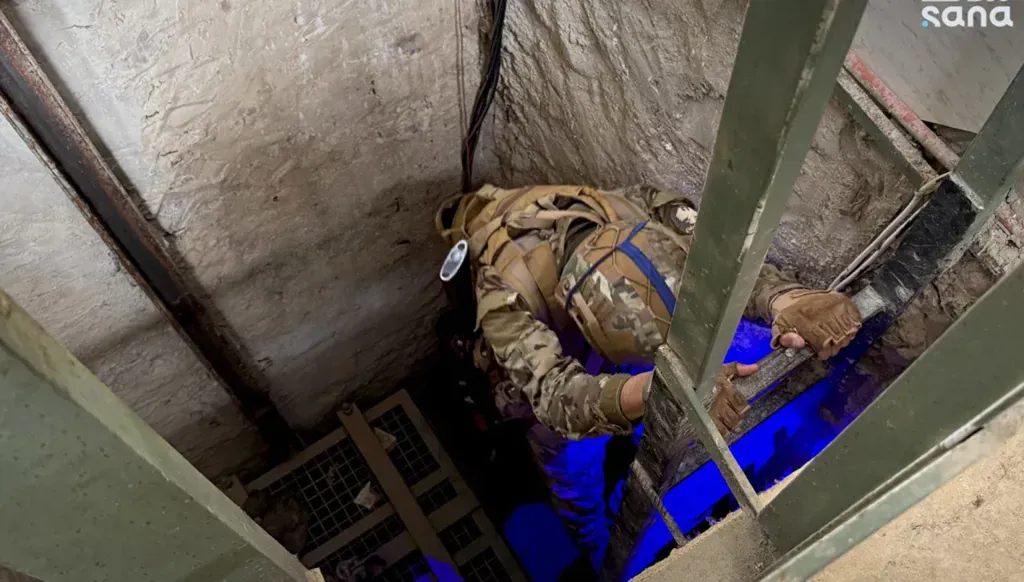


The recent Syrian announcement about the discovery of two tunnels linking Syrian territory to the town of Hosh al Sayyed Ali in Hermel was not just a routine security incident that can be filed under standard border control measures. The noticeable repetition of such announcements in recent months raises questions that go beyond the incident itself. Is smuggling still ongoing despite all the measures in place? What exactly is being smuggled? And more importantly, are we facing a situation of uncontrolled security, or an exchange of political messages between Damascus and Beirut?
On the surface, the issue may seem simple. A tunnel is discovered and then sealed. But in reality, these tunnels reflect a shift in smuggling methods. Tunnels are only dug when traditional crossing points become exposed or too risky from a security standpoint. This suggests that the networks operating on both sides of the border have not stopped but have instead reorganized and adapted their tools to the new reality. In other words, uncovering a tunnel does not necessarily indicate full success in controlling the border. Rather, it reveals a more advanced level of evasion of surveillance.

Arms smuggling is usually carried out through more protected channels linked to influential entities, which reduces the need for complex methods such as tunnels, except in exceptional circumstances that require high levels of secrecy.
However, the real significance of these announcements lies not only in their security dimension, but also in their timing and political context. Damascus, which has been seeking to reassert its regional position and reopen channels with Arab countries, is at the same time keen to demonstrate its ability to control its borders and combat smuggling. From this perspective, these announcements can be seen as part of a message directed outward as much as inward.
This reality places Lebanon in a difficult position. The state, already suffering from limited capacity and divided decision making, appears unable to keep pace with these developments through a clear and comprehensive border control plan. While localized measures are increasing here and there, the overall picture remains shaped by complex balances in which politics, security, and the illicit economy are deeply intertwined.
Perhaps most concerning is that this gap between the Syrian narrative and the Lebanese reality reflects a growing divergence in how the border issue is approached. While Damascus is trying to present itself as the party taking the initiative in enforcing control, Lebanon appears more as a recipient of developments than a shaper of them. This raises questions about the nature of coordination between the two sides and its actual limits.
In conclusion, the discovery of tunnels cannot be separated from the broader picture. Smuggling along the Lebanese Syrian border has not stopped; rather, it has entered a new phase of adaptation and increasing complexity, with tunnels being just one aspect of this shift. The political messages embedded in these announcements are no less important than the security facts themselves, especially at a delicate regional moment that is reshaping relations between Beirut and Damascus in line with overlapping interests and mutual pressures.