

Chokepoints of power: How Bab al-Mandab and Hormuz could reshape the global economy
Yemen’s entry into the conflict places two of the world’s most critical maritime corridors under pressure, raising the risk of oil shocks, supply chain disruption, and a widening global food security crisis.



 Messenger
 Whatsapp
 Threads
 Email
Email
 Print
Print
 X
X
 Facebook
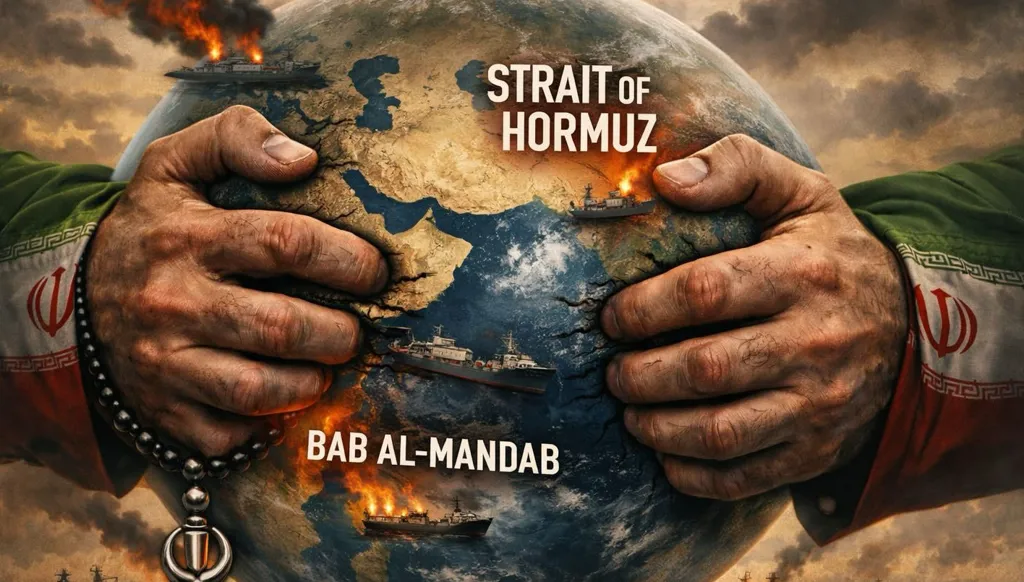


Amidst regional escalation, Yemen’s entry into the confrontation emerges as a highly impactful strategic factor, influencing not only military dynamics but also the global economy. The Bab al-Mandab Strait is considered one of the most important global maritime arteries, linking the Red Sea with the Indian Ocean. Approximately 10–12% of global oil trade and around 12% of international maritime trade pass through it. It also serves as a key gateway to the Suez Canal, making it a direct control point for trade movements between Asia and Europe.
Conversely, the Strait of Hormuz represents the largest pillar of global energy security, with approximately 20–25% of seaborne oil—around 20 million barrels daily—passing through it. Consequently, control by a single power over both straits would effectively mean controlling about one-third of global oil trade, representing a radical shift in economic power balances and serving as a far more potent instrument than the nuclear weapons Iran is accused of possessing.
Strategically, Yemen’s entry through the Bab al-Mandab creates a “maritime pincer” alongside the Strait of Hormuz, granting Iran and its allies an unprecedented ability to exert pressure on the global economy. Recent experience has shown that even the threat of closing these passages triggers immediate market disruptions, with oil prices surging above $118 per barrel during partial disruptions of movement through the Strait of Hormuz.
If the Bab al-Mandab Strait were actually closed, the impact would extend beyond oil. It would disrupt global supply chains, with studies indicating that around 20% of staple food trade, such as wheat, and approximately 15% of rice pass through this channel. Any disruption could therefore trigger a global food security crisis, particularly affecting importing countries in Africa and Asia.
Economically, the likely scenario in the event of a complete closure of both straits is:
A gradual increase in oil prices would likely begin with rapid jumps of 10–20% due to market panic, eventually triggering a global inflationary wave as shipping and insurance costs rise. Prices could potentially exceed $120–$150 per barrel if the disruption persists. Ships would be forced to divert around the Cape of Good Hope, adding roughly 25–30 days to transit times and significantly increasing operational costs.
In terms of navigation, the Strait of Hormuz historically handled the passage of around 138 ships daily prior to rising tensions, with the number sharply declining during periods of crisis—highlighting the fragility of this vital artery. Meanwhile, the Bab al-Mandab remains a key transit route for millions of barrels of oil each day, at approximately 4.2 million barrels.
In this context, Russia’s move to halt oil exports, based on the Kremlin’s decision, adds another layer of pressure, reducing global supply, granting Iran greater maneuverability and price-lifting capacity, and amplifying the impact of any potential strait closures.
This confirms that Yemen’s entry into the war, along with the potential closure of the Bab al-Mandab and disruption of the Strait of Hormuz, is not merely a military development but a strategic shift that could redraw the global economic map—from energy prices to food security—placing the world on the brink of one of the most dangerous crises of the century.