From 1994 to 2026: The U.S. soccer journey to global spotlight
After decades of growth, star-studded leagues, and historic moments like the 1999 Women’s World Cup, American soccer is ready to capture global attention—and inspire a new generation of fans.
The last time the United States hosted the World Cup in 1994, Bill Clinton was president, Nirvana was on the radio, and most Americans couldn’t name a single player on their national team.
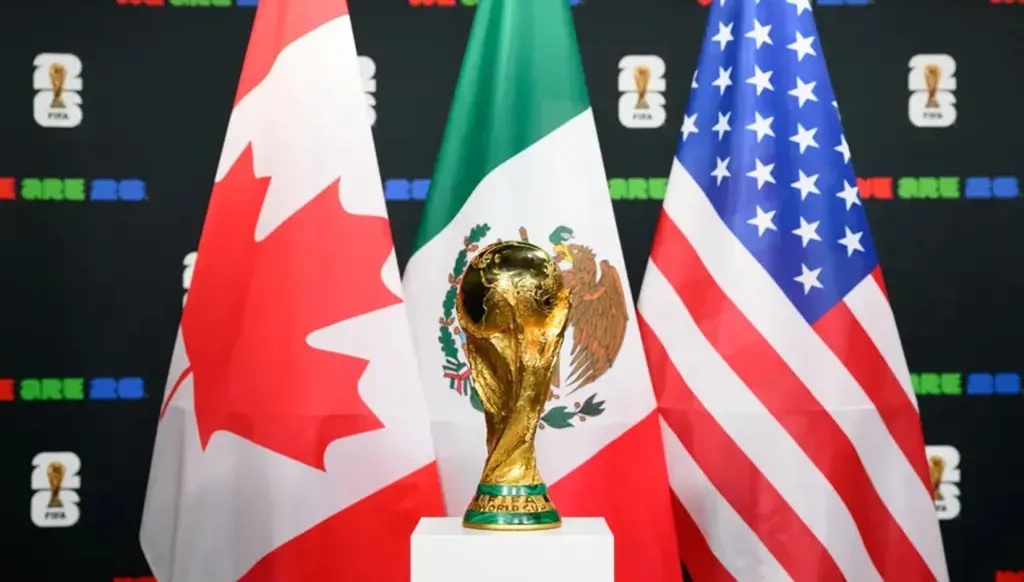
After 32 years, the tournament returns to the country—co-hosted with Canada and Mexico—bringing with it the question that has followed American soccer ever since: Is this the moment the game finally establishes itself in the land of Uncle Sam and becomes a major focus of interest alongside its successes?
The short answer, according to most in the game, is: “Anything less than the round of 16 is a failure.”
For Alexi Lalas, the former defender famous for his red beard who became one of the unexpected faces of the 1994 World Cup, “we can no longer accept low expectations.”
Alexi Lalas, now a TV commentator, added that “the opportunities and infrastructure we’ve built since 1994 were intended to produce better players. Anything less than reaching the round of 16 is ultimately a failure.”
The United States is preparing for the World Cup as it takes on Belgium in a friendly on Saturday.
At the South by Southwest Conference in Austin, players, officials, and media presented the game as being at a turning point.
A lot has changed over the three decades.
When FIFA granted the United States the right to host the 1994 edition, it was conditional on establishing a professional league—a step that, at the time, was seen as a leap into the unknown.
However, that trust paid off—first slowly, then all at once—as the American league attracted global stars like Argentina’s Lionel Messi, the winner of the 2022 World Cup, and achieved average fan attendance exceeding that of many European leagues.
Bettina Garibaldi, Director of Marketing and Communication for the local organizing committee for the 2026 World Cup in New York and New Jersey, said that it is “actually the third most popular sport in the United States, surpassing baseball.”
World Cup 2026. (Websites)
She added, “This ranking was officially released in January, so you can see how much the game is growing.”
100 Million interested
In the years following the 1994 finals, American soccer fans began to show significant interest in the game worldwide.
Nuria Tarre, Director of Marketing at Manchester City and the City Football Group, said, “There are already 100 million people interested in soccer in the United States. About 32 million say they are interested in Manchester City. The numbers are crazy.”
Owning New York City FC means converting fans—from casual World Cup viewers into committed supporters—has direct commercial motivations.
She noted, “There will be more eyes on the game, and possibly some newcomers. Everyone’s hope in the ecosystem is to turn this new attention into club support.”
No marketing campaign could have achieved what the 1994 World Cup did—making Americans care, even if only a little, about a sport long ignored.
The full stands sparked a surge of enthusiasm that extended its effects to youth programs for years.
Five years later, the U.S. women’s team offered something even more enduring.
The 1999 Women’s World Cup, held in the United States and ending with Brandi Chastain’s famous celebration after the final penalty shootout against China (0-0 in regulation and extra time), proved that soccer could capture the imagination of an entire nation.
"Barcelona Factory"
But the enthusiasm and expectations are not enough, according to former American player Jozy Altidore, who was clear about what needs to change.
Jozy Altidore said, “The academies abroad are much stronger. It’s like a factory. Messi leaves Barcelona, and (Lamine) Yamal appears. This is no coincidence.”
Building such a production line in the United States requires more than money.
Jozy Altidore believes the key is to create environments that challenge players rather than spoil them, “and that’s the only way to know what makes you a special player.”
He believes that real infrastructure means investing in the grassroots, not just elite facilities: “It’s beyond balls and shoes. It involves everything related to the game.”
Stuart Holden, a former midfielder who has become an analyst, said expectations have indeed changed, adding, “We’ve invested a lot in the game, and our expectations shouldn’t be like they used to be. There is now a realism that we should expect this group to reach at least fourth place, to get to the final.”
Carli Lloyd, a two-time World Cup winner who knows better than anyone what a tournament at home can mean, sees expectations from a different angle, saying, “The measure of success for this team… will be in the inspiration they give to the nation. That’s the power they have, and that’s what they control.”





 Messenger
 Whatsapp
 Threads
 Email
Email
 Print
Print
 X
X
 Facebook