

Algeria’s 2020 Constitution faces a shake-up: early elections and political power in focus



 Messenger
 Whatsapp
 Threads
 Email
Email
 Print
Print
 X
X
 Facebook


In rapid steps, the Algerian presidency began what it described as a “technical amendment” to the 2020 constitution.
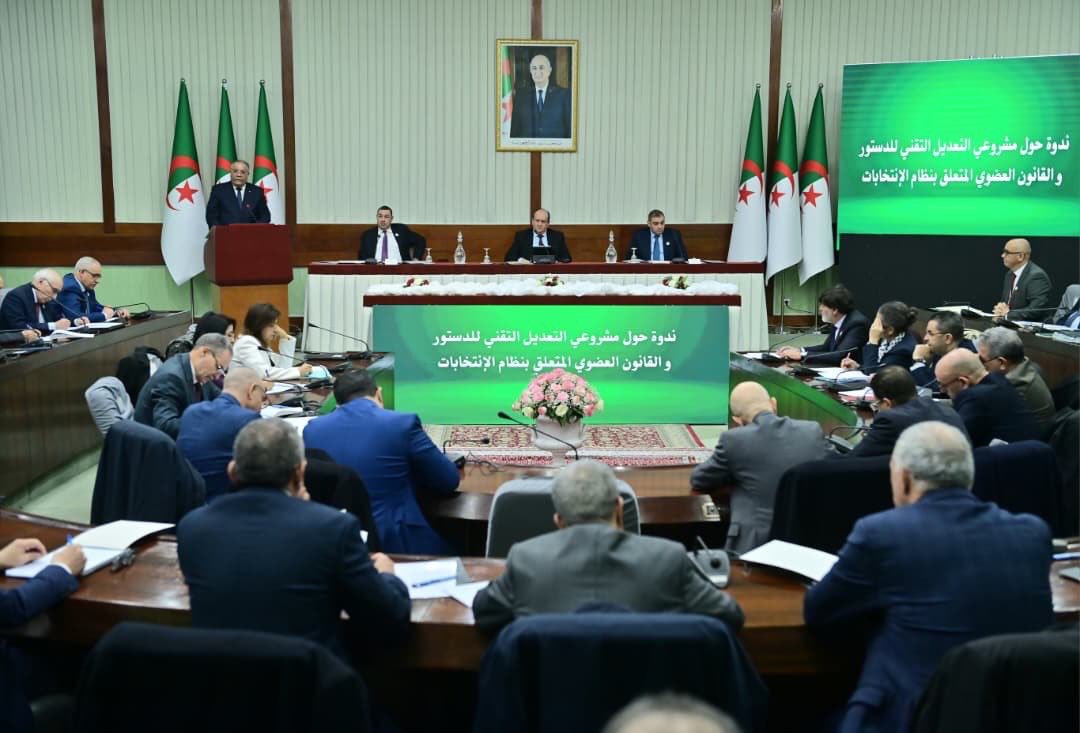
The head of President Abdelmadjid Tebboune’s office presented the proposed amendment during a recent national seminar, which was also dedicated to discussing the new election law, with the government and representatives of political parties in attendance.
The proposal included ten points affecting constitutional provisions, most notably granting the President the power to call early local elections and extending the term of the President of the Council of the Nation (the upper house of parliament) from three to six years.
These proposals sparked wide debate in the Algerian political scene, especially since the controversy, which began when the presidency announced its intention to introduce constitutional amendments, has focused primarily on the possibility of opening “presidential terms” (the number of terms a president can serve), which could allow President Tebboune to run for a third term in 2029.
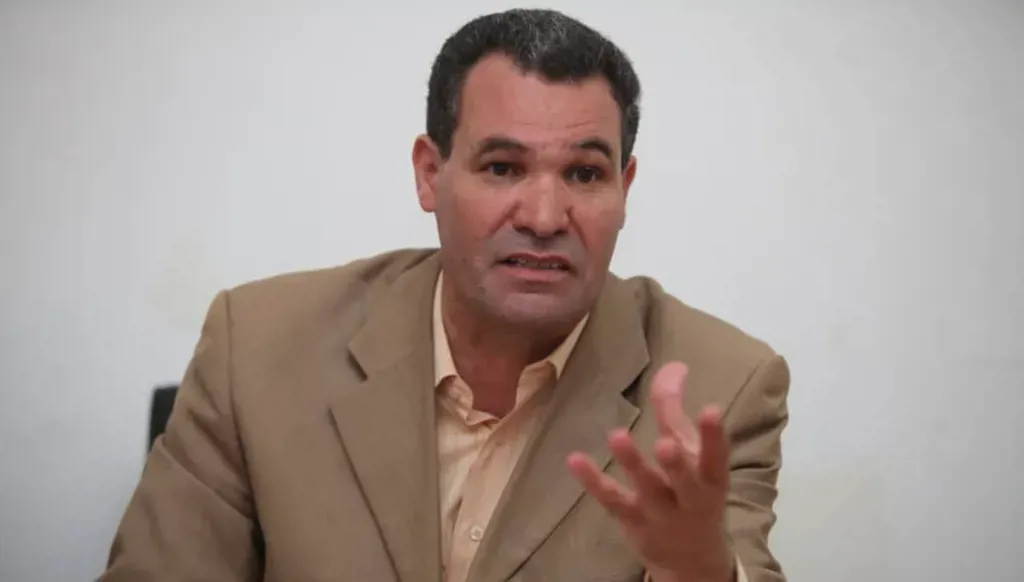
In this context, the head of the “New Algeria Front” party, Jamal Ben Abdel Salam, says that “granting the President the power to call early local elections is an old party proposal, adopted by the parties harmed by the 2017 elections, which were tailored to fit and produced the current political map.”
He explains in an interview with Annahar that “municipal elections, being held after the legislative elections, give an advantage in candidate lists and signature collection to parties that previously won, which the parties not represented in municipal councils consider a problem that requires review,” emphasizing that this situation “hinders the renewal of the political map and blocks the rise of new party currents to the forefront.”
The Algerian politician considers that this “supports the presidency’s proposal aimed at providing a constitutional basis for calling early municipal elections.”
Regarding the reasons for proposing an amendment to a constitution that has only been in force for five years, Ben Abdel Salam says that “the 2020 constitution was drafted under exceptional circumstances, both in terms of the impact of the popular movement and the repercussions of the COVID-19 pandemic, which made some of its provisions vague, especially in application.”
He calls for “introducing a degree of flexibility in some of its articles to allow smoother state management,” praising what he described as “a new tradition at the highest level of power, represented by involving the political class in discussing constitutional amendments and allowing alternative proposals, which is one of the positive features now characterizing the work of public authorities in Algeria.”
As for analyses suggesting that the ten proposed amendments are merely a prelude to deeper changes that could include opening or extending presidential terms, the head of the “New Algeria Front,” Jamal Ben Abdel Salam, rejects these assumptions, considering that “the discussions taking place on social media platforms cannot be relied upon.”
He adds: “Talk in the virtual space often does not rise to the level of serious thinking, and the proposed amendments confirm that the core of the constitution or the state’s choices are not being touched.”
President Tebboune had announced months earlier that he does not wish to continue in office after the end of his second presidential term in the fall of 2029, emphasizing that his current mission is limited to fulfilling the commitments he made to Algerians during his presidential campaign in September 2024, in which he received popular endorsement with a majority of votes.