




 Messenger
 Whatsapp
 Threads
 Email
Email
 Print
Print
 X
X
 Facebook
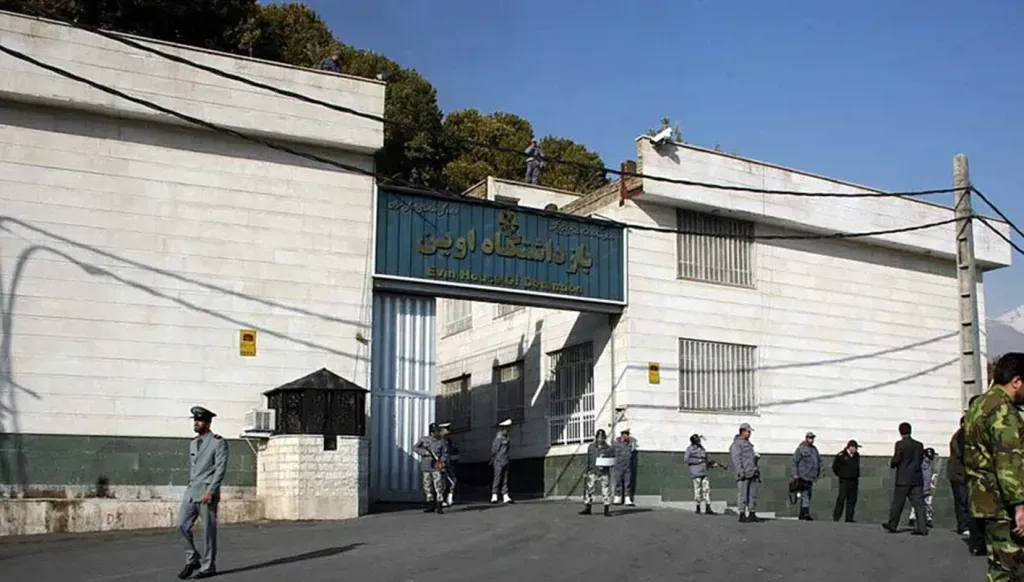


In the heart of Tehran, Evin Prison stands as one of the most prominent symbols of power in Iran. A place where politics and security intersect. With the expansion of the war, this prison has become more than just a closed space behind walls; it has turned into a direct contact point with the conflict, where thousands of prisoners suddenly find themselves in a military equation over which they have no control or escape.
In this context, The Wall Street Journal conveys narratives from within the prison, where Lindsay Foreman, a British citizen detained for a year, was bent over a landline phone in the seventh wing, informing her son about the start of the U.S.-Israeli air campaign. Outside, planes had been flying over Tehran for hours, while the sound of explosions drove the prisoners to take refuge under their metal beds.
"It has started," said Foreman, who was arrested with her husband on a motorcycle trip on spying charges that she denies. But the call was quickly cut off after a violent explosion shook the prison windows, which houses political dissidents and prominent figures.
In the fourth wing, the raids shattered windows and brought down interior walls, while a large number of guards left their posts, replaced by members of the Revolutionary Guards. The only store inside the prison was closed, exacerbating the suffering of the prisoners who mainly rely on scarce food rations, with some now living on stale bread and contaminated water, according to the newspaper. One detainee summed up the situation by saying, "The scene is chaotic."
According to the report, Iran holds about 200,000 prisoners, including political dissidents, protesters, and civilians who violated religious laws, along with a number of American and European detainees. These are held in a network of prisons, most notably Evin, in addition to secret detention centers belonging to security agencies.
The damage was not limited to Evin, as strikes also targeted Marivan Prison in western Iran. But Evin remains the most symbolic, embodying the reality of the repressive regime, while simultaneously representing a symbol of change hopes for its opponents.
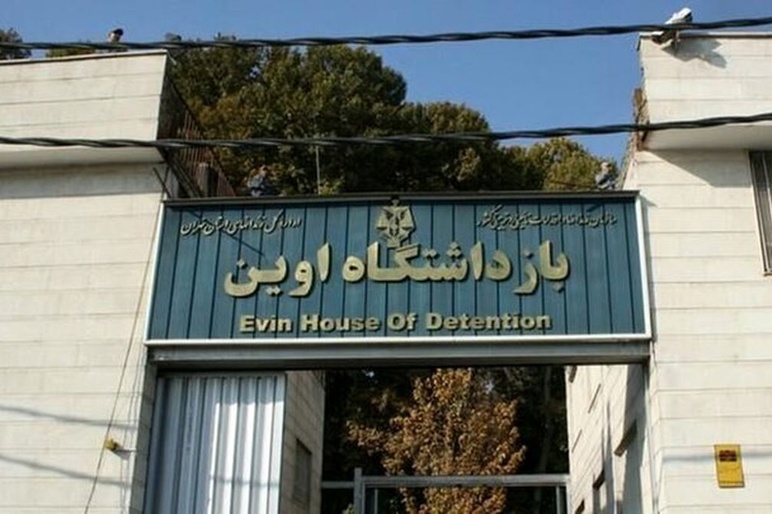
The newspaper reports the double anxiety among the families of prisoners: from a regime that threatens their sons with execution and from raids that could strike them. Last June, Israeli strikes targeted parts of the prison complex, including cells, the clinic, and the visitor center. The Israeli military stated it targeted the prison due to intelligence activities inside, affirming that the strike was executed precisely to avoid harming civilians.
However, the recent strikes heightened panic within the prison, as dozens of detainees from Section 209, heavily guarded and belonging to the Revolutionary Guards' intelligence, were moved to unknown locations without prior notice. Their families have no knowledge of their fate, amid fears of them being used as human shields.
Conversely, the Israeli military issued warnings to residents of the areas surrounding the prison to evacuate, considering that staying there puts their lives at risk.
Information indicates that there are at least three Americans detained in Evin, including Kamran Hakmati, who has bladder cancer, journalist Reza Vali Zadeh, and Craig Foreman, Lindsay's husband, all held in the fourth wing designated for prominent political prisoners.