Trump’s war with Iran sends shockwaves through global economy and security
From soaring oil prices and disrupted trade routes to political turmoil and migration fears, the conflict in Iran is sending ripples across the world—impacting China, Europe, Ukraine, and beyond.
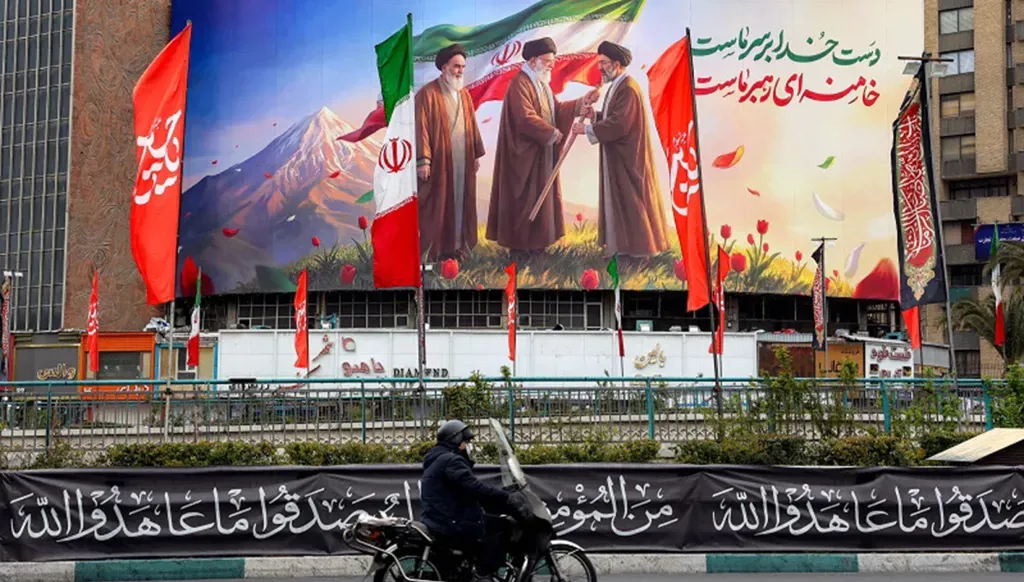
A man rides a motorcycle past a billboard in Valiasr Square in central Tehran. (AFP)
Since U.S. President Donald Trump launched a new war with Iran, he has described it as a shocking and horrific attack that would not have lasting consequences, particularly for Americans. On Monday in Florida, he characterized it as a “short-term disruption.”
Experts say it is rapidly turning into something entirely different: a shock to the global security system and economy that far exceeds those caused by other recent conflicts in the Middle East, according to a report from The New York Times.
Donald Trump’s war, now stretching past two weeks, has already started reshaping travel patterns, energy reliance, living costs, trade routes, and strategic partnerships. Countries typically insulated from regional conflicts, like Cyprus and the United Arab Emirates, have faced retaliatory fire from Iran. The ramifications could disrupt the U.S. midterm elections, alter war calculations in Ukraine, and force China into a major economic shift.
These effects might worsen if Trump continues with the war, especially if Iran escalates its counterattacks and disrupts shipping through the Strait of Hormuz, a vital oil transit passage. Some economists are already recalling a president's worst nightmare: the specter of stagflation triggered by an oil shock, with stagnation and soaring prices.
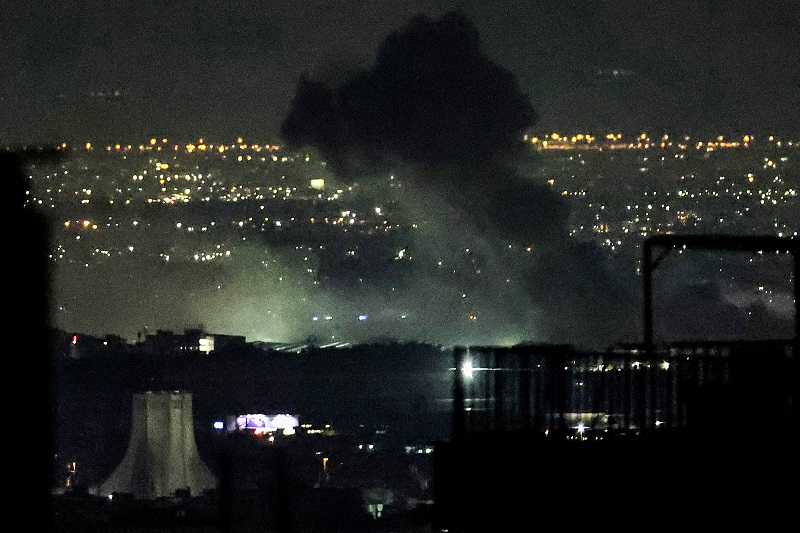
The war has a direct and deep impact on the Middle East. Attacks across the region have killed more than a thousand people and caused significant damage to vital infrastructure and the environment, resulting in plumes of toxic smoke and black rain over Tehran following Israeli strikes on fuel depots.
Iran has launched more attacks on Gulf states than on Israel, according to a U.S. war observer, targeting five-star hotels and damaging desalination plants.
Columns of smoke rise from the site of airstrikes near Azadi Tower in western Tehran (AFP).
For much of the rest of the world, one of the war's first tangible effects has been a spike in gasoline prices. As oil tankers stopped passing through the Strait of Hormuz, oil prices surged to over $100 a barrel in global markets, despite dipping slightly in recent days. French President Emmanuel Macron said Monday that his country would send 10 warships to the area, possibly to escort ships through the strait.
In recent days, Trump administration officials and European leaders have explored options to lower gasoline prices, which have risen with the spike in global oil prices. Economists have begun warning that a prolonged oil crisis could lead to soaring commodity prices across various economies, burdening economic growth — a fate similar to the stagflation that followed the Iranian revolution in 1979.
The loss of access to cheap oil poses an emerging risk for China, but it is not the only danger. Chinese exporters are increasingly dependent on Middle Eastern consumers. The disruption of Middle Eastern economies could limit Chinese goods sales there, weakening China's own growth.
Conversely, the rising oil prices benefit Russia by boosting oil revenues that help finance Moscow's war machine in Ukraine. Europeans are also concerned that fierce fighting in the Middle East might indirectly harm Ukrainian defenses: the more interceptor missiles the U.S. and its allies use against Iran, the fewer missiles available for Ukraine to defend itself against Russian attacks.
In the United States, the war seems to have already become a political burden for Trump. It enjoys relatively little popular support compared to past wars. Democrats are leveraging the rising energy costs to gain voter support ahead of the midterm elections, which were already focused on the soaring cost of living.
Publicly, Trump has boasted about the military might the U.S. and Israel have injected into the war while offering shifting explanations for the reasons behind the attacks on Iran and varying timelines for their resolution. He acknowledged some of the war's costs, including the American soldiers killed.
Trump has largely dismissed other downsides, such as rising oil prices, as temporary. He has worried allies by offering few concrete plans for how the Iranian government will function post-war.
In Europe, this has raised fears of an economic collapse in Iran, potentially leading to new waves of migrants crossing the Iranian-Turkish border. For Europeans, it evokes memories of the migration crisis a decade ago, when conflicts and poverty in the Middle East and Africa drove more than a million people to seek refuge in Europe, resulting in a right-wing backlash in countries like Germany.





 Messenger
 Whatsapp
 Threads
 Email
Email
 Print
Print
 X
X
 Facebook


 Columns of smoke rise from the site of airstrikes near Azadi Tower in western Tehran (AFP).