

Hasakah and al-Sharaa's approach to power-sharing



 Messenger
 Whatsapp
 Threads
 Email
Email
 Print
Print
 X
X
 Facebook
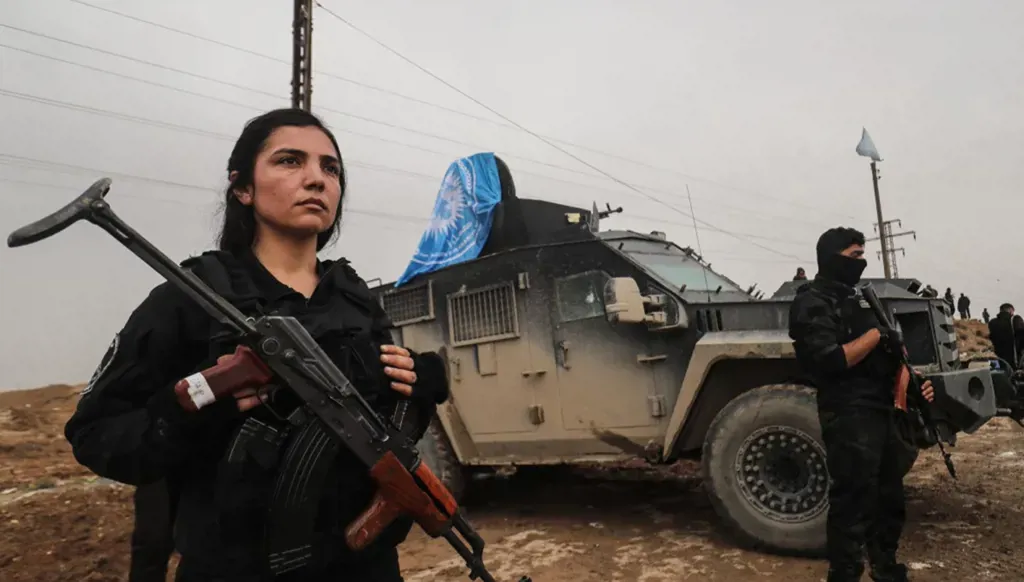


The agreement between the Syrian government and the Kurdish SDF entered the phase of field implementation in Hasakah, the eponymous capital of Syria's northeastern governorate. Units from the Ministry of Interior have begun to deploy throughout the city as a prelude to their adoption of security responsibilities. However, the nature of the deployment suggests a different model than previously pursued in other areas.
In Hasakah, a convoy belonging to the Ministry of Interior, consisting of about 15 armored vehicles carrying between 100 and 125 personnel, entered the city via the al-Hol axis. According to field monitoring, the deployment was limited to the central area surrounding government institutions, while other neighborhoods remained under the control of the Asayish forces of the SDF. This limited implementation pattern was accompanied by an official confirmation that the step comes as part of the "executive phase" of the agreement and aims to ensure a smooth transition of the security situation; realities on the ground showed that the takeover was not comprehensive, neither geographically nor functionally.
The same applies to the nearby city of Qamishli, where Syrian internal security is expected to be stationed only at the city airport and government centers.
The SDF continues implementing parallel security measures, including intensifying checkpoints and arresting individuals in both Hasakah and Qamishli. Despite the Ministry of Interior's arrival, security authority remains effectively distributed, and a full transfer of security control on the streets has not occurred.
Two Narratives for Implementation
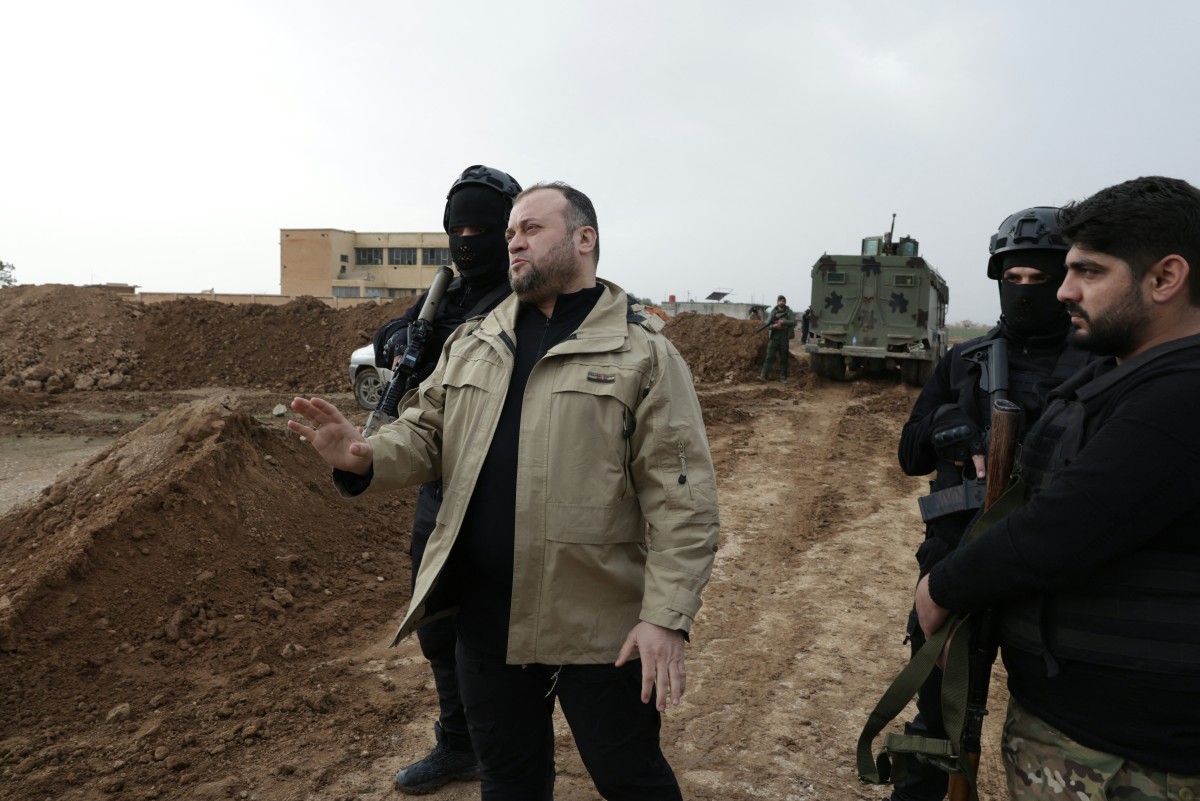
The differences are not limited to facts on the ground. Marwan al-Ali, the head of internal security in Hasakah, spoke of Syrian security forces remaining in their positions, noting that the integration of the Asayish into the Ministry of Interior will proceed after implementation of the recent agreement. His deputy Siamand Afrin, an SDF leader, offered a different description of the deployment, stating that most internal security personnel would leave within hours, with only a limited number (15 personnel) staying for one month to restart institutions before departing upon completing the task.
This difference in describing the nature of the deployment likely reflects the nature of the agreement itself, which stipulated a "gradual integration" of military and administrative forces without specifying detailed mechanisms or a binding timeline, opening the door for a flexible phased implementation and allowing multiple interpretations depending on the position and role of the spokesperson.
Why Hasakah Specifically?
Adopting this flexible model in Hasakah appears to be more of a calculated political choice than a technical detail. The governorate differs from Raqqa and Deir ez-Zor in terms of demographic sensitivity and the complexity of its social structure, as well as hosting high-stakes security and political issues. Additionally, Damascus seeks to avoid opening a new front at a delicate transitional moment, while the SDF aims to maintain key leverage during the integration phase.
This approach explains the clear difference from other areas where government forces entered as full security authorities, such as in Raqqa and Deir ez-Zor, or where the process ended in direct military resolution, as in the Sheikh Maqsoud and Ashrafiyah neighborhoods of Aleppo. In Hasakah, a formula of partial deployment and delayed resolution of sensitive issues is being applied.
It is also noted that this approach coincided with advanced French interest in the file, prior to the start of field implementation, which may have influenced considerations shaping the agreement and its execution, without amounting to direct political sponsorship or being the sole decisive factor.
ISIS Prisons: An Explanatory Factor
The issue of ISIS prisons is also likely a key factor driving the agreement and its implementation. The understandings keep the protection of these prisons in SDF hands, a notable exception in the context of a security and administrative integration that would theoretically restore the state’s sovereign functions.
However, this exception is likely a response to international priorities on preventing security vacuums in highly sensitive areas, and does not indicate broader security independence. It also explains the international support for a cautious and partial implementation.
Open Constitutional and Political Questions
The leak of the agreement’s provisions and its early implementation have raised serious constitutional and political questions. The agreement granted the SDF the authority to nominate the governor of Hasakah and a deputy defense minister, contrasting with the provisional constitutional declaration which states that these appointments fall under presidential authority, without granting any “right of nomination” to any other party.
The question here is not only legal but political: does it constitute a change in perpetuity or does Damascus see the move as a temporary concession in a transitional phase? Does it set a precedent that other regions might demand? The agreement provides no clear answers, but these questions remain central in evaluating outcomes.
The ambiguity is heightened by the absence of an official full version of the agreement, with only conflicting leaks available, reinforcing the transitional and unresolved nature of the ongoing understandings.
Divergent interests
In this process, the parties’ interests intersect without fully aligning: Damascus bets on gradually restoring sovereignty at minimal cost; the SDF aims to maintain the core of its de facto influence temporarily; international powers focus on preventing security lapses in sensitive files; and local communities seek to avoid a new vacuum that could reignite violence.
An Agreement Without a Final Definition
Based on the above, what is happening in Hasakah cannot be described as a full imposition of central authority, nor as a clearly-defined decentralized model. It appears closer to a third, flexible and gradual path, managed through executive understandings rather than decisive legal texts, intertwining local, regional, and international considerations.
Hasakah may prove to be an exception but it is also a testing ground for how the Syrian state manages transition without a clear constitutional framework. The success or failure of this path will depend on its ability to move from temporary arrangements to a stable format. Until then, Hasakah remains an open test of the meaning of sovereignty and how it is managed during a time of transition.