

America and the Kurds: Alliances with an expiry date



 Messenger
 Whatsapp
 Threads
 Email
Email
 Print
Print
 X
X
 Facebook
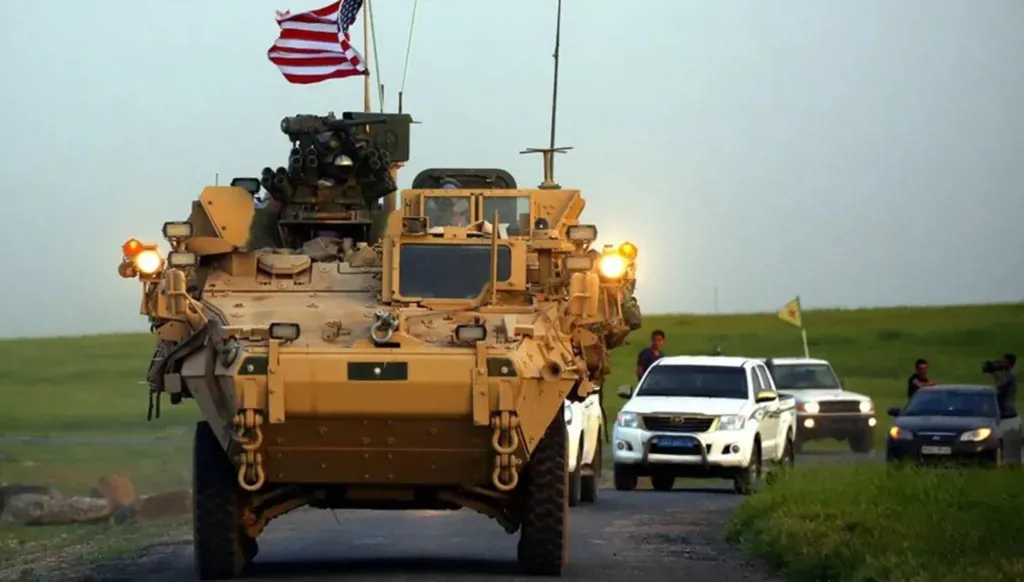


The Kurds of Syria are not deluded about America. This sole great power has only one true friend: itself, and a pampered daughter to whom it gives its affection and love to no one but herself. Aside from America and Israel, the rest of the world, with all its races, ethnicities, and conflicts, is for the United States nothing more than policy.
The swift, dramatic end of the Syrian Kurdish forces, and the end of the Kurdish dream of self-rule in Rojava in northeastern Syria (a Kurdish-run area), came within this blunt context of American policy in the region. Alliances are not eternal marriages or irreversible adoptions, but work contracts with an expiration date. The Kurds and the Americans shared a need to confront the expansion of “ISIS,” the terrifying Frankenstein of the East. Amid the catastrophic chaos of Bashar al-Assad’s regime, the relationship between Syria’s Kurds and the Americans was necessary and legitimate, but temporary. Now, as the region is being reordered around the priority of good relations with Turkey, and Syrian acquiescence to Israel’s effective control of southern Syria, the relationship with the Kurds is no longer necessary. Their return to the embrace of the new state, with American guarantees, remains the lesser of two evils, and better than leaving them with nothing but the mountains, caught between the jaws of Recep Tayyip Erdoğan and Ahmad al-Sharaa.
America always produces the bitter antidote at the final moment, as a savior whose harsh side effects are unavoidable, and it is seized with bitterness by the less fortunate partners, this time the Kurds of Syria.
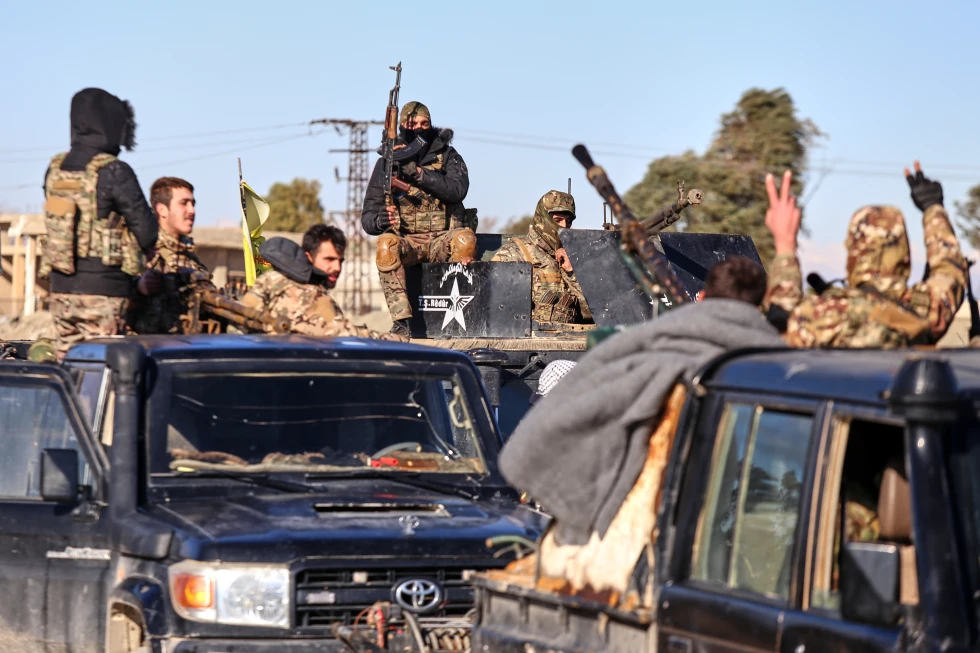
It is not that America distinguishes between a “good” Kurd in Iraq and a “bad” one in Syria; rather, the partnership between the Americans and Iraqi Kurdistan is much older, dating back to when Saddam Hussein invaded the State of Kuwait and George Bush moved to liberate it, allying from that moment with the Iraqi Kurds. The United States established a no-fly zone over northern Iraq to protect the Kurds from the Baath regime and to allow them to declare the Kurdistan Regional Government, which had its own military forces and oil fields. The Kurdistan Region later became constitutionally recognized within the new federal Iraq, on the border with the Islamic Republic of Iran, the United States’ longstanding adversary. It is a partner that possesses the resources required for partnership and offers far greater ethnic cohesion than Iraq’s other two components, Shiite and Sunni.
What is permissible for the Kurds in Iraq, then, is forbidden for the Kurds in Syria. Geography is not on the side of the latter, nor is demography, nor are the interests of the states competing in and over the region. President Ahmad al-Sharaa has avoided, or is still trying to avoid, a “federalized” fate for Syria. He has never hesitated to reassure America and Israel and has shown readiness to go to the very end in forging a partnership with the Americans. He has obtained what he wants, for now at least. While the U.S. administration sees its friendship with him as necessary and legitimate, it remains, as always, temporary, pending what the winds will reveal for the sails of the Iranian ships and for the sails of the entire Middle East. That region, whose storms have never truly calmed, is now experiencing its greatest tempest ever, one that does not distinguish between religions, ethnicities, or natural and artificial borders, and will therefore not, by nature, pay attention to the “minor” differences between an Iraqi Kurd and a Syrian Kurd. They are merely raging winds.