

From bazaars to Tehran: Iran’s protests challenge the regime
What began as outrage over a collapsing currency has ignited nationwide demonstrations, defying fear and challenging decades of authoritarian rule.




 Messenger
 Whatsapp
 Threads
 Email
Email
 Print
Print
 X
X
 Facebook
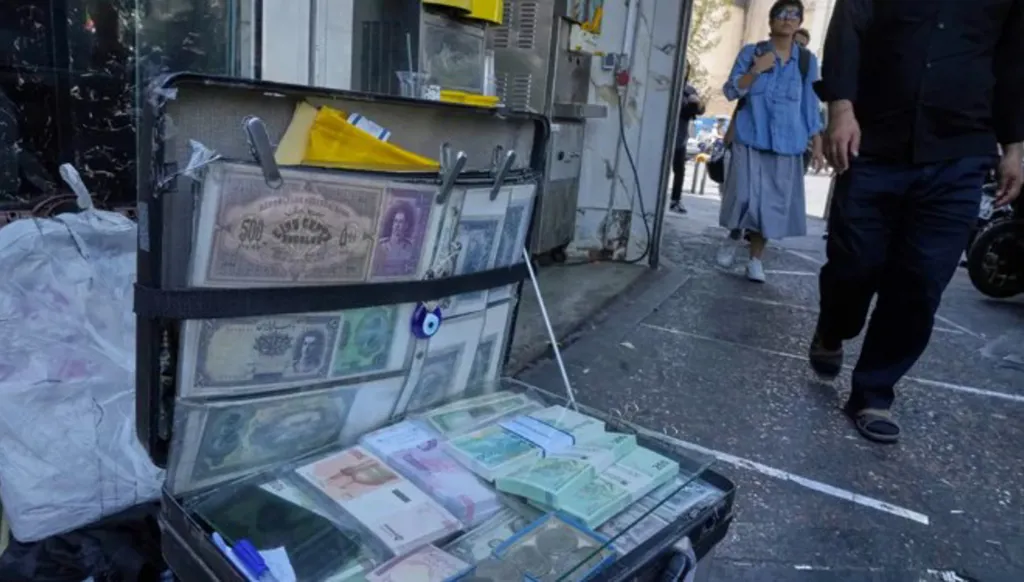


The recent wave of protests in Iran was triggered by a sharp surge in the U.S. dollar exchange rate - or, more precisely, by the sudden collapse of the national currency. The initial spark came from bazaars and shopping centers, where merchants went on strike and shuttered their shops, before the unrest quickly spread nationwide. The protests soon reached cities traditionally regarded as strongholds of the religious establishment, as well as neighborhoods in the capital, Tehran, and other major cities.
It is clear that the currency was only the spark, while the real fire lies in decades of poor governance at various levels.
In this context, Iranian activist A.S., speaking from Tehran to Annahar on condition of anonymity, lists a series of accumulated crises: chronic inflation, unemployment, poverty, widening social gaps, international sanctions, rampant corruption, political repression, restrictions on public freedoms and freedom of expression, widespread internet censorship and blocking, and environmental degradation and suffocating pollution recently culminating in shortages of electricity and water. He adds: "The regime has failed to provide the most basic components of a healthy state: prosperity, the rule of law, dignity, and the ability to live normally."
On the other hand, the regime lavishly spends billions of dollars on the nuclear program and on supporting militias in the region, at the expense of investment in infrastructure, industry, and the building of normal relations with the international community. As a result, according to A.S., there is “a deep economic and developmental decline that deprives Iranians of any prospects for the future.”
Beyond reform: Targeting the entire regime
The expanding protests in Iran are not the first the country has witnessed, but what distinguishes them from previous waves, according to A.S., is the clarity of their objective: “Protesters are no longer demanding partial reforms or addressing specific issues; they are now targeting the regime as a whole.”
The chants reflect this shift, with slogans such as “Death to the dictator” now prevailing, rather than a focus on specific demands, as was the case during the “Woman, Life, Freedom” protests in 2022 following the death of the young Mahsa Amini in detention after her arrest for not wearing her hijab properly, or in 2009 after the announcement that President Mahmoud Ahmadinejad had won 63 percent of the vote despite numerous reported irregularities.
A.S. confirms that the main demand went beyond lowering the dollar rate or curbing inflation, “to become the end of the existing ruling regime and its replacement with a normal, accountable, democratic government based on development.”
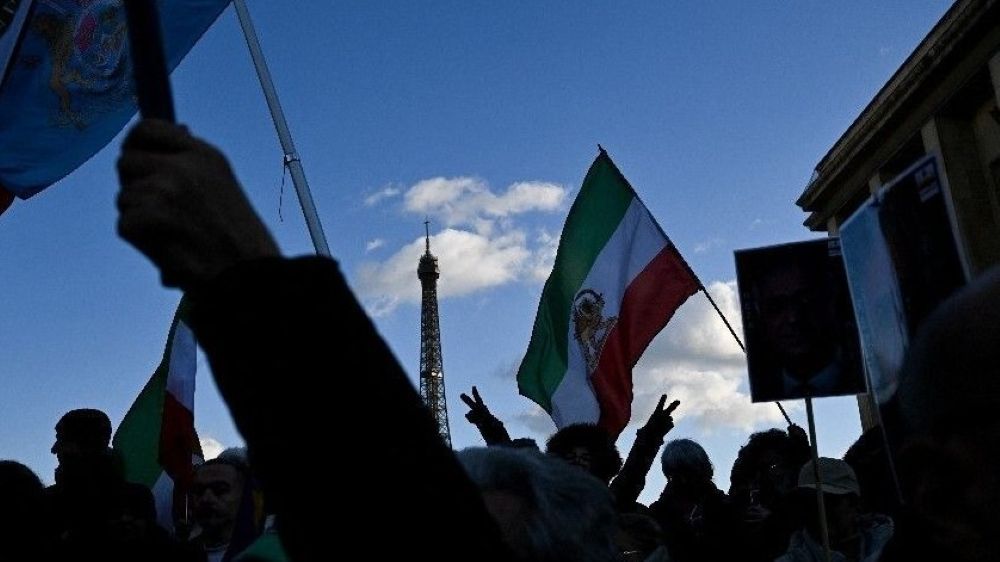
Perhaps the most prominent and politically sensitive element is the public support for the son of the former Shah of Iran, Reza Pahlavi, as a potential alternative. Protests have often lacked a clear political project - except during the “Green Revolution”, when millions protested alleged vote-rigging in the presidential election - and the regime has long drawn strength from the weakness of its main adversaries, including the exiled opposition group "Mujahedin-e-Khalq" and Reza Pahlavi, and from their lack of a popular base inside the country.
It was therefore notable how radical the shift is compared to previous movements, which lacked a clear political alternative. Today, the Iranian activist says, “Many protesters see Reza Pahlavi as a symbolic leader for a transitional phase ending the rule of the Islamic Republic.”
Crushing the fear
The scope of the protests continues to expand daily, reaching areas traditionally considered conservative and off-limits to rebellion against the regime, signaling a qualitative shift in public sentiment. As the unrest spreads, security forces have increasingly resorted to violence, with videos shared by activists on social media showing clashes between protesters and authorities, as well as the use of tear gas to disperse crowds.
However, the protests remain, according to A.S., spontaneous and decentralized: "Any protest movement in Iran is considered illegal and faces severe repression, often taking a bloody turn, as security forces open fire or target faces and eyes to inflict permanent disabilities."
To minimize the risk of persecution, protesters have adopted decentralized tactics, gathering at multiple locations simultaneously before quickly dispersing and regrouping elsewhere. The activist emphasizes that “there can be no talk of a single field leader,” while noting that “what we are witnessing is exceptional courage.”
The myth of "foreign intervention"
In response to the protests, the regime has reverted to blaming foreign entities for inciting them. Yet, as the activist points out, this narrative is a familiar refrain repeated with every internal movement in Iran: “How can it be claimed that a people living for decades under inflation, oppression, and poverty - where the minimum wage is barely $100 a month - are a satisfied population, or that they are acting on behalf of foreign agendas?”
These accusations serve only as a tool for intimidation, a justification for violence, and an attempt to avoid addressing the real reasons behind popular anger.
Seven dollars, one insult
About nine days after the protests began, authorities dismissed the central bank governor - but the move did little to slow the rising dollar exchange rate, which continued to climb. Reports indicate that at least 30 people have been killed, while videos circulating online show violent crackdowns that have failed to deter protesters, instead fueling their anger.
The government’s decision to provide a monthly allowance of roughly seven dollars was met with widespread ridicule and anger, especially since the amount doesn’t even cover “one kilogram of meat.” Many Iranians saw it as an insult rather than a solution. The worst part, according to A.S., is that such policies worsen the crisis by injecting liquidity without implementing structural reforms, driving inflation higher and reinforcing the widespread perception that the regime “lacks the capability and the will to carry out real reform.”
In the streets of Iran, the message is even more direct. What began in the bazaars has quickly evolved into a challenge to long-standing political and psychological taboos. For the first time in years, fear itself appears to be breaking.