

Middle East power shifts: Insights from Bernard Haykel
Conflict, diplomacy, and economic pressures are testing the region’s fragile balance, from Lebanon to the Gulf.



 Messenger
 Whatsapp
 Threads
 Email
Email
 Print
Print
 X
X
 Facebook
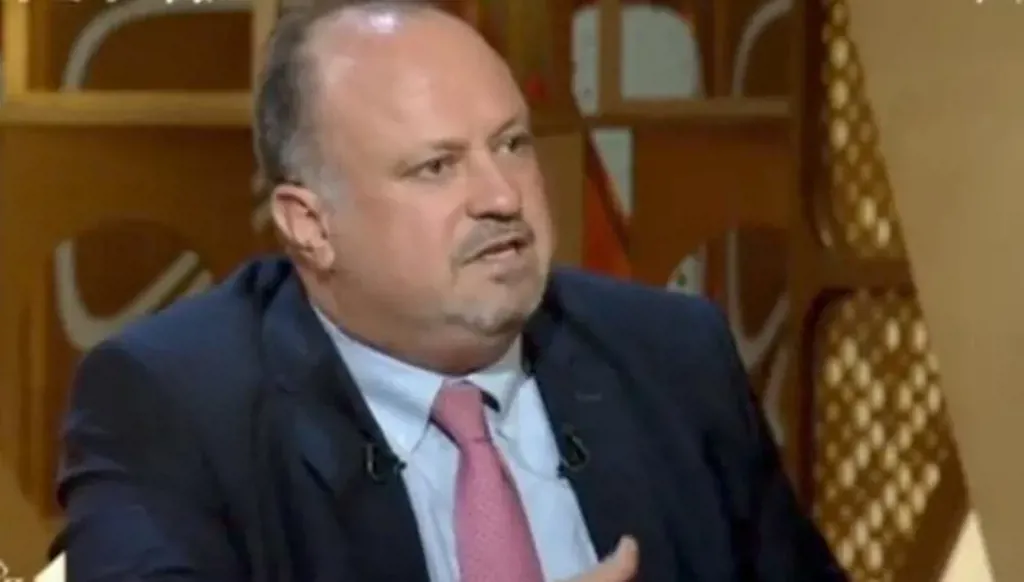


Professor Bernard Haykel, a professor of Near Eastern Studies at Princeton University, believes that the Iranian regime, despite its weakness, is likely to withstand the current war, though the conflict could lead to major global economic disruptions. He considers Lebanon’s stability to be linked to resolving the Hezbollah issue, which Israel believes can only be achieved by weakening Iran. At the same time, Saudi Arabia has shifted its regional policy, tying normalization with Israel and contributions to Gaza’s reconstruction to clear concessions and conditions, while Lebanon is no longer a strategic priority. Ultimately, the region’s future remains connected to the outcome of the conflict with Iran and the ability of local powers to limit the impact of external interventions.
Haykel told Annahar that the outcome of the war is still uncertain, but the Iranian regime appears relatively cohesive, with its security agencies and the Revolutionary Guard remaining united and possessing significant capabilities in drones and missiles. Although the war will weaken the regime, it is unlikely to collapse or surrender, contrary to what former President Donald Trump might have assumed. Internal opposition in Iran is fragmented and lacks unified leadership.
Major economic disruption
If the Strait of Hormuz were closed, Gulf countries like Kuwait, Saudi Arabia, and the UAE would be unable to export oil and gas, forcing them to temporarily halt production. This would cause a sharp rise in global oil prices, leading to significant economic disruption. If Iran escalated and attacked critical infrastructure such as water desalination plants or power stations, the consequences could be catastrophic, as these countries cannot easily defend against drone swarm attacks.
Escorting oil tankers
Haykel doubts that the United States could escort and secure oil tankers in the Strait of Hormuz on its own. Many U.S. naval assets are already engaged in military operations, and insurance companies would not cover such high risks. This type of operation has never been attempted before, meaning Washington would require broad international support to carry it out.
Disarming Hezbollah, not occupying Lebanon
Haykel believes that Israel is not seeking a permanent occupation of Lebanese territory. Its primary goal is to disarm Iran-backed Hezbollah. However, the Lebanese government has been unable to achieve this due to its weakness, internal divisions, and fear of triggering a civil war.
Hezbollah remains strong thanks to direct support from Iran’s Revolutionary Guard. Haykel argues that resolving the Hezbollah issue must come from within Lebanon itself, through a decision by Lebanese actors to stop acting in the interests of external powers such as Iran, Saudi Arabia, or the United States. As long as these external loyalties continue, Lebanon will remain divided and its state weak.
Washington views Lebanon primarily through the lens of Israeli security. Its demands focus on disarming Hezbollah and implementing reforms in the state and banking system. The United States may also support Lebanon joining the Abraham Accords as part of its regional policy, according to Haykel.
Saudi policy toward Lebanon has changed dramatically
Regarding Saudi Arabia’s stance on Lebanon, Haykel says the kingdom is no longer willing to provide unconditional financial aid to Lebanon, after billions of dollars were stolen in the past by corrupt politicians. Lebanon is no longer considered a strategic priority or a security threat for Saudi Arabia. Nonetheless, Riyadh wants to see Lebanon stable and prosperous and may consider profitable investments, but the previous system of political patronage has ended.
Saudi normalization with Israel depends on major concessions
Even after this war, Haykel believes Saudi Arabia will not join the Abraham Accords without significant concessions from Israel and the United States. These concessions would include a clear path toward a Palestinian state, a mutual defense treaty with the United States, a nuclear agreement, and better terms for purchasing American weapons.
Participation in Gaza reconstruction
Saudi Arabia and other Gulf states are willing to fund Gaza’s reconstruction, but this is conditional on a full Israeli withdrawal, disarming Hamas, and reforming the Palestinian Authority, which is accused of corruption. According to Haykel, these countries will not provide military forces or major political commitments without these conditions.
Israel seeks to expand its regional influence
Following recent military successes, Haykel notes that some right-wing currents in Israel have ambitious goals, such as occupying parts of Syrian territory, encouraging the creation of a weak, federal Syria, and ultimately defeating Hezbollah by weakening its main backer, Iran.
However, Israel’s power has limits, particularly in ground wars. Despite superiority in air power and intelligence, it cannot maintain large-scale, long-term occupations in countries like Lebanon or Syria. Therefore, its strategy focuses on weakening Hezbollah, with the belief that a complete defeat of the group would only be possible if the regime in Tehran falls.
Professor Haykel has deep personal roots in Lebanon. Born in 1968 to a French-Lebanese father and an American mother, he left Lebanon in 1984. He comes from the village of Niha in in the Batroun District of northern Lebanon, which he visits regularly and where he owns a farm. This personal background gives him a unique perspective on the Lebanese situation.
His new book, expected at the end of this year, examines Saudi Arabia’s political, social, and economic history from the 1980s to the present. It also explores the origins of Crown Prince Mohammed bin Salman’s ideas, evaluates the implementation of his reforms, and assesses their outcomes. The research draws on extensive interviews with Saudi officials, opponents, and different segments of Saudi society.