

War pushes MPs to consider postponing elections
Delays for Lebanon's parliamentary elections were already being discussed; the war has given them new urgency. The question is for how long.



 Messenger
 Whatsapp
 Threads
 Email
Email
 Print
Print
 X
X
 Facebook
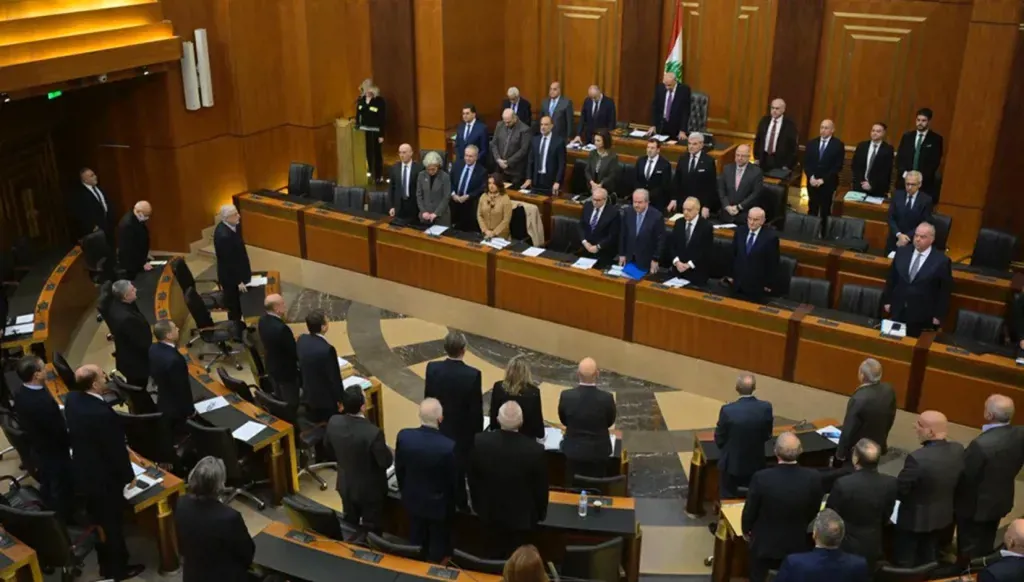


So far, 59 candidates have registered. The day before yesterday, the day Hezbollah dragged the country into the growing regional war, only two nominations were recorded.
This updated count was revealed by the Ministry of Interior to Annahar, confirming that nominations are continuing despite a slowdown due to political uncertainty and the intensity of military and security developments.
As the drums beat for a new round of destructive war, what is the fate of the parliamentary elections? What of the extraordinary session of Parliament that had been planned for March 2 to 16? Does canceling the session also mean canceling the elections?
According to Annahar’s sources, several proposals are being discussed to delay elections, with the war serving as an easy justification for those already favoring the measure.
Practical obstacles to holding the elections in May are becoming increasingly clear, especially since only a few days remain before the end of the nomination period on March 10.
According to available information, among the proposals being discussed behind the scenes are three options: the first is to postpone the elections for six months, the second to postpone them for a year, and the third to schedule them after two years.
One of these solutions would have to be approved if a legislative general session were held soon, following an agreement as a “way out” among the three leaders. But what chance is there of holding a general session amid such unstable security conditions?
In practice, serious efforts to delay the elections are already underway within the corridors of Ain Al-Tineh and the government palace, in coordination with the President of the Republic. Several MPs are working along these lines, including Parliament Deputy Speaker Elias Bou Saab and MP Neemat Frem.
These reports align with sources from the Parliament Bureau, which have not been informed of any upcoming meetings in preparation for a legislative session, since security conditions make it necessary to wait. Observers note that “the fate of the extraordinary session depends on any agreement being worked out among the three leaders regarding the elections under the current circumstances,” pointing out that “the latest meeting between Parliament Speaker Nabih Berri and Prime Minister Nawaf Salam went in this direction.”
As for the proposals now formally before Parliament, there is a proposal submitted by MP Adib Abdel Masih, which could serve as an introduction to extending the mandate and defining its duration.
In Abdel Masih’s proposal, he requested a one-year extension “because after the extension, the draft law becomes effective, and we do not need a new law to extend it further.”
A proposal by MP Neemat Frem has also emerged, also discussing the possibility of postponing the elections. According to Frem, “If a postponement is necessary, we should enter a deep foundational period, starting with a new election law that establishes a Senate alongside the Parliament and adopts a new electoral mechanism.”
Thus, the fate of the extraordinary session currently appears to be on hold. Information had indicated that some agreement had been reached between President Joseph Aoun and Speaker Nabih Berri on “a way out” regarding the elections, and on that basis, the decree calling for the opening of the extraordinary session was signed. However, the winds of war quickly shifted priorities.
In the end, Parliament and the country face multiple options, depending on how the security situation develops. The elections could be technically postponed for six months, or the period could be extended up to two years. The exact form of the solution is still expected to take shape. Will it come as a government bill or a parliamentary draft law to extend the Parliament’s mandate, and with it, postpone the parliamentary elections?
Alongside the security situation, some issues that were already unresolved in the current election law have resurfaced as priorities, including the “mega-center” system. The recent war has made adopting the “mega-center” an urgent priority if the elections remain on schedule, given that voters in the south may not be able to vote in their towns and villages.
All of this indicates that we are now very close to postponing the elections, at least for a few months… while waiting for the plan to take shape.