

Will Israel launch a full-scale invasion in Lebanon?
As speculation grows over a new Israeli ground operation, military experts highlight strategic targets, Hezbollah strongholds, and the geopolitical stakes in Lebanon’s southern and border regions.



 Messenger
 Whatsapp
 Threads
 Email
Email
 Print
Print
 X
X
 Facebook
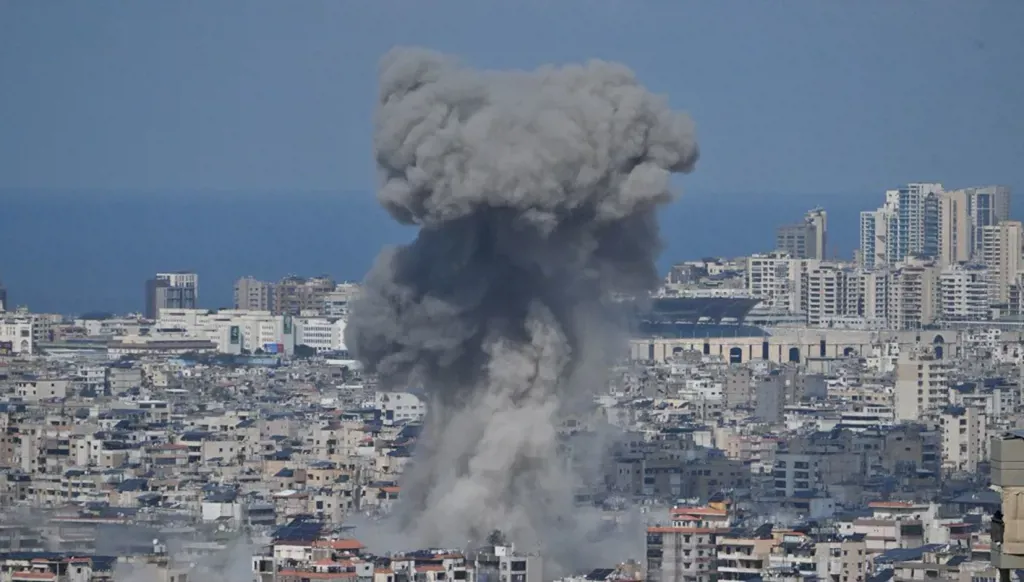


Speculation about a new Israeli ground invasion in the south is intensifying by the hour, with several frontline towns reporting incursions and French President Emmanuel Macron cautioning Israel against escalation.
Israel has invoked several pretexts over its history of invasions into Lebanese territory, which practically began in the 1970s and peaked with the summer 1982 invasion. In that incursion, Israeli forces reached Beirut and successfully expelled the Palestinian Liberation Organization's forces from the country.
The current pretext is the destruction of Hezbollah's remaining capabilities especially since it breached the ceasefire agreement last Monday morning by firing its first six shells into Israeli territory.
The action has opened the door to a ground invasion, which Israel signals it is openly considering. Meanwhile the Lebanese army has redeployed along all front borders with Israel, and UNIFIL forces have concentrated their units at discreet checkpoints.
The question arises: What would be the geographical extent of such an invasion? Perhaps more importantly, what strategic objectives would Tel Aviv seek to achieve?
Retired General Abdul Rahman Chehaitli, a former member of the military council, offers his assessment: "About five months ago, I said that with Israel intensifying its raids on the Jezzine Heights, Mount Rihan, and the hills of Iqlim al-Tuffah, the Israeli strategic command is focusing on one goal. The goal has become its main preoccupation: reaching that geographical area and asserting control over it based on three considerations:
"Israel's in-depth assessment concludes that Hezbollah maintains significant strength in that area, which is effectively outside the scope of Resolution 1701, and has been working there for years to turn it into a fortified region serving as a base and support center.
"The strategic significance of this region lies in its valleys, forests, and vast, uninhabited, rugged areas.
"Israel does not trust the capabilities of the Lebanese army, nor even those of the American army, to 'cleanse' this area and eliminate its danger zones. Therefore, it has concluded that it must carry out this 'cleansing' independently."
Consequently, General Chehaitli continues: "I rule out the possibility of Israel launching a ground invasion advancing to the Awali River or beyond. In my assessment, the Israeli effort will focus on one target: encircling that geographical area in preparation for thoroughly entering and inspecting it."
But what timeframe is estimated for Israel to accomplish the objective?
He answers: "If the timeframe given to Israel by the American side is short and urgent, Israel will resort to rapid, lightning raids using commando units. However, if the timeframe is longer, Israel will have the opportunity to first isolate the area before entering and carrying out its cleansing operations."
Regarding rumors that Israel views the Bekaa as the primary threat due to its storage of precise and long-range missiles, Chahitli says: "It is true that Hezbollah has missile launch bases and centers in many regions of the Bekaa and its remote terrains, but Israel considers this threat as postponed and relatively distant, which can be addressed through measures and mobilizations pursued by the current regime in Syria, potentially triggering battles. However, I believe that the greatest threat Israel fears exists in those heights. As has become clear, more than half of the Israeli raids on Lebanon since the ceasefire agreement have focused on these heights, highlighting their significance in the Israeli strategic mindset. This is further supported by recent Israeli advances in the border towns, concentrated on border areas such as Kfar Kila, Tall al-Nahas, and Borj al-Molouk, particularly along the roads leading to those heights."