

PM Salam splits the unions to finance salary increase for military personnel
Intent on stabilizing the Lebanese army with salary increases, Prime Minister Nawaf Salam seeks to finance his pay package with new regressive taxes targeting gasoline and the VAT. According to some, the proposal hinges on his ability to break the unions.



 Messenger
 Whatsapp
 Threads
 Email
Email
 Print
Print
 X
X
 Facebook
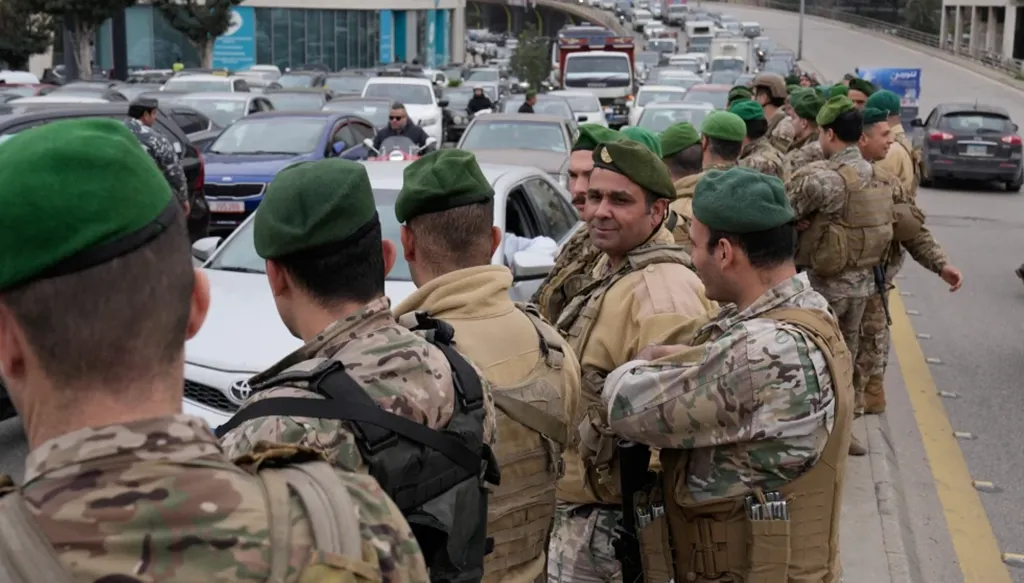


A nationwide strike against tax hikes promised to close Beirut’s major arteries Thursday, February 26, but was called off after a last-minute deal between two union leaders and PM Salam. Unable to continue the protest without the transport unions, whose vehicles ordinarily cause major disruptions, other unions told their workers to call off the strike.
Bassem Tleis, the leader of the Land Transport Union who struck the deal with Prime Minister Salam, told L’Orient that the government would pay full stipends for licensed transport workers to cover the increase in gas prices. In exchange, the union agreed not to raise fares.
However, on the issue of the taxes themselves, Finance Minister Yassin Jabar has only publicly committed to a “review of the issues of VAT in general,” stating that any “potential increase must be carefully studied.” Some believe the commitments are not strong enough.
“I consider what happened a crime against the rights of all Lebanese taxpayers,” union leader Walid Geagea told Annahar, saying of the February 25th deal: “You’re able to offer help from government reserves to people who aren’t government employees [meaning transport workers], but you don’t have the money to pay your people what they deserve.”
Dr. Nasreen Chehine of the Contractual Teachers' League called the deal a “attempt to break the movement and fair distribution of dues.” In a statement to Annahar, she asked, “is this money going to the helpless taxi drivers, or is it going to their bosses who own the red plates,” referring to the taxi medallion system used for licensed taxis in Beirut.
After the deal, Maroun Al-Kholi, head of FENASOL, announced in a statement that he was postponing the strike to “ensure the broadest possible participation,” following the “withdrawal of some union allies.” Geagea’s group, the Public Sector Employees Association in Lebanon, did the same, although both have vowed to continue civil disobedience.
Other unions are already planning returns to the street. Ayman Qaddour of the PPSTLL, which represents primary school teachers, told Annahar, “we see no guarantee in this agreement to alleviate the economic pressure resulting from the VAT increase or the fuel price hike, and have already witnessed the impact of these increases on various goods.” They planned to strike yesterday, March 2, but regional developments have complicated organizing.
Qaddour stressed that the government was “capable of securing funding from other sources,” but chose to pass the burden “disproportionately to the middle class.”
Paying for enforcement
On February 16th, the Cabinet announced a tax of 300,000 Lebanese pounds (about $3.30) on every 20 liters of gasoline and a percentage point increase to the value-added tax. Increases are intended to fund a one-time payment to civil servants equivalent to six months’ base wages, the value of which has fallen precipitously since 2019.
Army and security personnel, who fall under this umbrella, have been particularly hit by the devaluation, with reports stressing that soldiers make less than $400 US per month and are often forced to work multiple jobs.
On February 16th, the same session PM Salam approved the salary increases, the Cabinet moved forward with phase two of disarmament, a step which Hezbollah has repeatedly claimed would mean war for the group. In press remarks on the pay package, Salam stressed the government’s obligation to stabilize army salaries, saying that “given the required tasks and especially after the UNIFIL withdrawal… the number of military personnel must not be reduced.”
Yesterday, in response to Hezbollah’s overnight missile attack on Israel, Prime Minister Salam charged the Lebanese army with “firmly commencing” the implementation of Hezbollah disarmament north of the Litani river. As the coming weeks test the resolve of the Lebanese army, Salam’s ability to address union demands may prove uniquely consequential.