

Hariri’s adviser says Feb. 14 remains a "mark in the conscience"



 Messenger
 Whatsapp
 Threads
 Email
Email
 Print
Print
 X
X
 Facebook
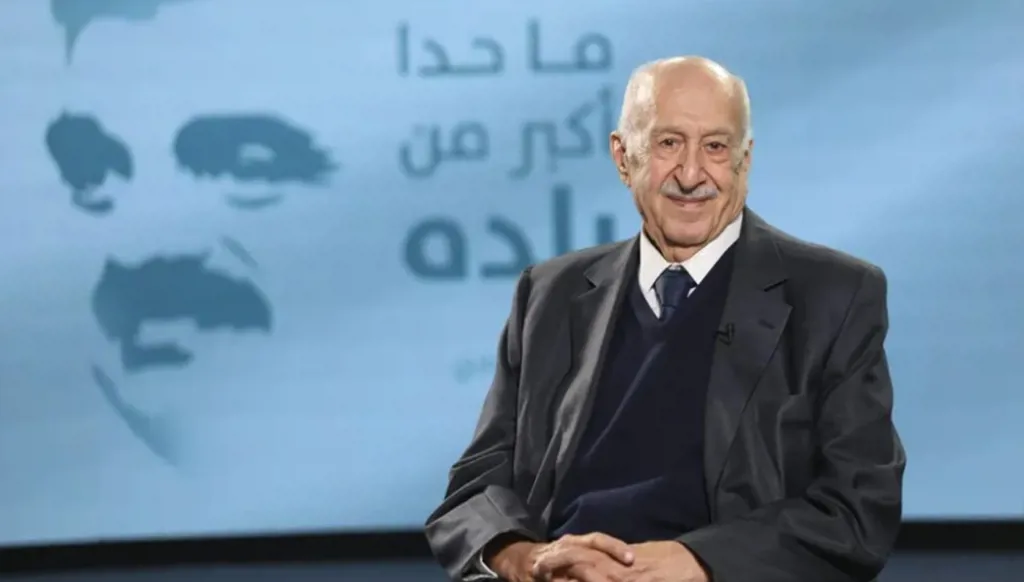


Twenty-one years after the assassination of martyred former Prime Minister Rafic Hariri, his adviser Dr. Dawood El-Sayegh says Feb. 14 is not merely an annual commemoration, but a steadfast mark in the national conscience.
El-Sayegh accompanied Hariri closely for 15 years, traveling with him between Beirut and world capitals, witnessing both his international relations and domestic concerns. He describes Hariri as a “symbol of trust” for Lebanon, at home and abroad.
In a conversation with Annahar, El-Sayegh said Hariri has never disappeared from the conscience of the Lebanese. He was not, he stressed, an ordinary politician seated on the throne of power, but a man with a daily worry named Lebanon.
“He slept only four or five hours and was in his office by 7:30 a.m.,” El-Sayegh said. “He was concerned about his country in every detail.”
At a time when Beirut was absent from decision-making — and “it was said that the decision was not in Beirut” — El-Sayegh said Hariri brought Lebanon back onto the international map.
He said many Lebanese today ask: If Rafic Hariri were still present, would the crises have worsened?
From the crisis of unsafe buildings in Tripoli, to the depositors’ crisis, to the Beirut port explosion, to the arms issue, El-Sayegh argues Hariri represented the Lebanese people’s trust in their state — and the outside world’s trust in Lebanon.
“Would he have accepted the deposit crisis to last seven years without a solution?” he asked.
El-Sayegh said the problem in Lebanon is not in the constitution or legal texts. “With all due respect to everyone,” he added, “the problem is in those conspiring against the texts.”
Hariri, he said, believed in the formula of coexistence and in a Lebanon built on consensus rather than dominance. That conviction led him to build a strong relationship with the late Maronite Patriarch Mar Nasrallah Boutros Sfeir — a relationship El-Sayegh said angered the security surveillance regime.
On the danger surrounding Hariri, El-Sayegh recalled that French President Jacques Chirac wrote in his memoirs that he warned Hariri to take precautions. He added that U.N. envoy Terje Rød-Larsen also cautioned him days before his assassination.
“But he was not a man of fear,” El-Sayegh said. “He was a man of boldness. He was concerned about Lebanon, but he did not fear for himself.”
El-Sayegh also recounted what he documented in his book, published by Annahar, titled Between Spring and Revolution: From the System to the State in Lebanon and Syria. He said Maronite Bishop Paul Matta once told Hariri at the Maronite bishopric that Lebanon was living through a phase of convalescence and hoped to soon move to full recovery.
Hariri, El-Sayegh recalled, replied: “We are no longer in convalescence. We are not sick, and Lebanon is not sick. We have recovered — but they want us to stay in the hospital.”
He continued: “We tell them we are healed, they say no, your back hurts. We tell them the pain is gone, they reply that now your stomach hurts. They want us to stay sick and under treatment. For thirty years they have acted this way.”
El-Sayegh quoted Hariri as saying they interfered in everything: politics, the judiciary, the administration, the army, internal security forces, foreign policy, and more — “a reality that could not be tolerated at all.”
Bishop Matta replied, according to El-Sayegh: “Be patient…” Hariri answered: “I have enough patience to distribute across the entire Arab world, but I can no longer endure.”
In El-Sayegh’s view, Hariri was “from the mold of founding fathers,” resembling in his political journey Bechara Al-Khoury, Riad Al-Solh and Fouad Chehab.
“He walked in the streets of Beirut and stumbled over debris,” El-Sayegh said. “So he decided to free the Lebanese from material debris — and from the debris in their souls.”
Today, 21 years later, El-Sayegh offered a clear message: “We hope his cause continues — the cause of rebuilding and restoring trust.”
He added that Hariri should serve as a role model for everyone who takes on the responsibility of governance, because governance, he said, is not a position, but a cause — and the fate of the people.
He concluded: “This extraordinary man passed through the history of Lebanon, and he will remain present in the conscience of the Lebanese.”