

In Shama, southern Lebanon, stones tell the story of war and the will to rebuild



 Messenger
 Whatsapp
 Threads
 Email
Email
 Print
Print
 X
X
 Facebook


There is no doubt that wars leave behind nothing but destruction, devastation and tragedy. However, the Israeli war on the southern towns focused on erasing their identity and everything that bears witness to the history and civilization of this land.
What the enemy left behind is little more than stones - yet they speak of an unbreakable will to live and an unshakable attachment to land and identity.
The border town of Shama, in the Tyre district of southern Lebanon, suffered extensive destruction during the last Israeli war on Lebanon. After Israeli forces invaded the town following bloody clashes with fighters near the archaeological castle and the Shrine of Prophet Shamaoun al-Safa, several soldiers from the Golani Brigade and Israeli archaeologist Ze’ev Ehrlich were killed.
According to Israeli media at the time, Ehrlich had been brought to the shrine at his own request to conduct historical research linked to alleged legends about a Jewish kingdom. Fighters, who had been hiding in an underground shelter, ambushed the Israeli force and opened fire at close range, killing the archaeologist along with several officers and soldiers.
Reconstruction and restoration of the shrine
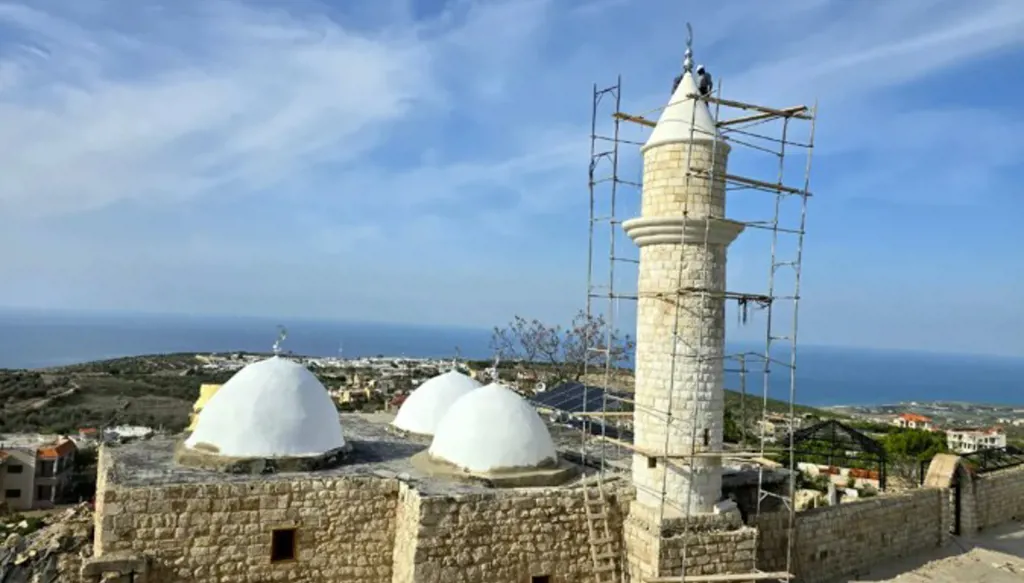
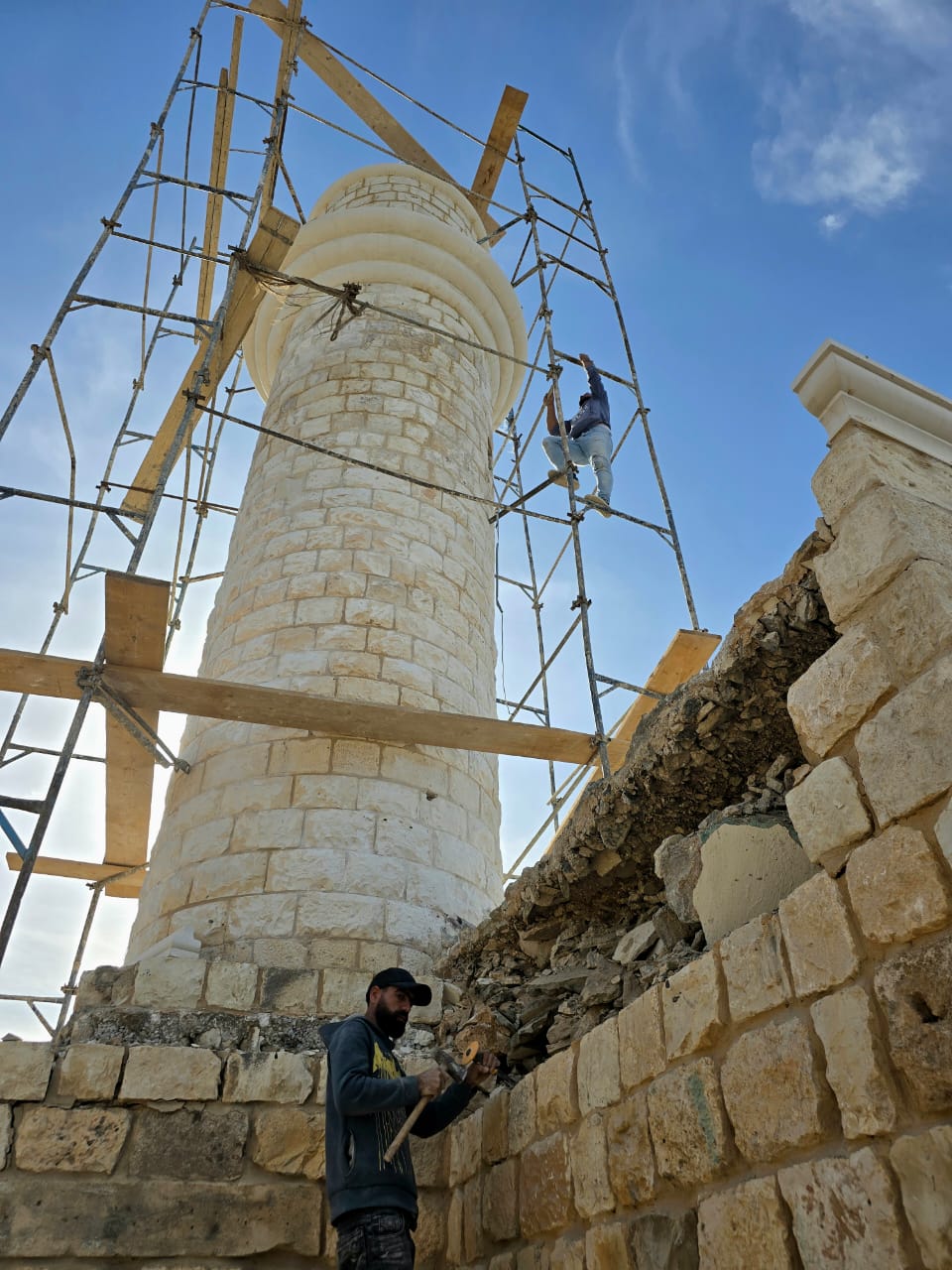
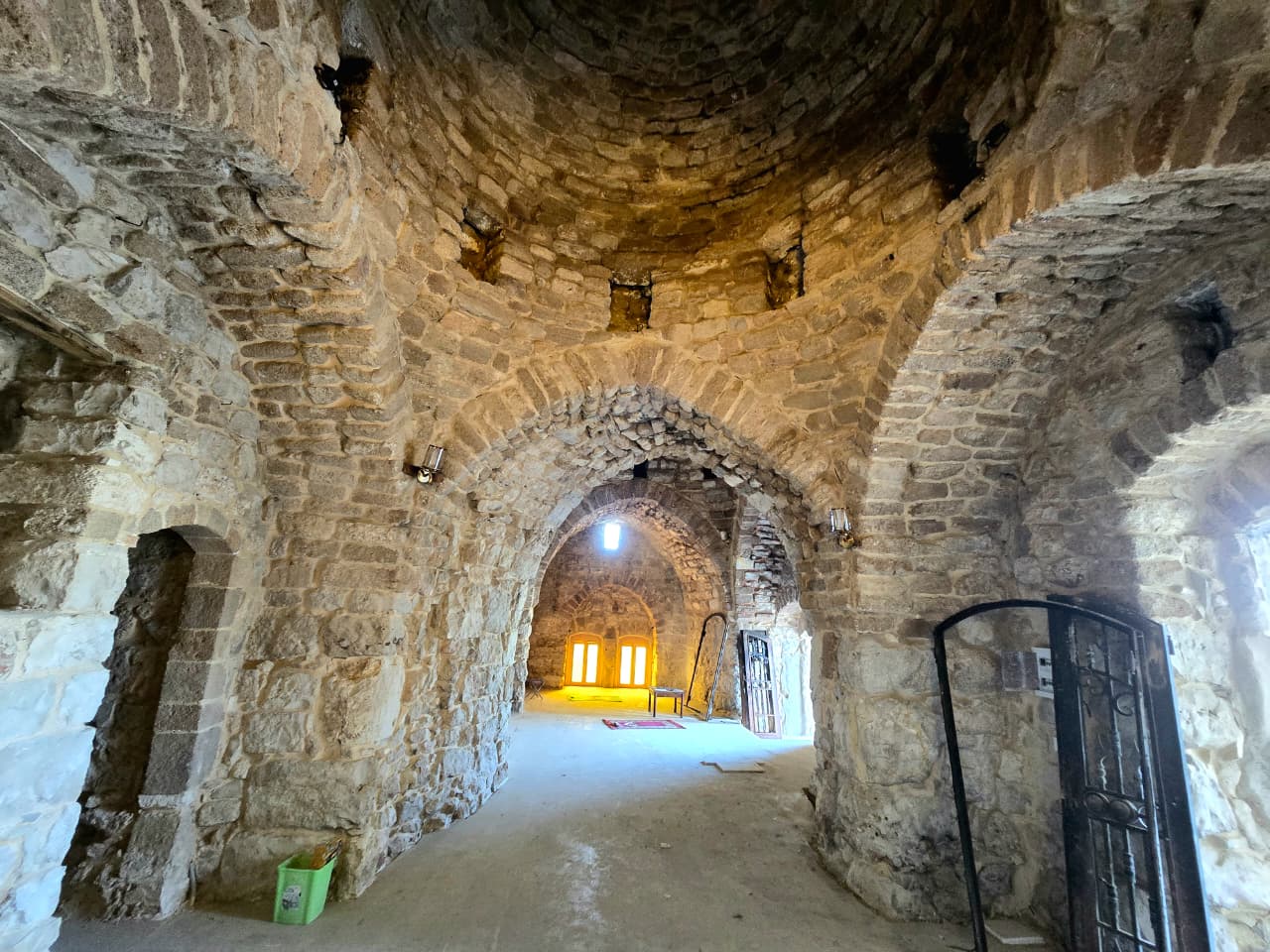
Despite the destruction at Shama Castle and the Shrine of Prophet Shamaoun al-Safa, and despite the devastation caused by heavy aerial and ground bombardment and the town’s occupation - which resulted in the destruction of dozens of homes, schools, religious and health facilities, as well as widespread damage to infrastructure - residents, through local initiatives, were able to rebuild and restore the shrine, along with the mosque’s minaret and domes dating back to the ninth century AD.
Israeli forces destroyed all features of the shrine and mosque and set them ablaze before withdrawing following a ceasefire agreement in November 2024.
Salameh inspects the shrine and castle
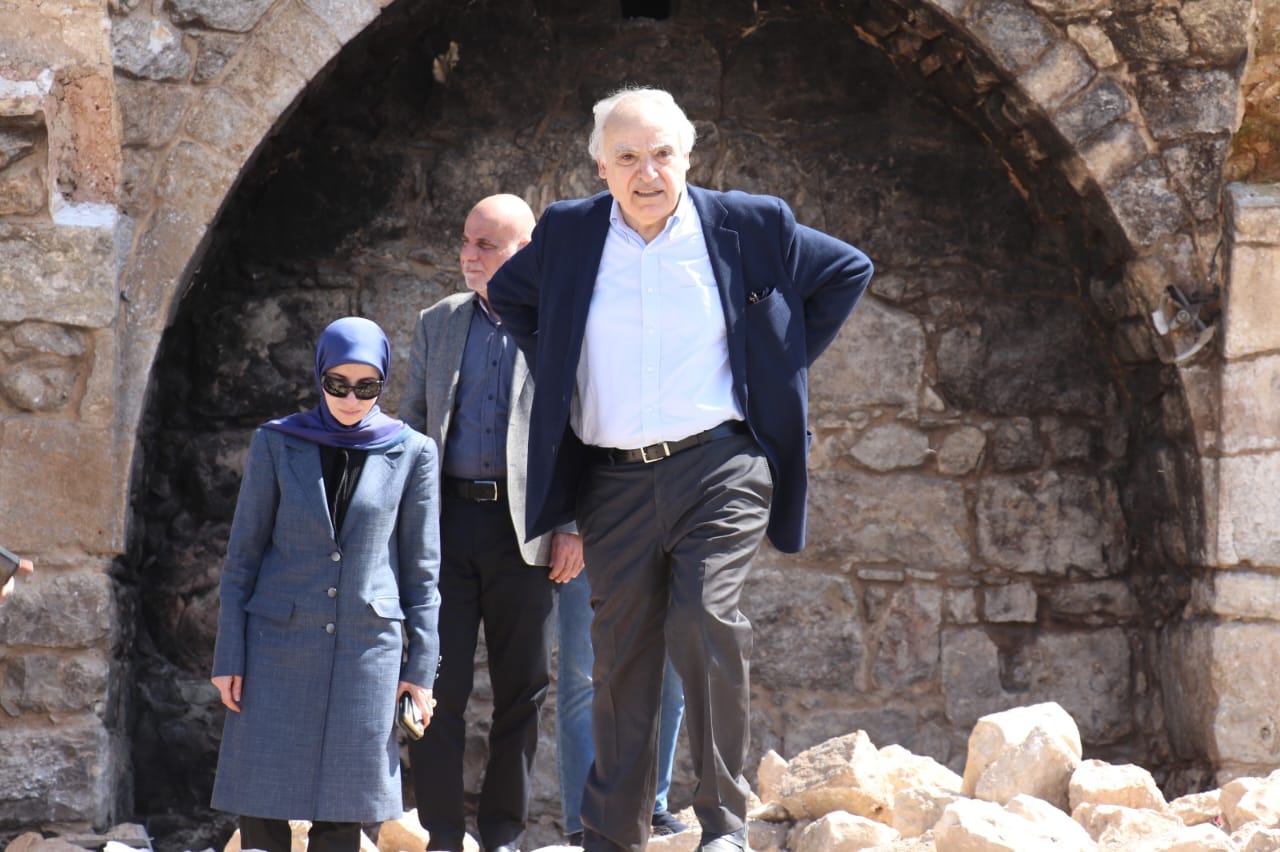
After assuming his duties in the current government, Culture Minister Ghassan Salameh visited the shrine and archaeological castle in February 2025, witnessing firsthand the scale of destruction. He pledged to assign local and international organizations specializing in heritage restoration to conduct studies and work on rebuilding the castle and shrine. He also called on expatriates to contribute to the reconstruction of archaeological and historical landmarks in southern Lebanon.
The archaeological castle and the need for local and international restoration
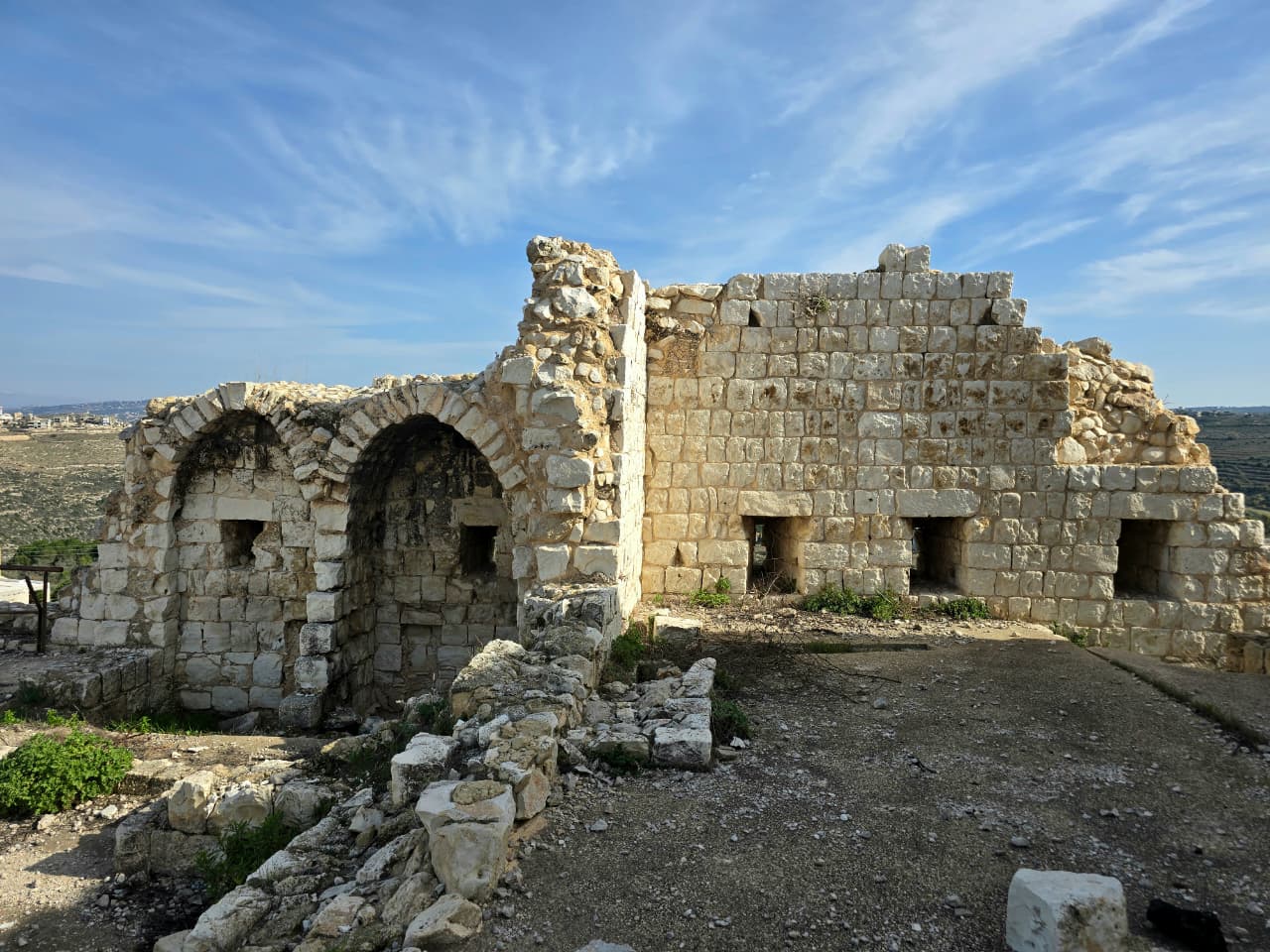
The archaeological castle, built by the Crusaders in 1116 and located next to the Shrine of Simon the Upright, had previously been shelled by Israeli artillery before the 1978 invasion of the border region.
During the July 2006 war, it was struck by an Israeli air raid, destroying parts of the structure. After the ceasefire, it was restored as part of a Qatari-funded project to rehabilitate archaeological and religious sites in southern Lebanon.
During the most recent Israeli war in 2024 - which coincided with the occupation of the castle - most of its features were destroyed, leaving only fragments of stone at risk of collapse.
Deputy Mayor Hussein Sarour told Annahar that the rebuilding and restoration of the Shrine of Simon the Upright were carried out at the initiative and expense of the town’s residents, in coordination with and under the supervision of the Directorate General of Antiquities.
He said the residents’ determination, together with the municipality, to rebuild the mosque’s minaret and dome reflects their insistence on preserving the shrine as a historical, religious and tourist landmark for Muslims and Christians alike.
Sarour stressed that restoring the archaeological castle requires both local and international efforts due to the scale of destruction and vandalism that affected all its structures and features.