

U.S. advisor Massad Boulos visits Tunisia again: Washington’s growing focus on North Africa
Amid regional tensions and global competition, Tunisia emerges as a strategic pivot for U.S. political and economic interests in the Maghreb.



 Messenger
 Whatsapp
 Threads
 Email
Email
 Print
Print
 X
X
 Facebook
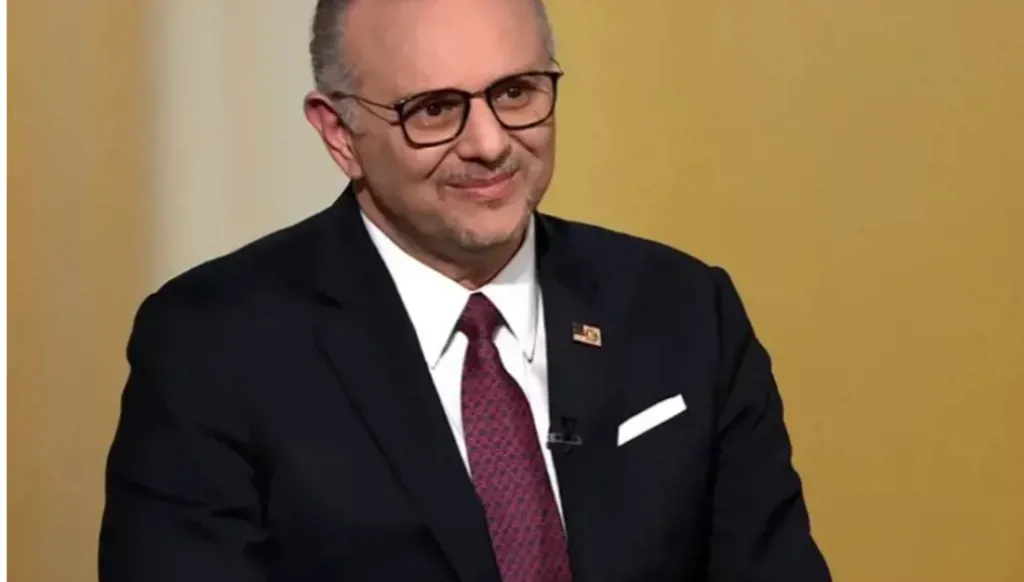


The second visit last week by the U.S. President's Senior Advisor for Arab and African Affairs, Massad Boulos, to Tunisia attracted significant political and media interest, due not only to its recurrence in a short period but also to its timing and broader regional context.
For the second time in six months, Tunisia welcomed Boulos this week, who held talks with Foreign Minister Mohamed Ali Al-Nafti, addressing common interests, according to official statements issued by both parties.
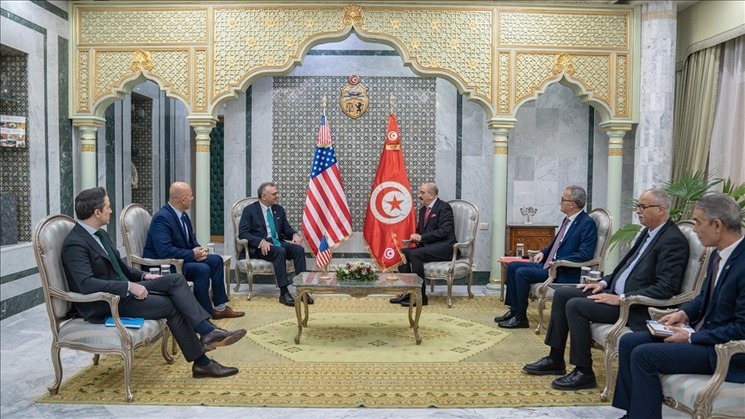
Official statements emphasize the strength of the bilateral relationship and focus largely on economic aspects, including a review of U.S. tariffs on Tunisia. Analysts suggest that this American move reflects a growing interest in the country as a pivotal player in the security dynamics of the Maghreb region.
Former Tunisian Ambassador and diplomat Abdallah Al-Obaidi stated that American interest in Tunisia has been evident since President Donald Trump returned to office.
In a statement to Annahar, he added that “the repetition of visits in a short period carries meanings beyond diplomatic niceties, and Washington seeks to establish direct communication channels with capitals it views as capable of playing a role in the region.”
However, he believes that the United States is not pleased with the rapprochement between Tunisia and China, viewing it as a threat to its influence in the region.
He says that Tunisia “could be an important pivot in a new American approach to North Africa and Africa, based on political and economic partnerships rather than reliance on traditional tools.”
It is noted that “Tunisia's geographical location, connecting Europe and Africa, makes it a significant area in Washington's estimation. Its position on the global trade route map is considered more important than the Bab-el-Mandeb Strait, as it serves as the gateway to Africa, which everyone today is vying to control due to its vast resources.”
To Tunisian university professor Farid Al-Alebi, it is significant that Boulos was received by President Saied during his first visit, but this second reception was only between the U.S. official and Tunisia's Foreign Minister.
Al-Alebi told Annahar that Boulos' first visit clearly showed the tension between him and the Tunisian president, “as he remained standing while Saied spoke about the genocide in Gaza. Meanwhile, during the second visit, the presidential reception for the American guest was absent, which could indicate greater tension, although the regional nature of the visit also explains this absence and the presidency's lack of direct interest in it.
“The United States realizes that Tunisian positions on the Palestinian issue are not aligned with its policies, as it seeks to involve as many Arab countries as possible, if not all, in the Abraham Accords, which were orchestrated by Donald Trump himself.”
Washington acknowledges that the Tunisian politicians closest to it have been ousted one after another by the current President, Kais Saied, amid undeniable popular support, which explains the degree of embarrassment it feels. He argues that, from the American viewpoint, Tunisia has “lost its way,” necessitating efforts to bring it back to the “right path.”
He points out that the United States has its method of dealing with such situations through gradual pressure. In his view, “it seems that it is dealing with the Tunisian president with a "carrot" approach before showing the "stick.""
The Secret of Interest in the Region
Boulos’ second visit to Tunisia takes place amid rapidly changing dynamics in the region, both regarding the situation in Libya and the growing international competition for influence in North Africa, with the United States on one hand and Russia and China on the other.
However, Tunisian diplomat Abdallah Al-Obaidi denies that Boulos’ visit is related to the Libyan issue, despite its coincidence with a trilateral meeting in Tunisia. He says, “Contrary to what some might think, U.S. interest in Tunisia is unrelated to the crisis in Libya.”
In this context, he affirms that the solution to Libya is being prepared quietly behind closed doors, away from the interventions of neighboring countries, which “have been sidelined and are now only involved in aspects pertaining to their security.”
In contrast, Al-Alebi says the recent visit was part of a tour that included several Maghreb countries, meaning it is fundamentally linked to issues beyond Tunisia's specific situation and encompasses the entire region.
He considers that dealing with the Tunisian situation cannot be separated from handling the “Maghreb situation,” as “geostrategic cards are being reshuffled both west and east.”
He confirms that Trump’s focus extends beyond Iran and Venezuela and could unexpectedly reach other areas as part of a plan to stop the spread of the “Russian bear” and the “Chinese dragon.”
With various interpretations of Boulos’ second visit to Tunisia, the main question remains: Will Tunisia succeed in turning this apparent U.S. interest into tangible political and economic gains, or will the visit remain part of a broader diplomatic movement, governed by international considerations that transcend Tunisian political priorities?