




 Messenger
 Whatsapp
 Threads
 Email
Email
 Print
Print
 X
X
 Facebook
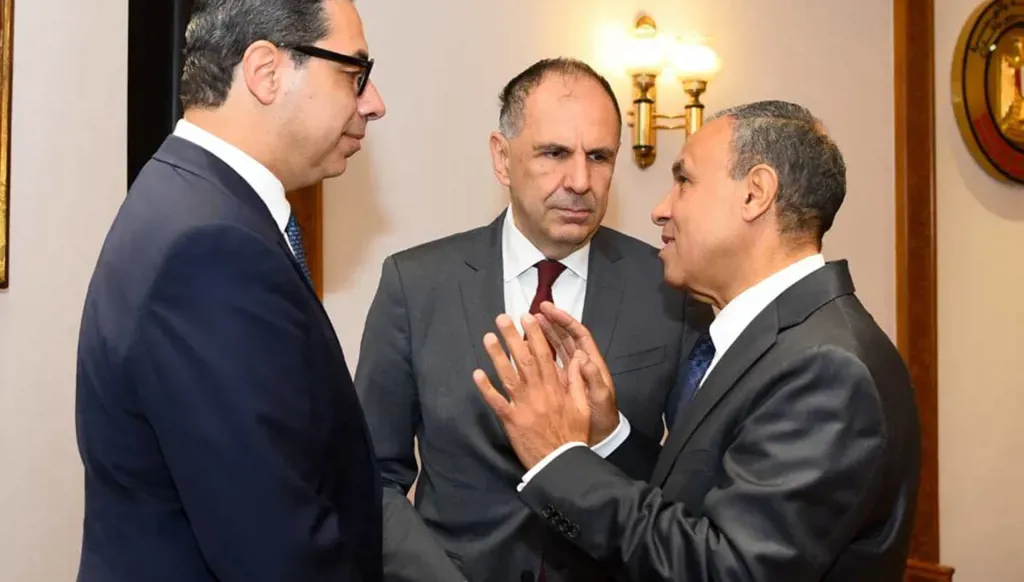


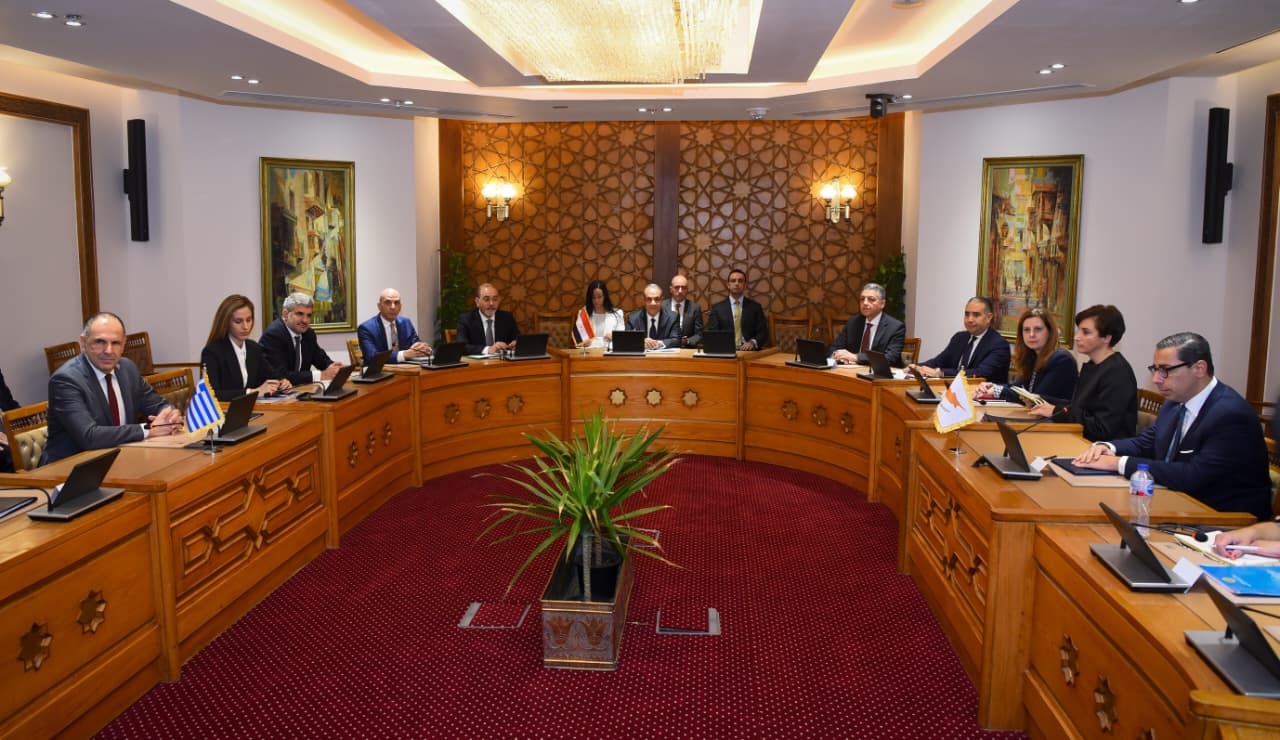
Cairo recently hosted two rounds of consultations between Egypt, Greece, and Cyprus as part of the trilateral cooperation mechanism among these countries. These meetings aim to enhance the existing partnership and cooperation between Cairo, Athens, and Nicosia that have been established for years.
Analysts view this partnership as a moderate bloc in a region rife with tensions.
The Egyptian Ministry of Foreign Affairs described the trilateral relationship as a "constructive cooperation among the three friendly nations, reflecting the depth of regional partnership and the shared desire to elevate cooperation across various fields."
Egyptian Foreign Minister Badr Abdel Aty, after receiving his Greek counterpart Georgios Gerapetritis and Cypriot counterpart Konstantinos Kombos on Sunday evening, highlighted the "special nature of the relationships linking Egypt, Greece, and Cyprus, which contributed to a consensus on establishing the trilateral summit mechanism that has become a model for cooperation and regional integration."
Strategic Alliance
Dr. Noha Bakr, a member of the advisory board of the Egyptian Council for Thought and Strategic Studies, told "Annahar" that "the partnership among the three countries represents an important strategic alliance in the Eastern Mediterranean."
Bakr notes that "holding two consultation sessions at the Egyptian Ministry of Foreign Affairs at this timing holds several implications, including the importance of the trilateral partnership for regional security and stability, as this partnership forms the nucleus for a moderate and stable bloc in a region plagued by tensions."
She cites ongoing tensions as examples, including "the conflict in Libya, the Turkish-Greek dispute, and the competition for Eastern Mediterranean resources."
She points out that "the partnership focuses significantly on maximizing the benefit from natural gas resources in the Eastern Mediterranean basin. The three countries have significant gas fields, such as Egypt's Zohr field, Cyprus's Aphrodite, and potential reserves in Greece."
She believes that "the cooperation allows for coordinated exploitation and marketing, accelerating export projects (like the EastMed Pipeline, which faces challenges), in addition to electricity link and infrastructure projects that enhance energy security and turn Egypt into a regional energy hub."
The cooperation is not limited to economic areas but "extends to mutual political support in international forums," according to the political expert.
Geopolitical Shifts
On his part, writer and political analyst Dr. Amr Hussein states that "the meetings of the foreign ministers of Egypt, Greece, and Cyprus reflect a deep understanding of the nature of the rapid geopolitical shifts in the Eastern Mediterranean, and affirm that trilateral coordination has become one of the most active regional frameworks in maintaining strategic balances and safeguarding the common interests of the region's countries."
He sees the recent meetings as particularly significant in light of increasing international competition over the Eastern Mediterranean, with its natural treasures and vital maritime routes, where the cooperation between Cairo, Athens, and Nicosia reinforces the principle of adhering to international law and rejecting policies of imposing fait accompli, especially regarding the demarcation of maritime boundaries and the exploitation of energy resources, notably natural gas, which has become a crucial element in the European energy security equation."
He adds: "Egypt's role in this context is highlighted as the primary stabilizing factor in the Eastern Mediterranean, drawing from Egypt's political and military weight, unique geographical position, and its ability to build balanced strategic partnerships that serve both security and development."
Hussein continues: "This trilateral coordination helps transform the region from a potential conflict hotspot to an area of economic and security cooperation, encompassing electricity linkage projects, maritime navigation security, and energy security enhancement."
The Egyptian political analyst notes that "on the security front, these meetings provide an important platform to unify visions regarding common challenges, such as combating terrorism, illegal migration, and protecting maritime routes, which in turn positively impacts the stability of the Eastern Mediterranean and Southern Europe."
Significant Implications
The timing and location of the consultations and meetings carry significant implications, according to Bakr, who says that "they indicate a strategic response to regional developments; the war in Gaza and tension in the Red Sea have led to a reshaping of alliances."
The political science professor adds: "There is increasing importance for the stability axis provided by this partnership, and the threats to navigation in the Red Sea enhance the value of alternative linkage plans across the Eastern Mediterranean."
Regarding the energy playing a vital role, she says: "There may be a need to coordinate positions before any potential negotiations with Lebanon, Israel, or even Turkey regarding gas resources."