

Uprooted at home: Why Lebanon’s Displaced need sustained solidarity now
Internal displacement is unfortunately not new to Lebanon, but the scale and speed of this latest wave have once again shown how quickly lives can be uprooted.



 Messenger
 Whatsapp
 Threads
 Email
Email
 Print
Print
 X
X
 Facebook
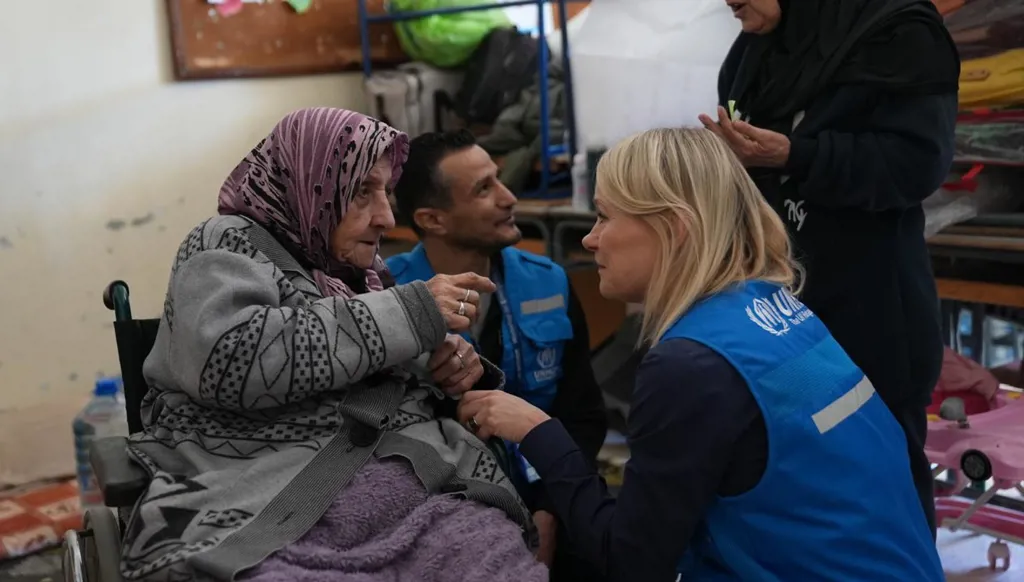


This World Refugee Day, global attention is largely on those forced to flee across borders: refugees. Yet here in Lebanon, another urgent crisis demands focus: internal displacement. More than 100 days into the latest escalation, around one million people have been uprooted within their own country—seeking safety, but often finding uncertainty, repeated displacement, and fragile support.
Internal displacement is unfortunately not new to Lebanon, but the scale and speed of this latest wave have once again shown how quickly lives can be uprooted. Many families have lost loved ones, homes, and livelihoods and have spent three months in collective shelters or overcrowded spaces never meant for long-term living. While some have found relative safety, stability largely remains out of reach.
Even as people show resilience by rebuilding daily life amid conflict, displacement must not become the norm. Displaced people have the right to return home and regain independence from aid as quickly as possible.
The US–Iran Memorandum of Understanding announced on 14 June has offered a glimmer of hope, with some families returning to the South. Many returns remain tentative, however, as people briefly check their homes and assess damage—reflecting the powerful pull of home despite uncertainty.
In my 28 years working with displaced communities, I have seen the difference between treating people as vulnerable victims compared to advocating for and supporting them to regain agency and rebuild their lives. This means listening, recognizing their capacities, and showing up. Many say that being seen, heard, and visited matters as much as material aid—it reassures them they are not forgotten.
Demonstrating solidarity through presence and action is key
Across Lebanon, this solidarity is visible: first responders risking their lives to save others, families opening their homes, volunteers supporting those who fled with little, and authorities guiding people to safety. And humanitarian actors continuing to deliver lifesaving aid.
In prolonged crises of this scale, it is crucial to harness the solidarity, skills and capacities of all actors in society. Before coming to Lebanon, I served as UNHCR’s Representative in Ukraine and saw first-hand how a ‘whole-of-society response’, in which the contributions of all actors were harnessed and valued. This helped sustain people’s resilience and hope through more than four years of full-scale war.
As host communities are increasingly strained, public services under pressure, and displaced families face mounting challenges in finding sustainable shelter solutions, healthcare, education, and livelihoods, sustained solidarity and collective support is lifesaving.
The longer displacement persists, the more critical it becomes for all actors to work together and build on each other’s capacities, as no single actor can address needs of this magnitude alone.
At UNHCR, we will continue contributing to the collective response in the areas of our expertise and responsibility – protection, shelter and humanitarian assistance - in partnership with the Lebanese authorities, UN and civil society partners and, most importantly – with the people affected. But needs by far exceed available resources.
This World Refugee Day must serve as a call to action: the people in Lebanon cannot face this alone. Stronger international solidarity—through sustained engagement and funding —is essential.
From Ukraine to Lebanon, one lesson is clear: working together to support displaced people in regaining their agency is fundamental. A whole-of-society approach is not optional in a protracted crisis—it is the only way to sustain resilience and help people rebuild their lives.
Explore our World Refugee Day dossier and related stories below.
- Lebanon: A Country in displacement
- The hidden cost of displacement: When privacy becomes a luxury in Lebanon’s shelters