

The Greater Israel Narrative: Between Fear and Strategic Reality



 Messenger
 Whatsapp
 Threads
 Email
Email
 Print
Print
 X
X
 Facebook
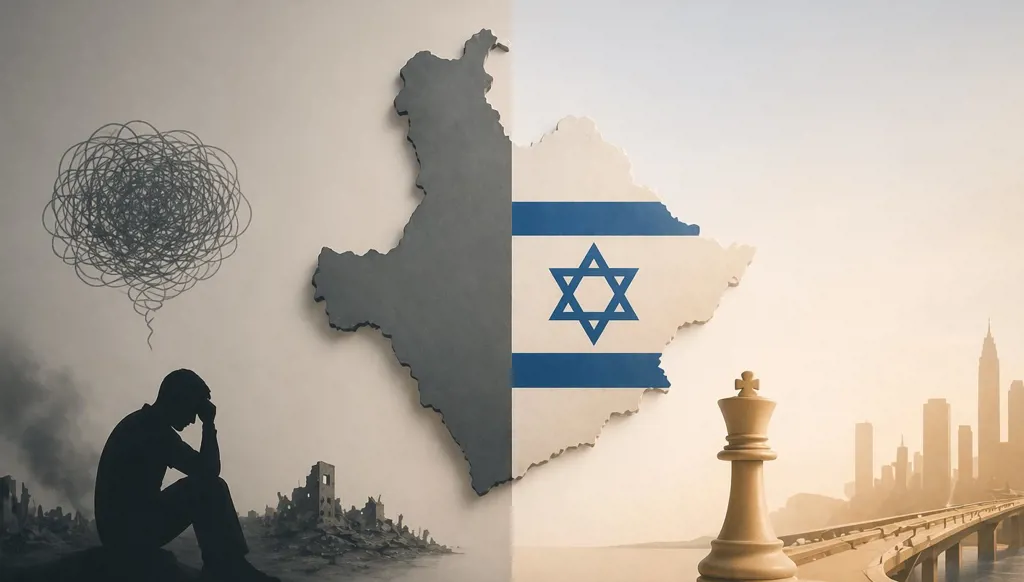


As the Middle East confronts renewed tensions and shifting geopolitical dynamics, the concept of “Greater Israel” has resurfaced across regional discourse.
Political leaders, commentators, and public opinion across the region increasingly portray the idea as a long-term Israeli strategy. Yet a closer examination of Israeli politics, historical behavior, and demographic realities suggests a more complex and more constrained picture.
The idea of Greater Israel does exist. It has roots in religious, ideological, and nationalist traditions that date back decades. However, the critical question is not whether the concept exists, but whether it represents an operational state policy. Available evidence suggests it does not.
Within Israel, support for expansion beyond current borders remains limited. While political debate continues around disputed territories, particularly the West Bank, broader expansionist visions remain largely confined to fringe ideological groups.
Polling estimates and academic assessments generally indicate that support for a full biblical Greater Israel remains marginal, while broader annexation debates remain politically contested rather than nationally consensual.
Yet perceptions often matter more than policy. Statements by certain political leaders, religious figures, and ideological movements have helped sustain regional fears, even when those views do not reflect official policy. In a region shaped by decades of conflict and mistrust, rhetoric alone can influence strategic calculations.
Israel’s historical behavior further complicates the narrative of consistent territorial expansion. Over the past decades, Israel has withdrawn from multiple territories under different strategic circumstances. The withdrawal from the Sinai Peninsula following the Egypt–Israel peace agreement, the exit from South Lebanon in 2000, and the disengagement from Gaza in 2005 all suggest that security considerations have often outweighed territorial ambitions.
If territorial expansion were a central doctrine, maintaining control over these territories would likely have been strategically preferable at the time. Instead, Israeli decision-making has often reflected shifting security priorities rather than a fixed expansionist blueprint.
At the same time, continued settlement expansion in the West Bank and ongoing territorial disputes continue to fuel suspicions. This dual reality; withdrawal in some areas and consolidation in others contributes to the persistence of the Greater Israel narrative. The result is a perception gap: even when policy does not align with expansionist ideology, developments on the ground sometimes appear to support it.
It is also important to recognize that expansionist visions are not unique to Israel. Throughout modern Middle Eastern history, multiple political movements have promoted expansive territorial or transnational ideological projects. These visions have often shaped regional perceptions and anxieties, even when they failed to translate into lasting geopolitical realities.
One of the earliest examples emerged with the Syrian Social Nationalist Party in the 1930s, which advocated for a "Greater Syria" encompassing Syria, Lebanon, Jordan, Palestine, and at times additional territories. Although this vision never materialized politically, it influenced political discourse and regional fears for decades.
Similarly, pan‑Arab nationalism, particularly under Baathist ideology, promoted the creation of a unified Arab nation stretching across the Levant, Iraq, the Gulf, and North Africa. This ideology shaped political systems in multiple countries and led to repeated attempts at political union. The most notable example was the United Arab Republic between Egypt and Syria from 1958 to 1961, which ultimately collapsed due to political and structural tensions.
More recently, Iran’s post‑1979 revolutionary ideology introduced another form of transnational influence. The concept of exporting the Islamic Revolution and supporting aligned movements across the region contributed to Iran’s growing influence in Lebanon, Iraq, and Syria. This development fueled regional concerns about a broader Iranian sphere of influence, often described as a "Shia Crescent."
These examples highlight a broader regional pattern: expansionist or transnational visions frequently emerge in times of political transformation or ideological competition. However, they rarely translate into large‑scale territorial restructuring. Instead, they often remain ideological frameworks, political narratives, or influence strategies.
Understanding this broader context is important when assessing the Greater Israel narrative. Regional fears are often shaped not only by Israeli rhetoric or policy but also by a historical memory of expansionist projects across the Middle East. In this sense, the Greater Israel concept fits into a wider regional tradition of ambitious geopolitical visions that generate anxiety but face significant practical constraints.
Perhaps the most overlooked constraint on large-scale territorial expansion is demographic reality. Israel’s population is concentrated primarily in three metropolitan areas: the Tel Aviv coastal corridor, the Haifa region, and greater Jerusalem. Large peripheral areas remain sparsely populated, particularly in the north and south.
Recent evacuations in northern Israel illustrate this structural challenge. Tens of thousands of residents were displaced during recent escalations, highlighting the limited population depth in peripheral areas.
By contrast, comparable geographic areas across the Lebanese border host significantly larger populations. This disparity underscores a fundamental limitation: territorial expansion requires population depth, infrastructure, and long‑term settlement capacity.
Global Jewish demographics further reinforce this constraint. The worldwide Jewish population remains relatively small, with the vast majority concentrated in Israel and the United States. This limits the demographic reservoir available for sustained territorial expansion, even if such ambitions existed.
These structural realities suggest that large‑scale territorial expansion would face significant practical obstacles. Territorial expansion is not only a political or military question; it is fundamentally a demographic and economic challenge.
Meanwhile, current regional tensions appear driven primarily by security considerations, deterrence dynamics, and geopolitical competition rather than ideological expansionism. Border security concerns, non‑state actors, regional rivalries, and domestic political pressures all play a more immediate role in shaping developments.
This does not mean regional fears are unfounded. Political rhetoric, settlement policies, and historical mistrust continue to shape perceptions. And in the Middle East, perception itself can become a strategic factor.
Ultimately, the Greater Israel narrative remains politically influential but strategically constrained. Understanding the distinction between ideological rhetoric and operational policy is essential for accurate risk assessment and regional stability.
As tensions persist, separating perception from reality may become increasingly important not only for policymakers, but for a region where narratives often shape outcomes as much as facts.