

Hormuz at the Center: How the Conflict Is Being Redefined
Failed high level talks in Islamabad exposed widening gaps over Iran’s nuclear program and control of the Strait of Hormuz, with both sides escalating pressure signaling a prolonged, expanding conflict rather than a path to resolution.




 Messenger
 Whatsapp
 Threads
 Email
Email
 Print
Print
 X
X
 Facebook


Since the eruption of the conflict, speculation had been mounting over whether talks between the U.S., Iran, and Israel would materialize. Iran put forward a 10-point proposal, while the U.S. presented a 15-point framework-competing starting points rather than final terms. The talks eventually took place in Islamabad, marking the highest-level engagement between Washington and Tehran since the 1979 Islamic Revolution, but ended without an agreement after 21 hours. What stood out, however, were the unresolved sticking points: the nuclear file, where U.S. demands have shifted from limiting enrichment to effectively eliminating Iran’s programme, and the Strait of Hormuz, which has emerged as a central point of leverage.
At the same time, the talks failed to secure a sustained ceasefire, with one of Iran’s key demands-a ceasefire in Lebanon-remaining unmet, as Israel has refused to engage on a ceasefire with Hezbollah despite signalling openness to formal talks with Lebanon. With the ceasefire timeline nearing expiration, these developments point not toward resolution, but toward renewed escalation and a likely continuation of the war.
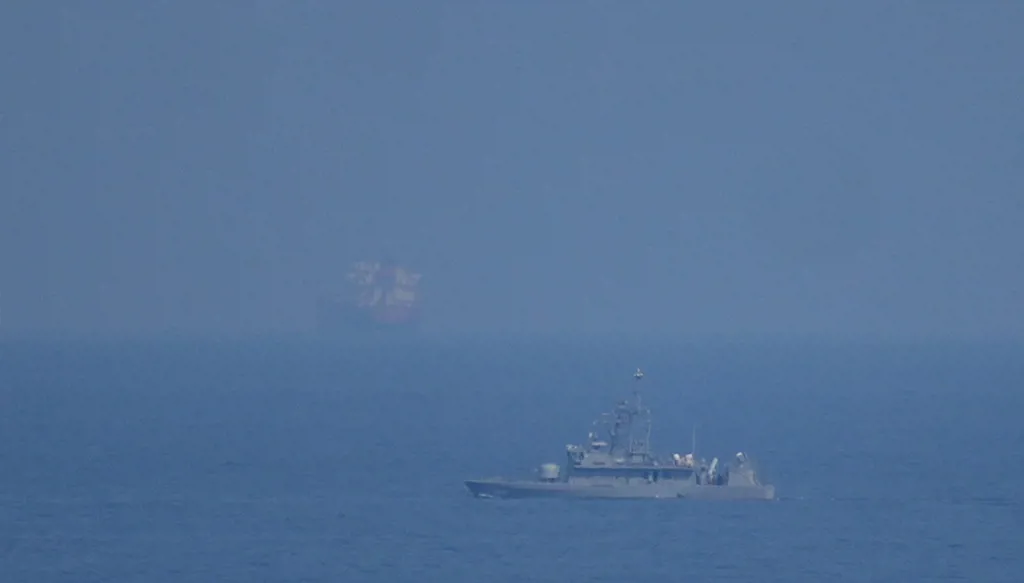
At the same time, Washington has shown readiness for both peace and escalation prior to talks and after. Before the talks commenced, there were signals of a possible ground invasion, this was followed by the announcement of a naval blockade and mine-sweeping operations. Iran’s response was immediate, warning that any military presence near the Strait would be met with force.Taken together, this suggests that while diplomacy appears within reach, the reality points toward a conflict that is widening rather than containing itself.
The U.S. has consistently said it destroyed Iran’s nuclear sites during the June war in 2025 -hitting Fordow Fuel Enrichment Plant and Natanz Nuclear Facility with bunker-buster bombs, and striking Isfahan Nuclear Technology Center with Tomahawk missiles. Donald Trump even described the operation as a “complete obliteration” of Iran’s enrichment capacity.
However, the shift in language after the talks is what’s most striking. It goes even further-it’s no longer just about stopping Iran from building a weapon. The language suggests Iran wouldn’t be allowed to have any nuclear capability at all, even for civilian use, which it has always insisted on. This marks a clear departure from the Joint Comprehensive Plan of Action (JCPOA), which focused on limiting Iran’s program rather than eliminating it entirely. That shift matters. It shows this isn’t just about limits anymore, it’s about total rollback-and that makes any deal much harder to reach.
Iran’s strategy has combined both kinetic and non-kinetic methods, from targeting oil installations and critical infrastructure to impose economic costs, to leveraging key maritime chokepoints to widen the conflict’s impact. This has effectively internationalized the war, pulling global energy markets into the equation. But its real pressure point lies in non-kinetic leverage. Rather than relying only on direct confrontation, Tehran is using geography as a tool of power.
The Strait of Hormuz, in particular, has become Iran’s most valuable card. By laying sea mines, targeting vessels, and even introducing transit fees, Iran is asserting control over one of the world’s most critical energy routes. That control not only raises the cost of continued escalation for the U.S. and its allies, but also gives Tehran an asymmetric advantage it is unlikely to give up easily. Its inclusion of Hormuz control in its ceasefire demands reinforces this-suggesting that for Iran, the waterway is not just a bargaining chip, but a core pillar of its negotiating position.
A different approach is being adopted by the U.S. moving beyond diplomacy and applying pressure through different means through directly targeting Iran’s strongest point of leverage. While Donald Trump has been adamant about keeping the Strait of Hormuz open, the latest move does the opposite in practice. The announcement by United States Central Command to impose a blockade on all maritime traffic entering and exiting Iranian ports signals a more aggressive strategy. Even if freedom of navigation through Hormuz is technically maintained, the pressure is being redirected. By restricting access to Iranian ports, Washington is effectively trying to turn Iran’s maritime advantage against it undermining its ability to use trade routes as leverage while still avoiding a full closure of the Strait.
In that sense, this is less about escalation in the traditional sense, and more about containment. The U.S. isn’t shutting Hormuz, but it is tightening control around it-limiting Iran’s room to maneuvre while keeping global shipping lanes formally open. However, the repercussions are high, particularly on two fronts: economically, through increased pressure on global energy markets, and politically, in the risk of renewed escalation. On the economic front, this is disastrous for both the Iranian economy itself but the global economy, particularly key states that import their oil from Iral such as China. The repercussions are highlighted with the increases of prices in both US crude oil and Brent crude oil, the international standard – which has spiked by 8 percent to $104.24 a barrel, and 7 percent to $102.29 or the latter after the US blockade threat. Furthermore, global growth forecasts would be downgraded coupled with rising inflation projections would severely impact emerging markets, according to IMF and World Bank officials.
On the military front, retaliation from Iran, as well as from its proxy in Yemen, the Houthis which have briefly played a role since the onset of the war, is highly likely. While the United States can assert dominance over the Strait of Hormuz through naval and air power, sustaining that control is far more complex. Enforcing a prolonged blockade would pull U.S. forces into constant proximity with Iranian territory, where Tehran holds advantages through asymmetric tactics.The deployment of approximately 3,500 additional U.S. troops under CENTCOM prior to the talks signals preparation for a range of escalation scenarios, including the possibility of limited ground involvement. While this does not point to an imminent invasion, it suggests that option has not been fully ruled out. Iran’s geography further complicates this: its mountainous terrain, strategic depth, and ability to launch missiles and drones from inland positions would make any ground operation costly and prolonged rather than a quick tactical success.
At the same time, Iran is unlikely to respond in a conventional way. Instead, it would rely on asymmetric tactics through the IRGC, including fast boat attacks, naval mines, anti-ship missiles, and drones-capabilities that have long formed the core of its military strategy in the Strait of Hormuz. Even a single successful strike on a civilian or military vessel could quickly escalate tensions and disrupt global markets. Even a single successful strike on a civilian or military vessel would be enough to trigger rapid escalation and send shockwaves through global markets.
Ultimately, the failure of the Islamabad talks, combined with the absence of a comprehensive ceasefire and the fragmentation seen across key fronts such as Lebanon, marks a clear turning point. Rather than moving toward de-escalation, the conflict is becoming increasingly difficult to contain. With ceasefire timelines nearing expiration and both sides relying on pressure to strengthen their position, escalation is no longer a risk but a likely outcome, pointing toward a more prolonged and entrenched confrontation.
Disclaimer: The opinions expressed by the writers are their own and do not necessarily represent the views of Annahar.