

The Impact of the 2026 War on the Lebanese Economy
Lebanon’s 2026 war has triggered a systemic economic collapse—deepening GDP contraction, crushing purchasing power, draining liquidity and reserves, and pushing unemployment and poverty to critical levels amid a near breakdown of public finances.




 Messenger
 Whatsapp
 Threads
 Email
Email
 Print
Print
 X
X
 Facebook
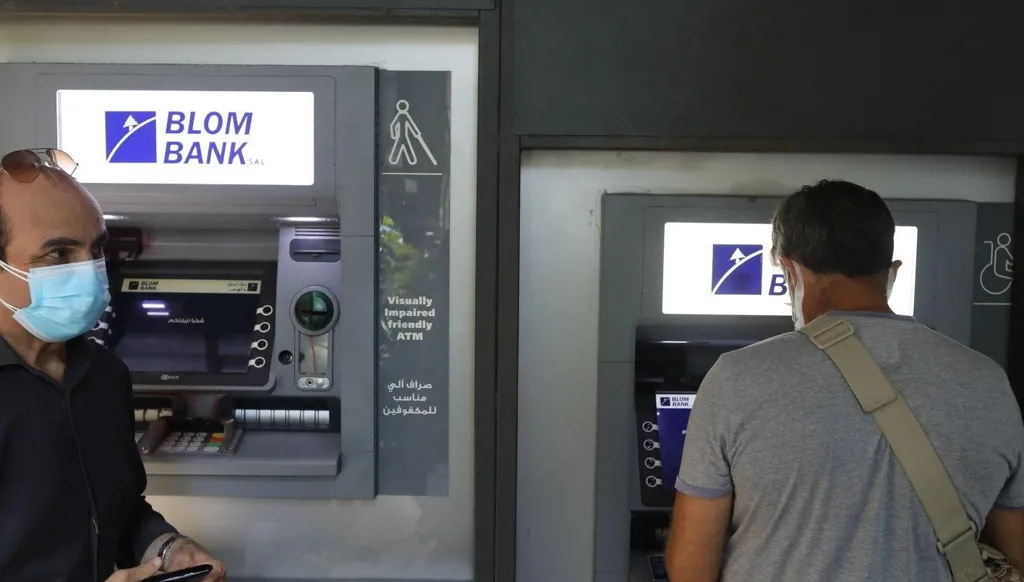


In 2024, the Lebanese economy contracted by about 5%, with losses estimated at $14 billion due to the war and 150,000 jobs lost. Population displacement reached around 350,000 people, while private sector activity declined by 20%. The liquidity deficit was between $5 and $7 billion. Despite this difficult context, remittances from Gulf countries partially supported economic activity, although inflation remained high. However, the escalation of the conflict in 2026 severely worsened the situation, simultaneously affecting GDP, liquidity, purchasing power, the foreign currency reserves of the Banque du Liban, and public finances.
Impact on GDP
The 2026 war represents a major economic rupture rather than a mere extension of the crisis. The conflict spread to several regions, displacing more than one million people. In many areas, economic activity shifted from slowdown to partial halt. The formal private sector recorded a sharp decline, estimated at nearly 50% in key sectors such as industry, agriculture, and services. Hospitality and restaurants were particularly affected, with activity dropping by about 80%. Unemployment could exceed 45%, with around 250,000 additional jobs at risk. Monthly income losses are estimated at $2 billion. If deterioration continues, GDP could contract by an additional 10% on top of the decline already recorded in 2024.
Impact on Purchasing Power
Purchasing power has been severely eroded by several combined factors. A 15% increase in domestic taxes, rising oil prices exceeding $110 per barrel, and major supply chain disruptions could drive inflation up to 35%. This inflation deepens poverty and significantly reduces households’ ability to meet essential daily needs.
Impact on Liquidity
Liquidity is rapidly deteriorating under opposing dynamics. On one hand, external capital inflows have dropped sharply: remittances from Gulf countries decreased, while tourism revenues became nearly nonexistent. On the other hand, demand for foreign currency structurally increased due to emergency imports linked to the conflict, notably fuel, food, and medical supplies. Humanitarian aid needs also rose due to mass displacement. Added to this is an acceleration of capital flight to safer countries. Households and businesses withdrew deposits to secure crisis cash flow for 3 to 6 months. This combination led to a severe liquidity contraction, marked by a scarcity of circulating dollars, a foreign currency financing deficit estimated at about $5 billion, and an equivalent deterioration in the balance of payments.
Impact on Public Finances
Public finances are also gravely affected. State revenues are expected to fall by about 50%, causing a severe budget deficit as early as the second quarter of 2026. The Banque du Liban’s capacity to intervene is reduced due to declining liquidity. In this context, a vicious cycle emerges, marked by accelerated erosion of foreign currency reserves, already down nearly 5% since the start of the war. The central bank thus has very limited room to contain inflation, stabilize financial markets, and support the national currency.
Impact on BDL Gold Reserves
Regarding gold reserves, several international factors exert downward pressure on prices, including high U.S. interest rates, margin requirement adjustments on futures markets, a strong dollar, and gold sales by certain central banks (France, Turkey…). Although geopolitical tensions partially support gold as a safe haven, a significant price drop has led to an opportunity loss estimated at $8–10 billion. This reduces the Banque du Liban’s ability to use this asset to support the economy, the currency, and confidence in the financial system.
Conclusion
In conclusion, the current crisis stems both from the shock of war and six years of poor economic management and insufficient governance. The absence of critical and decisive measures during the crisis worsens the situation. It is recommended to suspend tax increases, strictly reduce public spending, and limit imports to essential goods. Aid should be targeted at the most vulnerable populations. Finally, the Banque du Liban must preserve its foreign currency reserves and adopt a rigorous monetary policy to stabilize liquidity, support depositors, and prevent deeper deterioration of the financial system.
Disclaimer: The opinions expressed by the writers are their own and do not necessarily represent the views of Annahar.