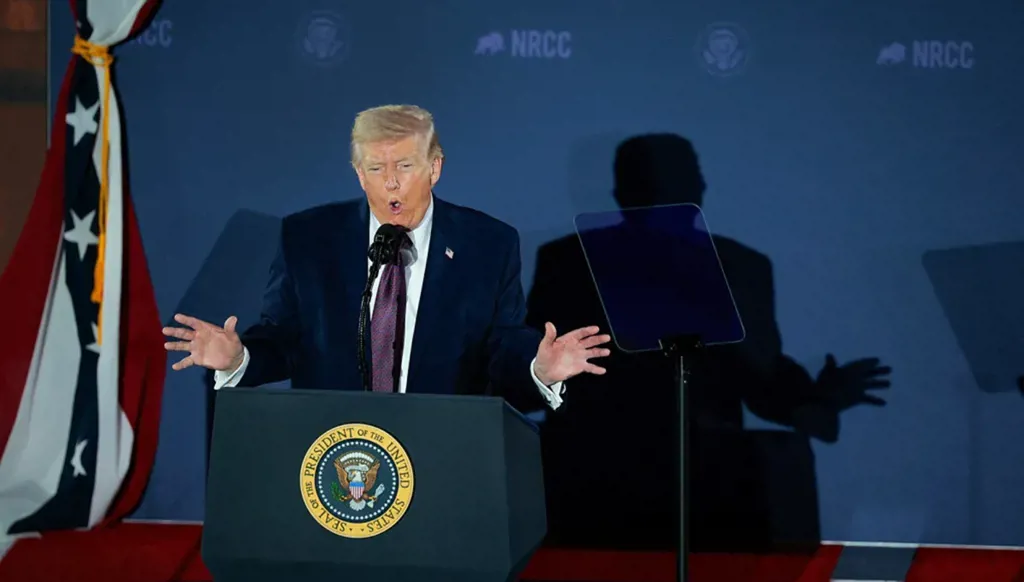
Gates of hell? Trump’s countdown to a decisive blow on Iran

Opinion 27-03-2026 | 11:23

Gates of hell? Trump’s countdown to a decisive blow on Iran

With time running out, the U.S. and Israel maneuver strategically, leaving Iran to confront shrinking options and mounting consequences. 
Gates of hell? Trump’s countdown to a decisive blow on Iran
A decisive American strike?! How? (AFP)
Smaller Bigger


Only hours remain until the deadline set by President Donald Trump for the Iranian leadership to meet U.S. negotiation conditions—or face what he promised: the gates of hell.


Yesterday, Thursday, this threat was accompanied by leaks from the White House suggesting that the President is considering options to deliver a decisive blow to end the war. But what do they mean by a decisive blow? Does it involve destroying energy facilities, occupying or blockading Kharg Island, or dropping tactical bombs on the so-called “missile cities” hidden deep within the granite mountains of western and central Iran?


In any case, these options are difficult and complex and could escalate the war to even more dangerous levels. The U.S. might avoid using tactical bombs directly, leaving the task to Israel, which would bear significant international blame for striking toward nuclear targets. However, this option is challenging and could bring substantial unforeseen international consequences if carried out.


If a crushing blow targets oil facilities, particularly on Kharg Island, the economic consequences would be severe—but they would still fall short of the devastation that could result if tactical nuclear weapons were used by either the U.S. or Israel.


On the other hand, the Americans are considering what can be achieved in terms of controlling the Strait of Hormuz. Would they first attempt to seize Kharg Island while avoiding major damage to its installations? Or would the U.S. military strike unexpectedly on Qeshm Island, off the port of Bandar Abbas, and the surrounding islands—particularly the three Emirati islands occupied since 1971 (Abu Musa, Greater Tunb, and Lesser Tunb)—thereby controlling a relatively large island that dominates the strait and, more importantly, oversees Iran’s oil exports?


Some experts believe that, from the very beginning of the war, the United States has rushed to neutralize the Iranian navy—about 150 ships and fast boats—and to strike coastal sites, particularly missile-launch locations along the Iranian side of the Arabian Gulf. This could explain the U.S. buildup of Marine forces on the USS Tripoli and USS New Orleans, in addition to the arrival of the 82nd Airborne Division, preparing to deploy in combat formation. They could operate on land, supported by airborne forces from the carrier USS Abraham Lincoln and close air support aircraft such as the A-10, capable of clearing the way for amphibious or airborne forces toward any targeted site.


Western military observers estimate that Iran’s combat options are shrinking day by day, particularly since its missile forces cannot compensate for the total loss of air sovereignty across the country. Reports confirm that U.S. and Israeli air forces are operating with near-complete freedom over Iranian skies. With such a level of air dominance lost, Iran’s missile power becomes a limited and largely ineffective tool for defending its territory against landings or island occupations. If missiles are used to repel such incursions, launches toward Israel and targeted Gulf Arab states would decline, given the continuous reduction of Iranian missile launch platforms and the severely restricted maneuverability under near-total U.S. and Israeli air control.


From the foregoing, it can be said that time works in favor of the U.S.–Israeli alliance—assuming we set aside internal political pressures or the potentially decisive influence of economic factors on the American presidential decision. In other words, if President Donald Trump had an additional month to conduct operations, he might achieve the victory he envisions. However, he is compelled to pursue political, media, propaganda, negotiation, and military maneuvers to buy more time, while the Iranian leadership—or what remains of it—works to hasten the end of the war, relying on pressure through assaults on Gulf Arab neighbors and on Europe’s timid stance, which at times even flatters Iran. The Iranians also depend on the political conflict within the United States, where the Democratic Party has so far struggled in vain to obstruct Trump’s war efforts in Congress. Meanwhile, missile launches toward Israel, whether originating from Iran or Lebanon, have been largely absorbed by the targeted Gulf countries, which are successfully repelling attacks and preventing Tehran from achieving its objectives.


In conclusion, the war may not end by the end of this week, but with each passing week, President Trump’s gains increase the scale of the calamity confronting the Iranian regime.