Lebanon-Syria border: Military moves and political stakes under scrutiny

Opinion 26-03-2026 | 14:10

Lebanon-Syria border: Military moves and political stakes under scrutiny

Syrian military deployments near Lebanon highlight international pressures, domestic challenges, and the delicate balance of influence shaping the future of both countries. 

Lebanon-Syria border: Military moves and political stakes under scrutiny
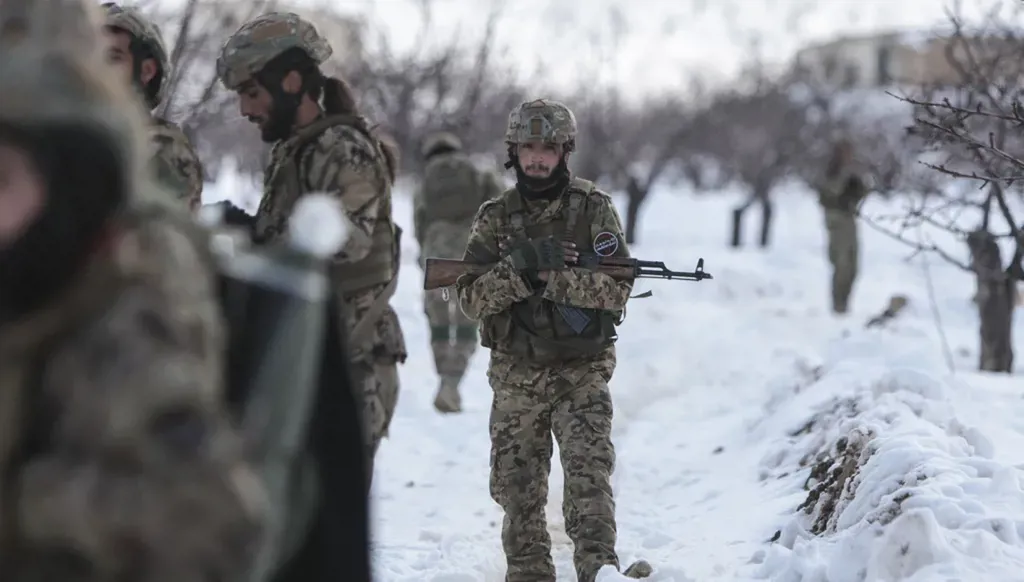
Syrian soldiers at the border with Lebanon. (AFP)
Smaller Bigger


Western reports suggest that American pressures, with Israel behind them, are being exerted on Damascus to encourage military intervention in Lebanon.


News of Syrian military deployments on the border with Lebanon has reinforced the credibility of these reports, despite Syrian President Ahmad Al-Sharaa’s direct and indirect reassurances to Lebanese officials—through various statements, both old and new—that Syria will not repeat the errors of the old regime and will not interfere in Lebanon’s internal affairs, respecting its independence and sovereignty.


Good intentions and friendly statements may not be enough to determine what is changing in politics and relations between states. Although Damascus demonstrates discipline and commitment to its declarations, as Al-Sharaa noted the injustice imposed on the Syrian people—which points to an open wound—the new Syria may not withstand major international pressures if they intensify.


Conversely, the party in Lebanon might not object to Syrian forces becoming part of the conflict in Lebanon, as this provides legitimacy for retaining its arms to defend against a new “enemy” threatening “all of Lebanon.” The party does not oppose border provocations that could prompt Damascus to lift its reservations about intervening in Lebanon.


The party is not alone in potentially welcoming a “sedition” that fuels sectarian fervor, thereby reaffirming its necessity and presence in Lebanon. Within the environment shaped by Syrian influence in Lebanon, some even threaten to invoke Syrian “transformations” to amplify the “Sunni grievance.” These dynamics manifest in popular and populist forms, but they also resonate with elite voices who view them as a way to correct the imbalance created by the “political Shiism” that has dominated the country for decades.


While foreign pressures, the argument of the “open wound” in Syria, and the calls of “supporters” in Lebanon converge to push Al-Sharaa’s regime to extend beyond Syria’s western borders, Turkey and some Arab countries—concerned with Syrian affairs and supportive of the post-Assad transformation—warn Al-Sharaa and advise rejecting these pressures and ignoring any plans to respond to them.


From the perspective of safeguarding Syria and preserving its achievements, it is more beneficial for Damascus to resist Syrian temptations aimed at drowning Syria’s transformation in the complex, multidimensional Lebanese quagmire. Secondly, it is more advantageous that no aspect of Syria’s stance in rejecting involvement in Lebanon be perceived as a favor or a potential choice subject to change by a volatile mood. Thirdly, it serves Syria better to maintain formal, equal relations with Beirut that respect the principles of international relations and establish a consistency that Syria imposes on itself and on those attempting to draw it into Lebanon.


Some Lebanese may still harbor fears of the “idea” of Syria, regardless of its current regime. This anxiety may serve as political leverage in Lebanon, which some politicians exploit to foster internal attraction and polarization. Al-Sharaa is certainly aware of this, exercising caution in handling the “Lebanon file” and resisting the lure of appointment seekers who seek strength from Damascus and its influence. While the traditions of “Anjar” and “Bourj Al-Barajneh,” established under the Al-Assad regime in Damascus, entrenched the practice of “taqiyya” under the guise of “guardianship” in Lebanon, it may now fall to the new Damascus to challenge those traditions and deter new Lebanese volunteers.


Lebanon will be stronger, safer, and more developed if Syria can restore its stability, rebuild its political and economic strength, and reclaim its prominent role in the region’s history and geography.


Undoubtedly, Syria is aware of the malicious pressures that have recently targeted its southern military infrastructure, and it also recognizes that warnings from allied capitals are intended to protect both Syria and Lebanon from an ambiguous, looming threat with broad regional implications.