

The Degraded Mosaic: Why Hezbollah's Visible Survival Signals Its Structural Collapse




 Messenger
 Whatsapp
 Threads
 Email
Email
 Print
Print
 X
X
 Facebook
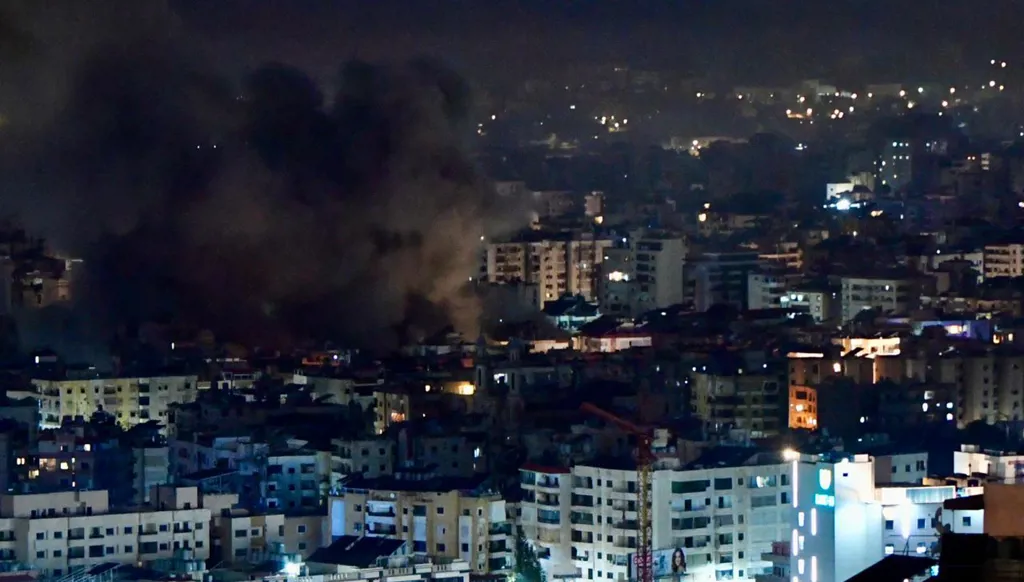


What may seem like the boldening of the “resistance”; the continued rocket fire from southern Lebanon, the elevation of Naim Qassem, the sporadic ambushes by Radwan units, and the persistent broadcasting of Al-Manar, are not in fact, signs of Hezbollah's strategic coherence or organizational durability.
Instead, they are the visible mechanics of a proxy militia in its collapse phase. Following the devastating Israeli campaigns of 2024 and the ongoing US-Israeli war on Iran in 2026, Hezbollah is executing the plans built for the moment its central nervous system was severed.
It is functioning through fragmentation, betting that it can maintain enough surface-level violence to outlast the political patience of its adversaries.
However, unlike the Islamic Republic of Iran, where the regime's survival is intrinsically linked to the personal survival and wealth of its elite, Hezbollah faces a profound game-theoretic vulnerability: a severe incentive asymmetry between the Iranian handlers commanding the war and the Lebanese foot soldiers fighting it.
The Misleading Signs of Resilience
Eighteen months after the systematic decapitation of Hezbollah's leadership by the IDF, including the assassination of Hassan Nasrallah and nearly the entirety of its senior military command, many of the usual signs of militant continuity remain visible.
Hezbollah still fires drones and rockets into northern Israel, forcing residents into shelters. Naim Qassem was installed as the new Secretary-General. The group's media apparatus, Al-Manar, continues to broadcast defiance. Radwan forces still engage Israeli troops in the border areas.
For many observers, these signs point to one conclusion: Hezbollah has taken a severe blow, but it is still holding.
That reading is fundamentally flawed. These indicators are being read through the wrong framework. They are taken as evidence that the organization has absorbed the shock and remains solid. In reality, they indicate the opposite. Hezbollah, guided by the Islamic Revolutionary Guard Corps (IRGC), prepared for the moment when its center would be hit and its command structure would fracture. In that scenario, regional units keep firing, localized cells keep fighting, and the organization projects fragments of normality even as central control collapses.
The activation of these mechanisms is evidence that the system has entered its collapse phase, not escaped it. What we are seeing is not resilience, but a militia preserving violence and surface function long enough to impose costs, masking a deep structural rot.
The System Was Built for Decapitation
To understand why the usual indicators mislead, one must look at the "mosaic defense" doctrine imported from Iran. Following the 2006 war, and accelerating after the outbreak of the 2023-2024 conflicts, Hezbollah reorganized around the logic of asymmetric warfare and decentralized command. Iranian planners understood that Hezbollah could not survive a sustained, technologically superior decapitation campaign if it relied on a rigid, top-down hierarchy.
They built a structure meant to survive fragmentation. The network of regional commands, divided into sectors south and north of the Litani River, the Bekaa Valley, and the Dahiyeh, were built to control local brigades and rocket units with substantial autonomy.
Their purpose was explicit: if the command structure in Beirut were destroyed, the group would still retain armed regional organs able to continue fighting external enemies without waiting for the center to issue orders.
If the chain of command broke, the system would not freeze; it would fragment into semi-independent pieces and keep operating. That is why continued rocket launches should be handled carefully as evidence. They do not show strategic coherence. They show that the militia has entered the phase it prepared for its worst day: preserving violence after coherent command has begun to fail. The missiles are still flying not because the political center in Beirut is fully in control, but because the system was built to keep firing after the center's grip had already frayed.
The Principal-Agent Problem: The Game Theory of Hezbollah's Collapse
While Hezbollah's structural decentralization mirrors Iran's "mosaic defense," a critical divergence exists in the underlying incentive structures. Applying game theory to the current conflict reveals a fatal weakness in Hezbollah's operational model: the principal-agent problem between the IRGC "principals" and the Lebanese "agents."
In Iran, the IRGC elite has everything to lose from regime collapse. Their political power, economic monopolies, and physical survival are inextricably linked to the survival of the Islamic Republic. For them, fighting a war of endurance is a rational, utility-maximizing strategy.
For Hezbollah, the calculus is entirely different. Following the 2024 degradation, Iran dispatched IRGC officers to Lebanon to rebuild Hezbollah's military command, plugging gaps with Iranian personnel. These commanders have a vested interest in bleeding Israel and the United States to protect Tehran.
However, the Lebanese foot soldiers, the rank-and-file fighters of the Radwan Force and local village militias, face an extreme incentive asymmetry.
| Actor | Risk | Reward/Incentive | Rational Strategy |
|---|---|---|---|
| IRGC Commanders (Principals) | High (Targeted strikes) | High (Regime survival, strategic depth for Iran) | Prolong the conflict, maximize adversary costs |
| Hezbollah Leadership | Extreme (Decapitation) | Low (Maintaining diminished local power) | Hide, delegate to local cells, signal continuity |
| Hezbollah Foot Soldiers (Agents) | Extreme (Death, destruction of homes/families) | Negative (Economic ruin, loss of community support) | Defect, avoid engagement, minimize exposure |
On an individual level, a Hezbollah fighter in southern Lebanon in 2026 has very little to gain from fighting a war dictated by Tehran. The financial infrastructure that once guaranteed their salaries has been severely sanctioned and degraded. Their homes have been destroyed, and their communities displaced. The social contract, where Hezbollah provided protection and welfare in exchange for loyalty, has been shattered.
From a game-theoretic perspective, the optimal move for the individual Lebanese fighter is defection or minimal compliance. The IRGC commanders can issue orders, but enforcing them across a decentralized, fragmented network of fighters who bear all the costs and reap none of the rewards is increasingly impossible. The "mosaic defense" relies on the ideological zeal of isolated units; when that zeal is replaced by rational self-preservation, the mosaic crumbles.
Succession as Exposure, Not Confidence
The elevation of Naim Qassem to replace Hassan Nasrallah has been cited as a sign of institutional continuity. But continuity in name is not the same as continuity in power. Nasrallah was a charismatic figure whose physical and rhetorical presence was a primary instrument of authority. Qassem, by contrast, operates in the shadows, a necessary adjustment to the reality of decapitation strikes.
His rare, pre-recorded statements do not project sovereign authority; they project survival. Whether he is in a bunker in Beirut or relocated elsewhere, his invisibility sends a clear message to the rank-and-file: the center is hiding rather than holding. This is a transition of survival, with a leader constrained by extreme personal risk and the remnants of a badly damaged command structure calling the shots around him.
Quiet Constituencies Do Not Mean Public Support
The absence of mass, organized Shiite uprisings against Hezbollah in Lebanon is often misread as enduring loyalty. In reality, segments of Lebanon's Shia community have expressed growing disillusionment with Hezbollah's deterrence capability and the devastation brought upon them.
The quiet reflects tactical restraint and exhaustion, not public submission. The population is reeling from displacement, economic collapse, and the realization that Hezbollah dragged the country into a devastating war for Iranian, not Lebanese, interests. When the structural coercion of Hezbollah's security apparatus weakens further, this quiet exhaustion is highly likely to transition into open political revolt.
The Organization Does Not Need to Win. It Needs to Last.
Taken one by one, the signs of Hezbollah's continued operations, the rockets, the media broadcasts, the localized ambushes, can reassure those looking for evidence of endurance. Taken together, they create a powerful illusion of resilience.
But that is precisely what contingency architecture is meant to do. A system built for its worst-case scenario can go on firing and projecting fragments of order long after it has lost the central coherence, strategic confidence, and institutional depth it once had.
Hezbollah's present behavior must be read differently. It does not need to look healthy. It does not need to prove that its command structure is intact. It only needs to prevent the appearance of final collapse, keep enough force in motion to impose costs, and hold out until the current US-Israeli campaign concludes.
However, unlike the regime in Tehran, Hezbollah cannot rely on the self-interest of its fighters to sustain this illusion indefinitely. The game-theoretic reality is that the Lebanese fighters are paying the ultimate price for an Iranian strategy.
What we are watching is not a proxy demonstrating strength; it is a proxy in its collapse phase, executing a doomsday design while the very fighters meant to sustain it, rationally calculate that the war is no longer theirs to fight.