

From Gaza to the Gulf: The Contradictions of Arab Activism
Some Gulf citizens wonder—and I am merely passing along the question—why some of our own people took it upon themselves to boycott companies accused of supporting the Israeli occupation during the war on Gaza, yet they do not now call for a boycott of Iranian products such as yogurt, carpets, and saffron in response to Iranian aggression against our countries.



 Messenger
 Whatsapp
 Threads
 Email
Email
 Print
Print
 X
X
 Facebook


Some Gulf citizens wonder—and I am merely passing along the question—why some of our own people took it upon themselves to boycott companies accused of supporting the Israeli occupation during the war on Gaza, yet they do not now call for a boycott of Iranian products such as yogurt, carpets, and saffron in response to Iranian aggression against our countries.
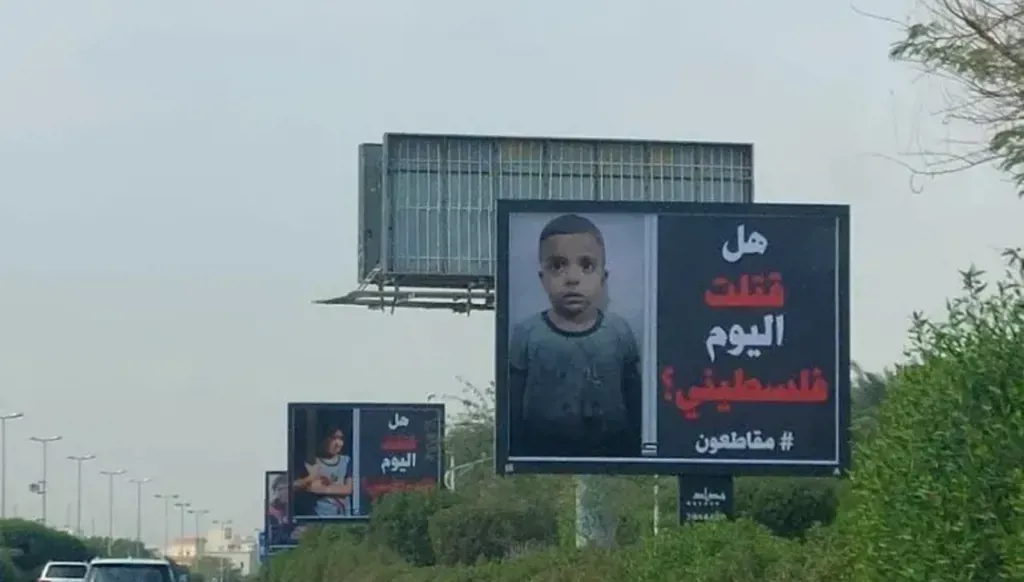
They recall, for example, the giant banners that were displayed in one Gulf capital with the phrase, "Did you kill a Palestinian today?" as a call for boycott, and they wonder why similar banners were never put up saying, "Did you kill a Gulf citizen today?"
While I have no doubt about the legitimacy of the Palestinian cause and fully support any initiative launched in its defense, I find these questions thought-provoking. How is it that some Gulf citizens who wept blood for Gaza feel not even a trace of outrage when it comes to Dubai, Muharraq, or Duqm?
In short, because defending the Gulf homeland is not considered “cool” enough.
You do not feel from them the sense of being a revolutionary, a rebel, or strong, nor that the spirit of Che Guevara—or on the other side, the spirit of Sayyid Qutb—has taken hold when they confront the enemies of their Gulf homeland, even as missiles and drones literally fly over their heads. They are fighters, excellent fighters, but they are not meant for local use.
They are the product of years of ideological conditioning that have made defending our Gulf countries seem shameful, annoying, embarrassing, disgusting, and contrary to their sense of rebellion. This is evident even now, when these countries are in a real state of war that calls for rising against the enemy. I would bet that any of them would feel awkward, embarrassed, or unsettled in front of their fellow “Arab activists” if they wrote or delivered a word denouncing Iranian aggression against their own country. They might even swear on the gravest oaths that they have not become “patriotic,” because the principle is that these “wealthy, comfortable, capitalist, and Western-aligned” countries are not worthy of support or endorsement, even as martyrs fall and security is shaken.
One of the most striking things I witnessed with my own eyes was during lunch with a woman of Gulf father and Syrian mother who had asked to meet me after we followed each other on Twitter. She stressed her contempt for the idea of belonging to a homeland. What is a homeland—she meant her father’s Gulf country—other than the place where one happened to be born, where fate decided one would grow up, and that one did not love or support simply because one did not choose it? Since I had no patience for a discussion that would fry my brain cells, I said my favorite phrase, “a point of view,” and changed the subject.
At the same time, she mourned her mother’s homeland, Syria, on social media as she described it being destroyed by Bashar al-Assad, worried about it under Caesar Act sanctions, and despised Iran and Hezbollah for their involvement. She did all this without ever noticing the sheer coincidence that made her half Syrian. She is just one example of the phenomenon.
This is a real disaster, threatening to make the Gulf citizen the last to mourn a Gulf tragedy.
Disclaimer: The opinions expressed by the writers are their own and do not necessarily represent the views of Annahar