

Between war and collapse: Lebanon under Hezbollah’s pressure
The party did not merely provoke an Israeli war against the country’s resources, cities, and villages; it placed the Lebanese state in a very weak position against Israel.



 Messenger
 Whatsapp
 Threads
 Email
Email
 Print
Print
 X
X
 Facebook


Last week, Turkish Foreign Minister Hakan Fidan used strong language when he said that “Israeli attacks must stop before the Lebanese state collapses,” warning that such a collapse “would have a deep impact on the entire region, especially neighboring countries.”
European countries agreed with Turkey on this assessment, noting that Hezbollah has placed the state in a serious existential crisis. Within this context, it has not hesitated to issue public threats through its Secretary-General, as well as implicit threats aimed at dismantling the Lebanese state and the Lebanese army from within. This, in particular, also reflects the magnitude of Hezbollah’s own predicament.
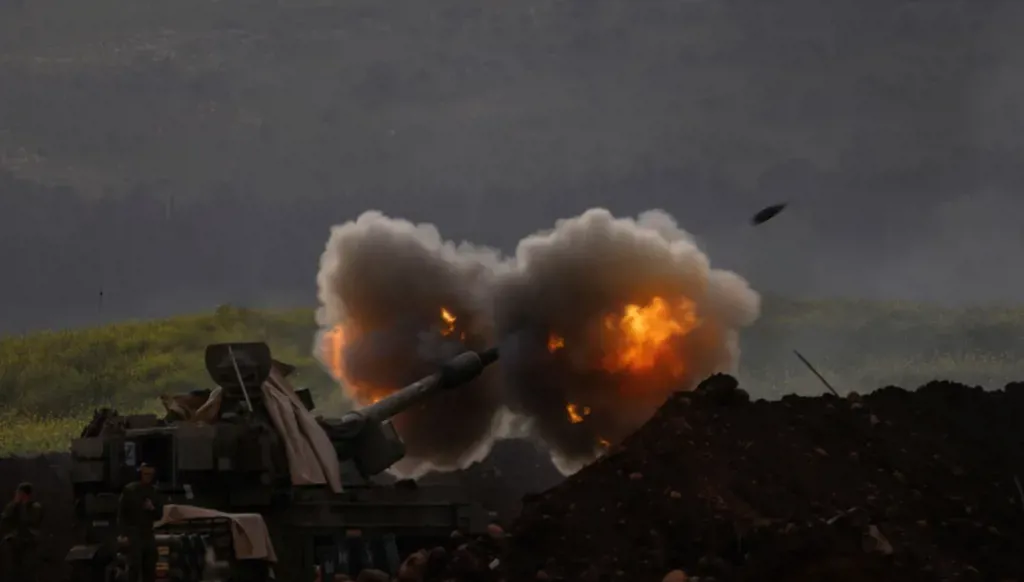
The party works to present itself as “resisting” Israel in the border villages where the Israeli army operates, but this effort has been strongly dominated by linking its presence and actions to avenging Iranian Supreme Leader Ali Khamenei and defending Iran, as stated by the new Supreme Leader, who praised Hezbollah for standing with Iran despite all difficulties and also thanked the “Resistance Front” in Iraq and Yemen. This has reinforced the image of a war that Hezbollah has not fought for Lebanon’s benefit. Unlike its previous conflicts, in this round Hezbollah failed to force the displacement of northern Israeli settlements, as it did during the Gaza support war, despite repeated calls in that regard.
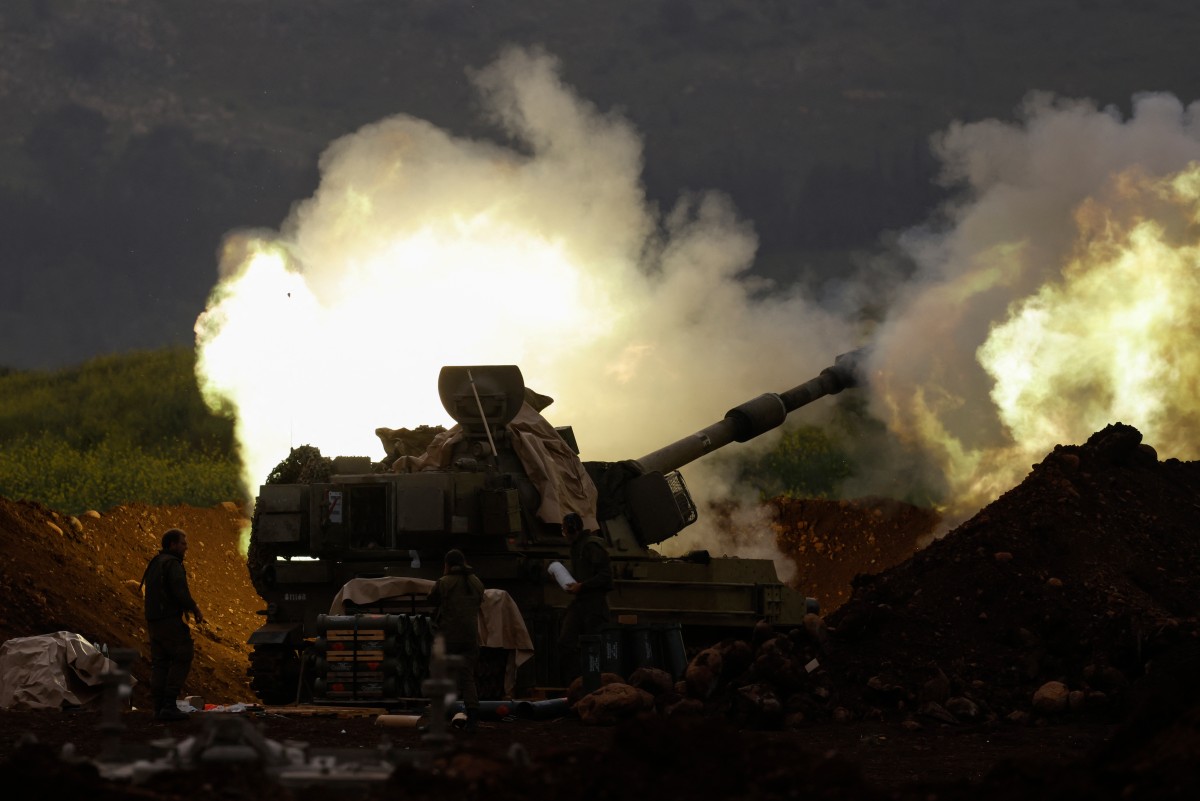
He issued warnings calling for the evacuation of northern Israeli residents from their homes to put political pressure on the Israeli government to reduce its military effort. However, this did not materialize, reflecting a different military situation compared to the past. Even the launch of a large group of rockets—numbering several hundred as part of the “Al-Asf al-Ma’kul” campaign announced days earlier—did not significantly change or influence Israel’s brutal approach. This prompted notable observations regarding the party’s military capabilities and the remaining rockets at its disposal.
The party also lost any cover from the Lebanese state. While the state has been criticized for its inability to implement a legal separation of the party’s military and security wing, it was compelled to do so to save itself and Lebanon. Yet the description by President Joseph Aoun of Hezbollah as serving foreign interests at the expense of Lebanon dealt a severe blow. UN Secretary-General António Guterres did not observe Hezbollah’s compliance with Lebanese state decisions, and mediation efforts to stop the Israeli war on Lebanon see disarming the party as a necessary precondition.
A fine line exists between ensuring that Israel can neutralize Hezbollah without triggering broader destructive consequences and preventing Lebanon’s collapse. The party did not merely provoke an Israeli war against the country’s resources, cities, and villages; it placed the Lebanese state in a very weak position against Israel. Its so-called “resistance” is not a strong card that can be used, nor is Israel’s deterrence over it truly effective, while Israel has significantly expanded its presence to occupy additional positions in Lebanon.
While Naim Qassem accuses the state of making concessions to Israel, in reality, it is the party that is pushing the state into unprecedented concessions to stop the war and prevent its collapse. The state is not the party; it cannot be reduced to the party’s ideology, power, or sect, as it is responsible for all Lebanese, across their sects and affiliations, and not solely for the party. Relying on “martyrdom and resistance” or on national causes—whether related to Palestine or Iran—as distinguishing factors is no longer sufficient to protect the party from wider regional shifts or from internal necessities that threaten its survival as a military faction serving Iran. The party has become a burden on its environment and on Lebanon. This regional shift, which will inevitably lead to a decline in the party’s financial and military capabilities, poses a challenge that forces the party to reassess and adapt, as it now faces significant shortcomings in military confrontation and in protecting its base, not to mention a decline in financial resources.
External actors who do not want the Lebanese state to collapse are placing it before difficult choices with bitter consequences: either engage in direct negotiations with Israel alongside a path to disarm the party or endure a war that could lead to Lebanon’s collapse. In the deliberate leaks of proposals, ideas, or preparatory papers for these negotiations—which Lebanon has expressed willingness to engage in—there are many high stakes that put the state in a dangerous position, with open possibilities for internal conflicts that are no less challenging and threatening to its unity and stability. The emphasis by French President Emmanuel Macron that all components must be represented in the negotiation process signals an awareness of the minefield Lebanon may face along this path, especially given the important leverage the party continues to hold, which controls the decisions of the Shiite community in ways that affect the state and its decisions.
Disclaimer: The opinions expressed by the writers are their own and do not necessarily represent the views of Annahar