

From revolt to war: How the Arab Levant shaped the modern Middle East
From Ottoman collapse to modern conflicts, a century of wars, independence, and regional power struggles shaped the Middle East and continue to reverberate worldwide.



 Messenger
 Whatsapp
 Threads
 Email
Email
 Print
Print
 X
X
 Facebook


Talking about changing maps or the geopolitical reality in the Middle East, particularly in the main Arab Levant countries, is not just rhetoric or a matter of political orientation, and it is not new. Such changes occurred during what became known as the "Great Arab Revolt" in the early 20th century, which led to the end of the Ottoman Empire and the subjugation of the Arab Levant to Western colonial powers, as a result of the World War I equations.
This happened again after World War II, at the end of the first half of the last century, with the end of direct colonialism and the independence of Arab states in the Levant, resulting in the establishment of "nationalist" republican regimes led by the military, as in Syria, Iraq, and Egypt. Remarkably, these developments coincided with the establishment of the State of Israel (1948) at the expense of the Palestinian people, challenging the newly emerging Arab reality at the time.
During the second half of the 20th century, the first transformative event after Arab independence occurred with the Six-Day War (1967), resulting in Israel's occupation of the remaining Palestinian territories in the West Bank and Gaza, and its expansion into Egyptian (Sinai Peninsula) and Syrian (Golan Heights) lands, reducing Jordan to east of the river after the West Bank's occupation. This also weakened the "radical" nationalist regimes in terms of structure, meaning, and legitimacy, shifting the Arab-Israeli conflict from a struggle over Israel's existence to the nature of its existence in the region. Remarkably, this coincided with the rise of the Palestinian national movement, which chose armed struggle to liberate Palestine, in contradiction with the prevailing Arab regimes' approach at the time.
However, the effects of that war ultimately shaped subsequent developments in the Arab Levant, as the October War (1973) was considered the last state-level Arab war against Israel. This translated not only into Egypt's withdrawal from the Arab-Israeli conflict through the signing of the Camp David Agreement (1978) but also into a broader shift within the Arab system toward a political negotiation approach with Israel. This shift eventually led the Palestinian leadership, following the Israeli invasion of Lebanon (1982) and the collapse of the Soviet Union, to sign the first political agreement between Israel and the Palestinians, establishing the Palestinian Authority under the Oslo Accords (1993).
The most significant transformative event in the Arab Levant in the early 21st century was the U.S. invasion of Iraq (2003), not only toppling Saddam Hussein's regime but also, allegedly, presenting the country on a "silver platter" to the Iranian regime through armed sectarian militias acting as regional instruments serving its policies in the area. This made the Iranian regime, for two consecutive decades, the dominant or most effective power in the region—surpassing even Turkey and Israel—directly influencing Iraq, Lebanon, and Syria.
Now, we face the most dangerous and significant event since independence and the establishment of Israel, and after the 1967 War, represented by the repercussions of the "Al-Aqsa Flood" operation. Paradoxically, it is considered the harshest blow Israel has ever received in its history, producing opposing repercussions—much like what occurred earlier when the independence of Arab Levant countries coincided with the establishment of Israel.
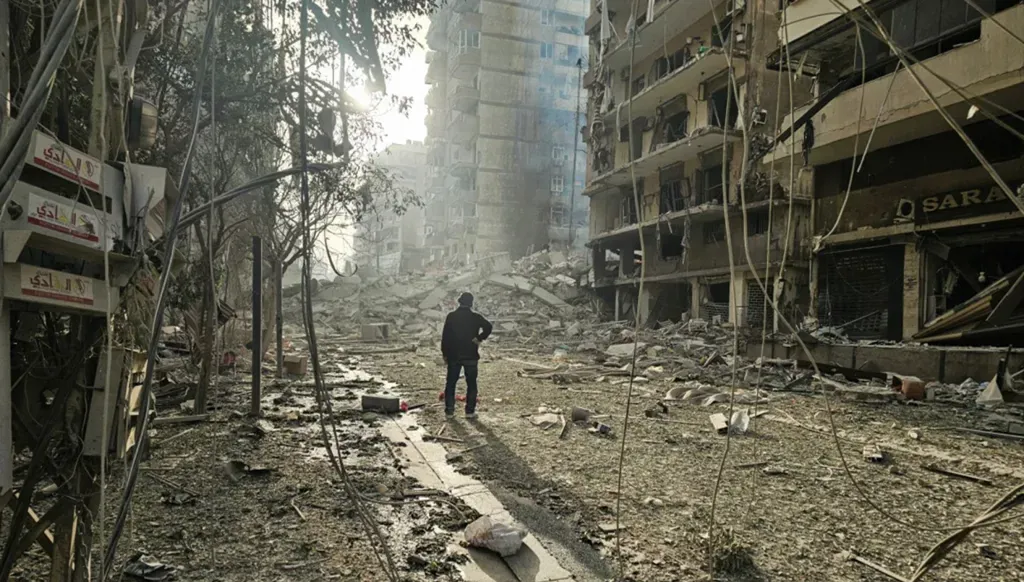
As we've noted, those repercussions included Israel launching a multi-front war in the region—from Lebanon, Syria, Iraq, and Yemen, reaching Iran itself—including a brutal extermination campaign against Gaza's Palestinians lasting more than two years. This reinforced Israel's colonial, racist, religious, and oppressive dominance over Palestinians from the river to the sea, turning Gaza into an unlivable area and undermining the path toward establishing a Palestinian state, more than three decades after the Oslo Agreement. At the same time, it weakened Hezbollah's capabilities and legitimacy in Lebanon, coincided with the Syrian regime's collapse, and curtailed Iran's influence.
However, it should be acknowledged that what we are witnessing today in the U.S.-Israel campaign against the Iranian regime and its regional proxies is not merely a response to the 'Al-Aqsa Flood' operation. Rather, it fits into a broader framework aimed at restoring Israel as a deterrent state and solidifying its status as a regional superpower. This also applies to the United States, which, under the Trump administration, has sought to advance its political, security, and economic agenda globally—through the Middle East as well as Latin America, Eastern Europe, and East Asia—in the face of other emerging global powers, particularly China.
The world is in flux, and it appears that the ongoing war is one means of driving that change, once again affecting the Middle East, just as it did after the two great wars—the First and Second World Wars.
Disclaimer: The opinions expressed by the writers are their own and do not necessarily represent the views of Annahar.