

Mojtaba Khamenei and the making of Iran’s next era
As Iran’s new Supreme Leader, Mojtaba Khamenei inherits his father’s legacy, a powerful Revolutionary Guard, and a nation at a crossroads between ideology, instability, and global pressure.



 Messenger
 Whatsapp
 Threads
 Email
Email
 Print
Print
 X
X
 Facebook
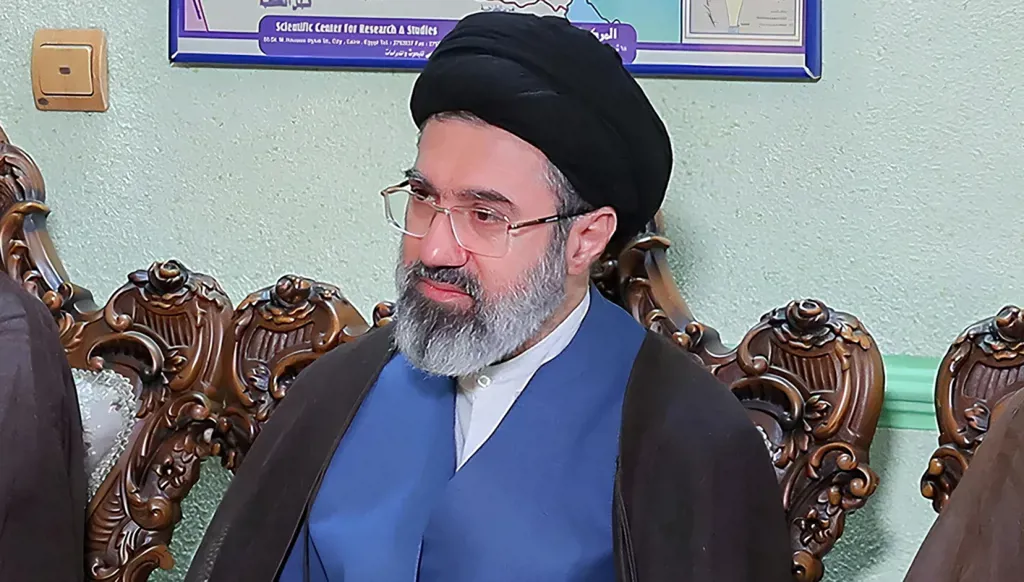


The Iranian regime did not wait long to select a successor for the late Supreme Leader Ayatollah Ali Khamenei: his son Mojtaba. In this way, the institutions tasked by the constitution with filling this position carried out their role perfectly, despite the very harsh campaign waged against them by U.S. President Donald Trump and Israeli Prime Minister Benjamin Netanyahu for roughly two weeks or less.
Will the new leader face difficulties that could hinder him in performing his new duties? Two serious American researchers, one of Iranian descent, answer this question by saying that, due to family connections and his relatively young age (56), he is well prepared to assume this major position at the head of an institution that employs around 5,000 people under his father’s leadership, not including experts and advisors. Khamenei senior had representatives in every province, every government ministry, and in a number of cities, as well as within units of the Islamic Revolutionary Guard Corps.
Mojtaba has long been an important figure in his father’s office. Observers say he often influenced affairs from his position and controlled access to visitors of his father. He mostly worked behind the scenes, even when moving to implement certain decisions. Among these decisions, unfortunately, was pushing Mahmoud Ahmadinejad to run for and win the presidency of the Islamic Republic in 2005. Other potential candidates had to begin by trying to understand how the late Supreme Leader operated, noting that Mojtaba needed several years to establish himself as a significant voice in the decision-making process within the regime, and even longer to gain control over the government and constitutional institutions. The “levers” of this institution had been strengthened over decades. Therefore, Mojtaba will be well qualified to assume the role of Supreme Leader quickly and exercise much of his father’s authority.
What about Mojtaba as a leader in the military and security institutions? His succession comes at a time when the regime is facing a systemic crisis. There is a war with the United States and Israel, the sudden death of Supreme Leader Khamenei, and an unprecedented transfer of power both within the family and within the Islamic Republic. This occurs against the backdrop of a conflict between the regime’s ideology, traditional structures, and the pre-1979 Islamic Revolution era.
Those familiar with Mojtaba’s background believe that complications will ripple through the military institution. As part of his long “behind-the-scenes” record, Mojtaba established influence within security, intelligence, military, and religious institutions. He developed deep ties with Revolutionary Guard networks, directly managing significant money-laundering operations and overseas investment networks, which were partly used to finance the Guard.
A memo leaked several years ago praised Mojtaba for his military knowledge and extensive support for the Guard, especially through additional funding for missile and drone projects. He gained his military education and experience during the Iran-Iraq War. As a teenager, he served in the Guard’s 27th Division in mostly non-combat roles, but enough to build camaraderie with supporters of the institution, particularly within his well-known unit, the Habib Battalion. Many of these comrades later held leadership positions in the Guard, intelligence agencies, and government.
These wartime relationships remain central to his power base today. His rise to Supreme Leader will mean that his authority will rely on maintaining and strengthening ties with the Guard, but in ways that remain largely out of the media spotlight and official channels.
Mojtaba has a personal stature that must be taken into account now that he has come to power within the Guard and the religious legitimacy network. There is no doubt that reaching the top of the Islamic Republic in Iran will continue to influence his decision-making process. According to available information, the military strike that killed his father also killed his mother, wife, sister, and brother-in-law.
This may lead him to treat external security risks with great attention, focus on state power and authority, and avoid entering into compromises with the United States. In the early stages of his “rule,” he may be driven by feelings of revenge and a desire to strengthen the ideology of the Islamic Republic, including its existential confrontation with America and Israel.
At the same time, coming to power after the death of his father and family members may make him somewhat fragile, especially as public sentiment toward the clergy begins to shift. However, these challenges also existed during his father’s era and did not prevent him from successfully leading the Islamic Revolution after its founder, Khomeini, passed away.
What are the implications of selecting Mojtaba as the Supreme Leader of the Islamic Revolution in Iran following the assassination of his father? Trump did not comment when there were vague, widespread rumors about preparing Mojtaba for succession. However, earlier this week, he expressed his displeasure and rejection of it, even before it happened.
In his view, the risks of Mojtaba coming to power include facing personal and political pressures, strongly influenced by the Revolutionary Guard. This may lead him to adopt certain policies under the Guard’s influence, aiming to restore control over the streets and counter Iran’s declining capabilities. It could also push him to expand ballistic missile launches, particularly targeting Gulf countries.
As the new Supreme Leader, Mojtaba may initially pursue a strategy of “defiant persistence.” Over time, however, he and the Revolutionary Guard might decide that Iran must act quickly to acquire nuclear weapons to deter future Israeli and American attacks, whether this stabilizes the regime or further fragments and destabilizes it. If the system collapses, Mojtaba will likely attempt to work with the remaining loyal members of the Revolutionary Guard and the Basij to stage an uprising and thwart the Iranian people’s efforts to rebuild their country.
Disclaimer: The opinions expressed by the writers are their own and do not necessarily represent the views of Annahar