

Why war in Iran is more complex than Gaza or Venezuela
Trump lost the chance to replicate the “Venezuela adventure” in Iran, since the late Supreme Leader has no deputy to step in and play the role of Delcy Rodríguez in place of President Nicolás Maduro.



 Messenger
 Whatsapp
 Threads
 Email
Email
 Print
Print
 X
X
 Facebook
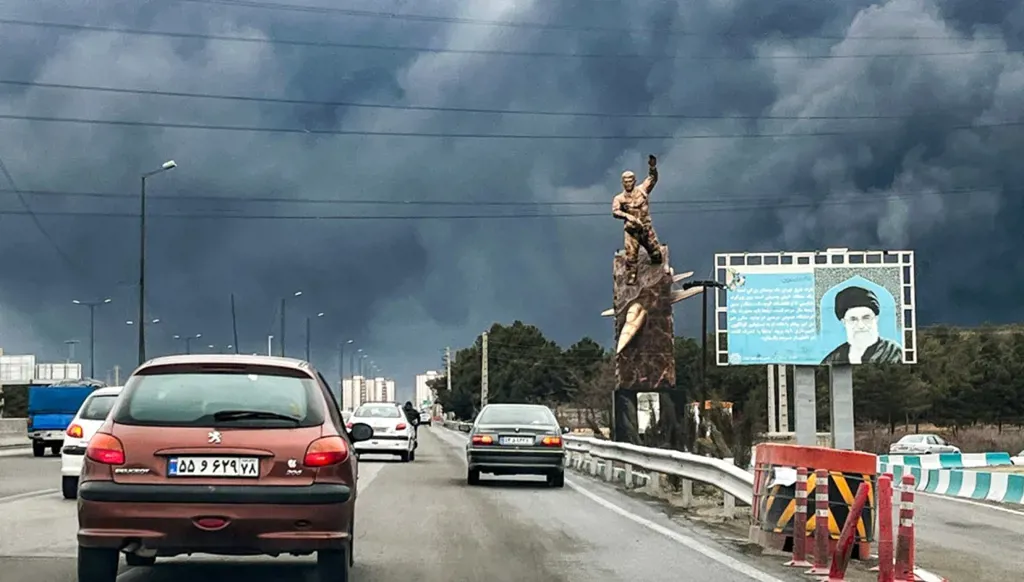


Many aspects of the current war do not seem to have been deeply considered, especially on the American side, which is why frustration and embarrassment emerged during the planning of the second phase. When it was decided to resort to the deadliest weapons to test their effects, it became clear that the war is being conducted according to Israeli military doctrine. It has increasingly been described without hesitation as “Netanyahu’s War,” since it takes on the characteristics of the “war on Gaza,” which remains unresolved and in which the Israelis have failed to achieve complete victory over the past two years.
The American president must know, or has been told, that Iran is neither Gaza nor Venezuela. Naturally, he would not be pleased if his war were described as anything other than “Trump’s War.” Yet he and his administration currently prefer to attribute all missteps or “dirty strikes” to their Israeli ally, including the assassination of the Iranian Supreme Leader and forty-seven of his commanders in a single airstrike. Nevertheless, American fighter jets carried out a massacre of schoolgirls at Minab School in southern Iran.
At the end of the first week of the war, the Iranian president came forward to announce the “decisions” of the interim leadership. The first was an “apology” to the Gulf states after they had been targeted by missiles and drones. He then pledged not to attack them, saying “we hold no enmity toward them,” while justifying the strikes by claiming that the armed forces—referring to the Revolutionary Guard—“acted independently after the loss of our leaders and our commander.” Shortly afterward, the Iranian army spokesperson confirmed the president’s position, stating that neighboring countries whose territories are not used against Iran would not be targeted.
Although the apology came very late and from a source whose authority is uncertain, missiles fell in several of these countries shortly after the announcement, signaling from the Revolutionary Guard that compliance could not be guaranteed. While the apology indicated that the highest levels of power recognized the strategic mistake of striking neighboring states, it may not be sufficient to close the chapter. In any case, the Gulf states had already made their principled opposition to the war and to any intervention publicly clear.
In the first week of the war, Washington, unlike Israel, appeared preoccupied with concerns about a prolonged confrontation and the expectations for the “day after.” No matter how much Trump trusted the power of his forces, he could not deal with a country like Iran in the same way Netanyahu dealt with Gaza—without a time limit for the war or a vision for what comes next—even though American destruction could continue for a long period, from four to six weeks, as Pentagon generals assured him, given the military capabilities at their disposal.
Trump began to realize the difficulty of achieving the “unconditional surrender” he hoped for, as well as the impossibility of personally “choosing (new Iranian) leaders.” In fact, the National Intelligence Council’s report, summarizing analyses from the 18 intelligence agencies, confronted him with a reality that might persuade him to quickly seek a “negotiated exit.” This would involve limiting the campaign to destroying Iranian capabilities in the second phase, then defining a “reasonable” end to the war and allowing the consequences to unfold inside Iran, while simultaneously encouraging the Kurdish minority—and possibly later the Azeri and Baloch groups—to take action on the ground.
Does this represent a divergence from Netanyahu? Not at all. The Mossad and the CIA are coordinating the militarization of these minorities, as they represent the best alternative to involving American forces in penetrating Iran directly.
Trump lost the chance to replicate the “Venezuela adventure” in Iran, since the late Supreme Leader has no deputy to step in and play the role of Delcy Rodríguez in place of President Nicolás Maduro. Trump will not be able to gain control of Iranian oil to sell it and offset the costs of the war. Public opinion—even within his MAGA-supporting base—is increasingly divided over whether this war on Iran serves “America First” or “Israel First.” Rising oil prices are also a worrying signal for Washington, as the imminent consequences—higher inflation, disrupted supplies—could worsen if the war drags on, both domestically (ahead of the midterm elections) and globally (leaving America—and Israel—responsible for economic instability).
Although the war has spread to Lebanon—and could still extend to Yemen or Iraq—this does not change the course of the war on Iran. On the contrary, it was another strategic mistake by the Revolutionary Guard, giving Israel a free hand, without pressure or interference, to carry out its expanded war plan against “Iran/Hezbollah” and seize additional Lebanese territory, as if it were “separate” from the war on Iran.
If, by the end of the second week, after using its heaviest weapons, Trump decides to halt the war, he would do so solely in the interest of the United States, once he is convinced that the Iranian domestic apparatus will continue the war on his—and Netanyahu’s—behalf, whether to crush any armed internal revolt or to deal with the worsening impact of sanctions. Pushing for an early public surrender may have backfired, as the regime is likely to respond with increased extremism.
Disclaimer: The opinions expressed by the writers are their own and do not necessarily represent the views of Annahar