

The Iran conflict: How U.S. and Israeli interests align and clash
Washington and Tel Aviv coordinate militarily but diverge on long-term goals, balancing regional influence, ideology, and security priorities.



 Messenger
 Whatsapp
 Threads
 Email
Email
 Print
Print
 X
X
 Facebook
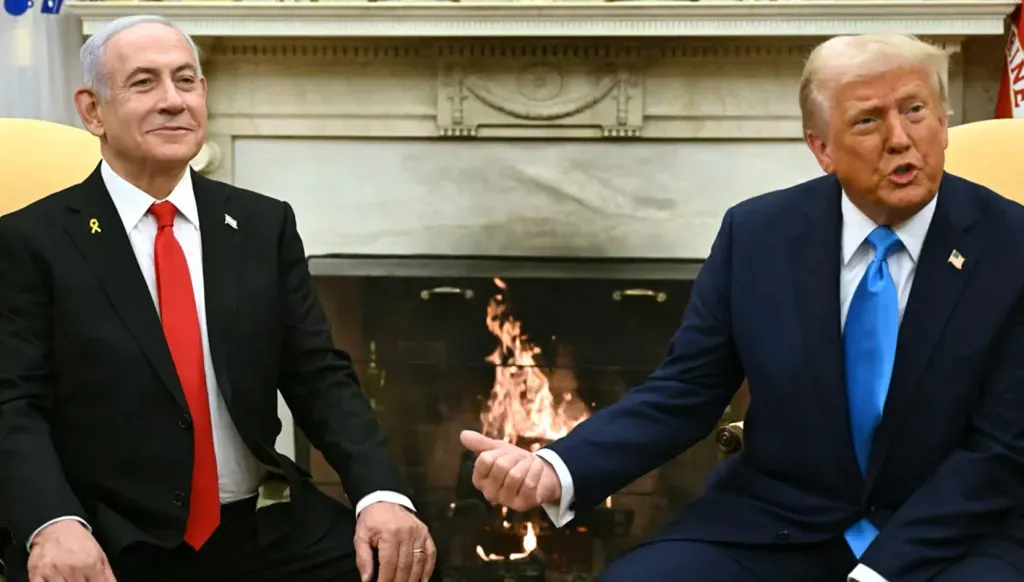


The course of the war between the United States and Israel on one side and Iran on the other reveals a divergence between the visions of the first team’s partners, despite significant field coordination in managing military operations targeting Iranian strategic facilities, particularly those related to nuclear enrichment and ballistic missile production. This difference in goals has been a primary reason for the division in American public opinion, with an increasing number of people believing that the main reasons for the war on Iran are primarily to protect Israel’s interests rather than to serve American interests.
Washington has goals that cannot be ignored, specifically: disrupting the "Belt and Road Initiative" launched by China in 2013; changing the behavior of the current regime in Tehran—or, if not, its replacement—to enable future cooperation in investing in oil and gas, as well as in rebuilding various deteriorating public sector facilities; and exploring precious light metals needed for sensitive electrical and technological industries. The U.S. also aims to ensure that Tehran does not fully align itself with major powers opposing the United States in the future. There is no doubt that President Donald Trump’s administration seeks to settle an ideological score with Netanyahu’s Israeli government through this war, as Tel Aviv leaders view a strong Iran as an existential threat to Israel. It is clear that Washington does not seek to divide Iran into states, nor is it enthusiastic about radical regime change, and is content with leaders willing to cooperate with it assuming power.
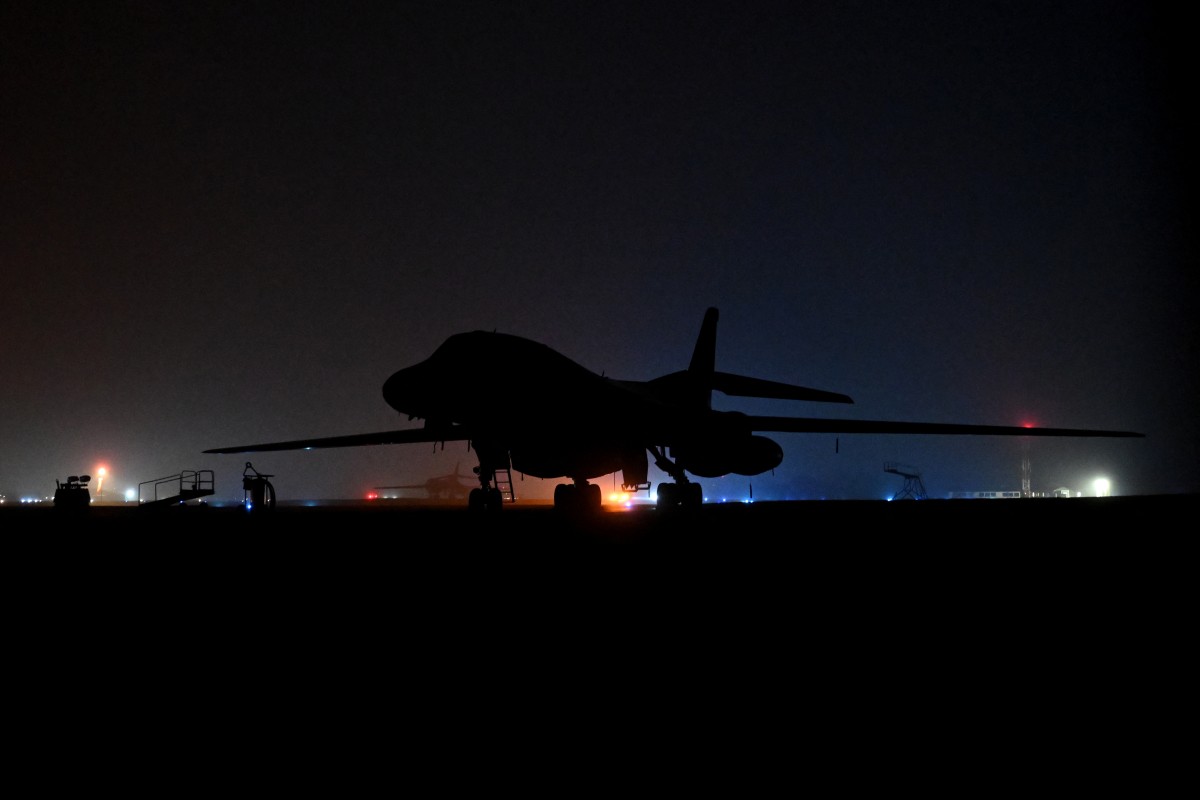
Conversely, Israel seeks to change the regime structure so that it fully abandons its arms manufacturing policy and aims to create internal divisions that could lead to the fragmentation of the sprawling “empire” by establishing independent entities for Kurds in the west, Balochs in the east, and Arabs in the south. This is intended to prevent Iranian strategic expansion, which is seen as a competitor to Israeli ambitions for regional domination. Israel’s goals also include completely ending the Iranian nuclear program, halting Iranian efforts to build an advanced ballistic missile system, and stopping the production of long-range attack drones.
These goals appear to be recent, emerging after the wars in Gaza, Lebanon, and Syria last year, which were followed by significant shifts in the regional balance of power. This suggests that what once benefited Israel from the chaos caused by Iran’s expansionist policy is no longer in its favor, and it appears that Tel Aviv has moved from a strategy of merely distracting the enemy to one of comprehensive domination.
Relying on the perspective of a fundamental disagreement between Washington and Tel Aviv’s ambitions in the war is an uncertain hypothesis. The commonalities between their aims are strong, particularly on the ideological level, where many American elites share the Israeli leadership’s Zionist interpretation of the “Old Testament” and recognize Israel’s actions in its quest for regional dominance as a historical right. Recent statements by U.S. Ambassador to Tel Aviv Mike Huckabee confirm this assumption. Increasing Israel’s influence in the region may serve American interests in the future, as it would come at the expense of European and Turkish influence.
The real problem that the partners will inevitably face in the future arises if Russia or China—or both—decide to leave the neutral zone and reassert themselves in balancing power to enforce multi-polarity with a strong presence. In that case, the outcomes of the war on Iran would be different, and Tehran—which has already incurred huge human and material losses—would not hesitate to join any alliances opposing U.S. and Israeli directions. An “undefeated” Tehran would remain a geopolitical, energy, and ideological force not to be underestimated.
There is certainly a divergence between the allies in the war on Iran, but the disagreement remains under control imposed by common interests and to a lesser degree, the doctrine of some influential figures based on unconfirmed historical facts.
Disclaimer: The opinions expressed by the writers are their own and do not necessarily represent the views of Annahar.