

Iran’s strategic shift: Pezeshkian calls for peace with Gulf neighbors
Let us imagine the following scenario: when American and Israeli forces struck Iranian territory on February 28, the Iranian forces limited themselves to self-defense, targeting Israel and the forces that attacked them without expanding the battle. What would have happened then?



 Messenger
 Whatsapp
 Threads
 Email
Email
 Print
Print
 X
X
 Facebook
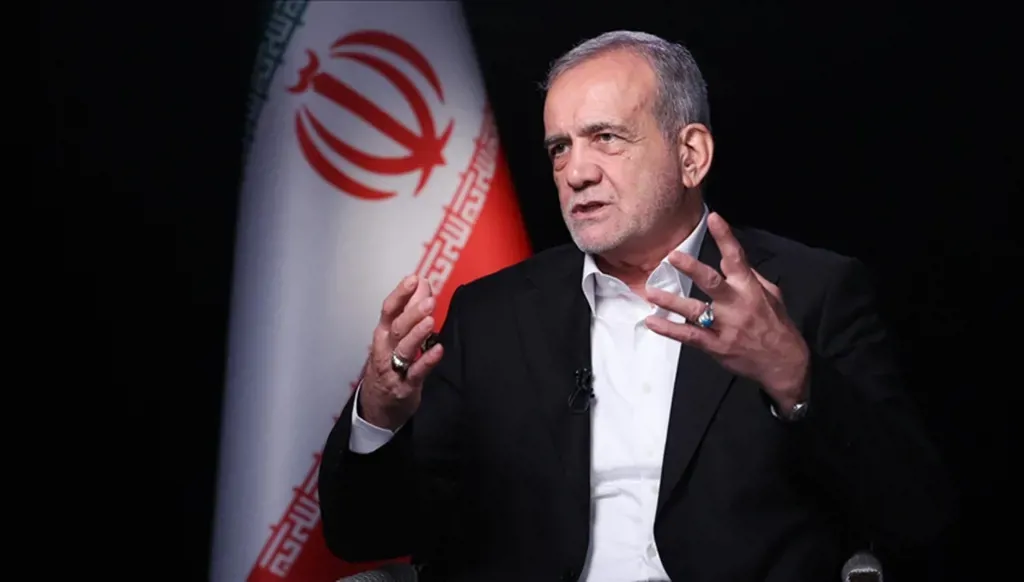


"I apologize to neighboring countries and we have no hostility toward them." This is what Iranian President Masoud Pezeshkian said in a televised speech broadcast on March 7, adding, "We must work with neighboring countries to ensure security and peace."
Pezeshkian tried to explain Iran's hostile military behavior toward neighboring countries, saying, "In light of the loss of our leaders and our supreme leader due to brutal aggression, our armed forces acted independently," while emphasizing that his country "is committed to international law and humanitarian principles."
The position announced by Pezeshkian was not only in his capacity as president but also represents the "Temporary Leadership Council," which approved "suspending attacks unless an attack originates from those countries against Iran." Consequently, the council, which holds the powers of the "Supreme Leader" according to the Iranian constitution, declared this position. All military sectors and the "Revolutionary Guard" are required to comply.
Let us imagine the following scenario: when American and Israeli forces struck Iranian territory on February 28, the Iranian forces limited themselves to self-defense, targeting Israel and the forces that attacked them without expanding the battle. What would have happened then?
At that time, the Gulf Cooperation Council countries, Jordan, and Iraq would have been outside the scope of military targeting and would have acted as they did during the 12-day war between Tehran and Tel Aviv in June 2025, when these countries without exception condemned the "Israeli aggression" on Iranian territory and considered it a violation of sovereignty and international law.
What if the assassination of Supreme Leader Ali Khamenei had occurred while relations between the Islamic Republic and its Arab neighbors were positive? Certainly, messages of condolence would have been sent, and there would have been a broad official and popular Islamic and Arab humanitarian and moral response, stemming from the values upheld by the Gulf states.
Let us recall that when the helicopter carrying former Iranian President Ebrahim Raisi crashed in May 2024, the Gulf countries sent envoys to offer condolences. King Salman bin Abdulaziz at the time assigned Minister of State Prince Mansour bin Muteb bin Abdulaziz, as part of a high-level Saudi delegation, to convey condolences on behalf of the Kingdom.
This previous hypothetical scenario would have benefited Iran, strengthening its political, humanitarian, security, and negotiating position. However, Tehran squandered all this political capital and sympathy, and from day one, its missiles and drones were directed at all Gulf countries without exception.
The recent statements by Pezeshkian will be closely watched, and most importantly, they must be adhered to by the Iranian Revolutionary Guard. The goal is to ensure that aggressive attacks on the Gulf countries do not continue. The Gulf states want words to be translated into real action, with Tehran practicing good neighborly policies that respect the sovereignty of its neighbors, and for hardliners to stop threatening the security of the entire region.
Disclaimer: The opinions expressed by the writers are their own and do not necessarily represent the views of Annahar