




 Messenger
 Whatsapp
 Threads
 Email
Email
 Print
Print
 X
X
 Facebook
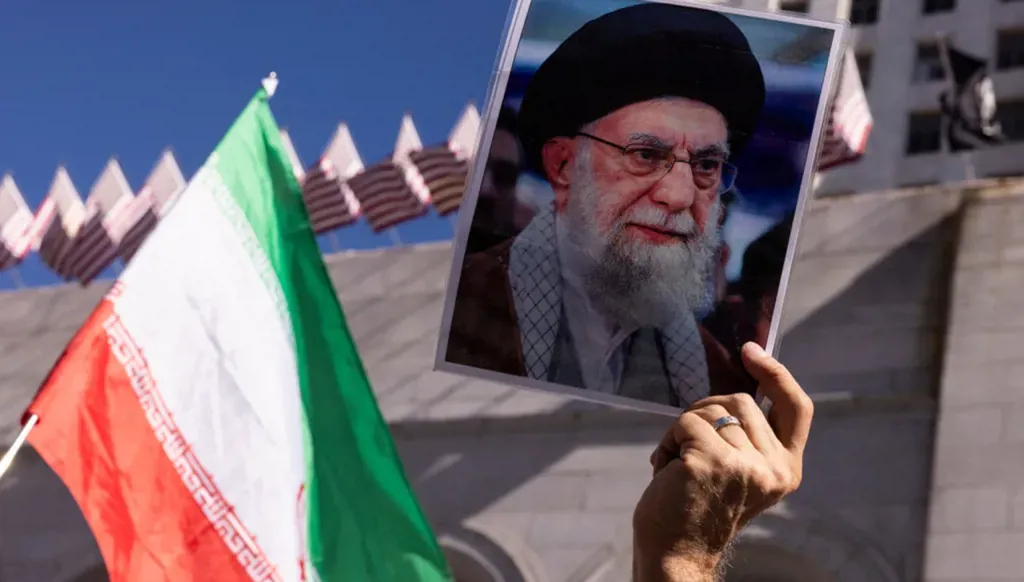


The United States and Israel launched a joint military operation against Iran on Saturday, with the declared aim of overthrowing the regime in Tehran. Hours later, President Donald Trump announced the death of the country's Supreme Leader, Ali Khamenei, in a video message posted on the 'Truth Social' platform. Trump stated that the operation aimed to end a security threat to Washington and offer Iranians a chance to overthrow their rulers.
When announcing Khamenei's death, he said: "Khamenei, one of the most evil people in history, is dead," adding that the Iranian people have "the greatest" opportunity to regain control of their country.
Early diplomatic sources speculated that the severity of Iran's missile response, which targeted Israel and a number of the Gulf states, indicated that something extremely severe had occurred in Iran. The purpose of the strikes was soon made clear as the overthrow of key figures, even before formal confirmation of Khamenei's death.
Iran, broken and defeated, looks at a United States and Israel which have emerged victorious. There is a regional and international anticipation for the coming period: is it coordinated in advance with some undisclosed Iranian partners, according to scenarios circulated in global media in recent months, or will it bring dangerous surprises that regional states have long feared?
The death of Khamenei announces the end of an era in Iran's history and opens the door to a new era, one many countries anticipate, might lead to a radical transformation in policy-making and restructuring of the ruling elite. This indeed places the region at the fore of a new strategic reality, one with unclear ramifications, which have high escalatory potential.
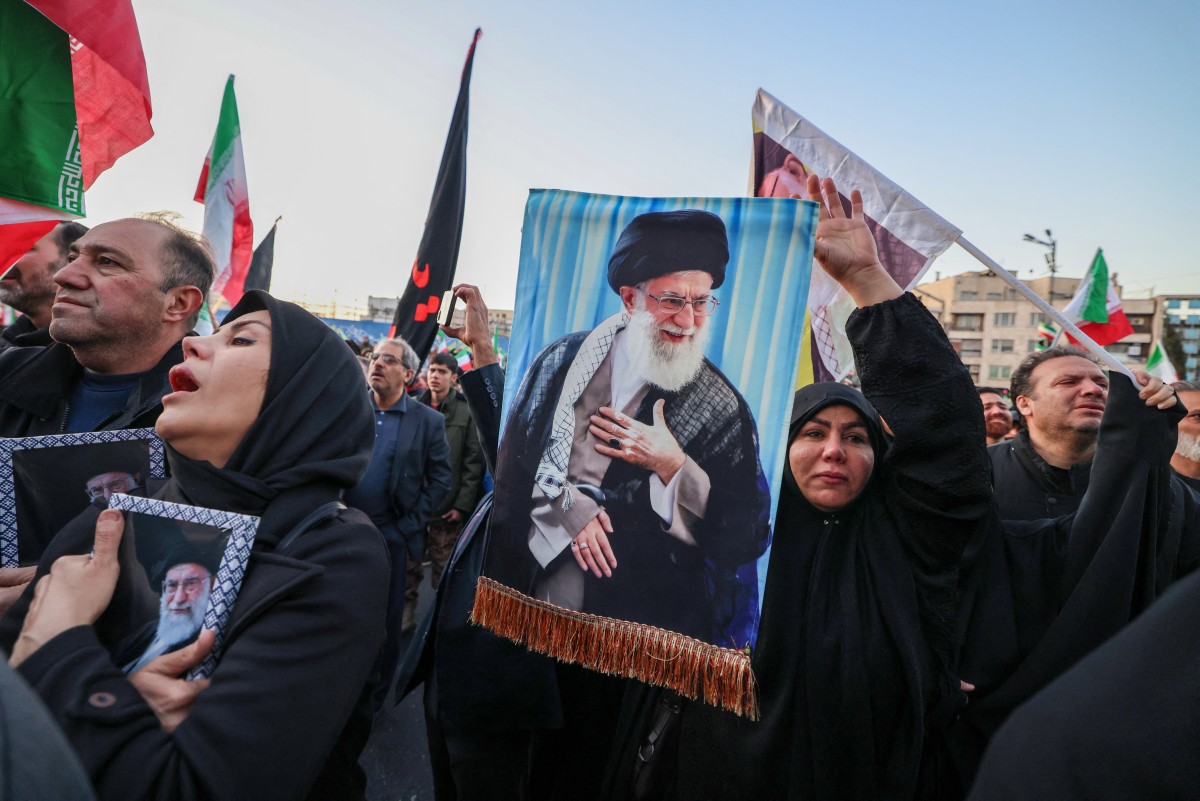
However, it is clear the region must contend with an ascendant United States and Israel. Khamenei, who once held absolute power in the Islamic Republic, leaves behind significant speculation about a vacuum in decision-making within Iran.
Amid the failure to ensure Khamenei's security, it is clear that the added precautions taken after the twelve-day war in June last year did little to prevent American and Israeli planning.
While the succession arrangements, which Khamenei may have prepared in anticipation of his death, could serve to temporarily hold Iran together, the Venezuelan model, frequently revisited when discussing the US's involvement in a war against Iran, looms large: toppling the head while maintaining the same structure to prevent chaos, albeit under entirely new conditions.
Trump publicly indicated this trajectory saying, "We have a very good idea about Iran's new leadership and new leader."
On top of that, Trump's success in imposing complete control over the region, significantly sidelining both Russia and China, will be recorded.
Specific success is attributed to Israeli Prime Minister Benjamin Netanyahu, although it remains under the aegis of American support, which provided cover for the military operation against Tehran.
But Iran, in its multiplicities, is not Venezuela, exceeding it in diversity, size, and capacity, at a time when toppling Iran's leader holds substantial sensitivity that could open doors to very dangerous possibilities of turmoil and chaos in the region.
The role of the Revolutionary Guard, even were it a formal successor to Khamenei, faces the most perilous internal phase in Iran, necessitating significant concessions Khamenei likely couldn't undertake. Like Khamanei, they may be unable to radically shift from slogans like 'Death to America' to an alliance with the major power, or to open avenues of cooperation with it.
Whoever succeeds Khamenei will be obliged to make these concessions to ensure Iran's further decline into collapse and chaos is prevented, and to maintain its cohesion and unity.
Additionally, Iran's regional arms must adjust their calculations differently, starting from 'Hezbollah' in Lebanon, to the Popular Mobilization Forces in Iraq and the Houthis in Yemen. Proxies must assess what has transpired and what is likely to come as new realities can no longer be ignored.
Disclaimer: The opinions expressed by the writers are their own and do not necessarily represent the views of Annahar.