

On the precipice of a 'New Iran'




 Messenger
 Whatsapp
 Threads
 Email
Email
 Print
Print
 X
X
 Facebook
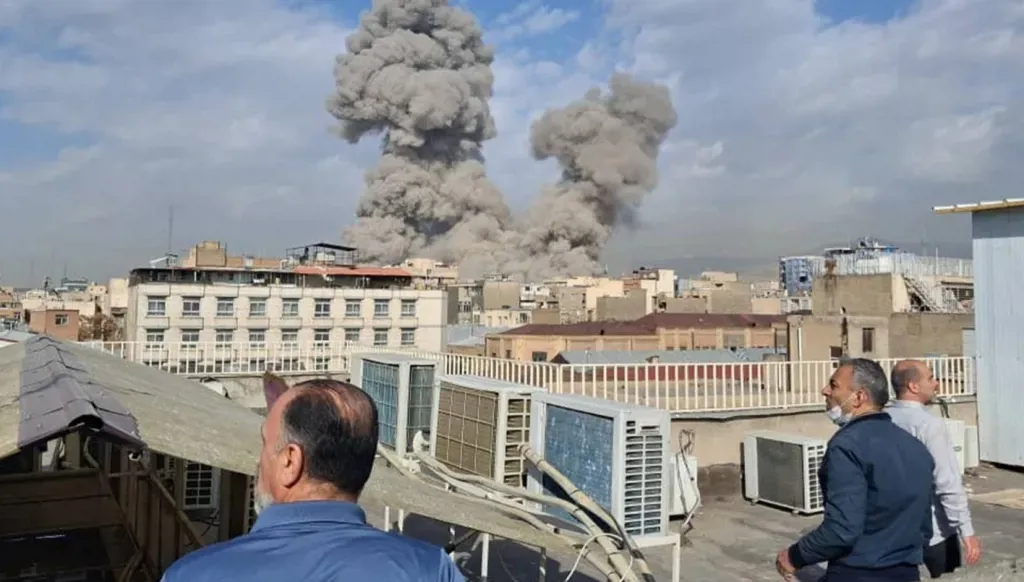


In a comprehensive joint attack, America's 'Divine Wrath' and Israel's 'Lion's Roar' operations wreaked havoc on Iranian targets this Saturday, February 28. The raids represent a tense moment in the 'maximum pressure' policy pursued by U.S. President Donald Trump, however, they should be viewed as an opening salvo. Questions are now arising on the limits of military action, the timeframe for regime change, and the extent to which air power can break Tehran's will.
Dimensions of the conflict
The operations are limited by strategic imperatives and operational constraints. According to Trump, the primary goal is to destroy Iran's missile industry, prevent Tehran from acquiring nuclear weapons, and cripple the regime's regional axis. At present, the war is confined to naval and aerial assaults without indications of a comprehensive ground invasion.
The initial airstrikes targeted locations in Tehran, Isfahan, Qom, Karaj, Kermanshah, Tabriz, and Ilam. The attacks were not limited to military installations but also reportedly targeted the residential compound of Supreme Leader Ali Khamenei and the presidential office in Tehran. This expansion of the target bank suggests that plans for a limited war may have been superseded by a decapitation strategy, although it is still too early to tell.
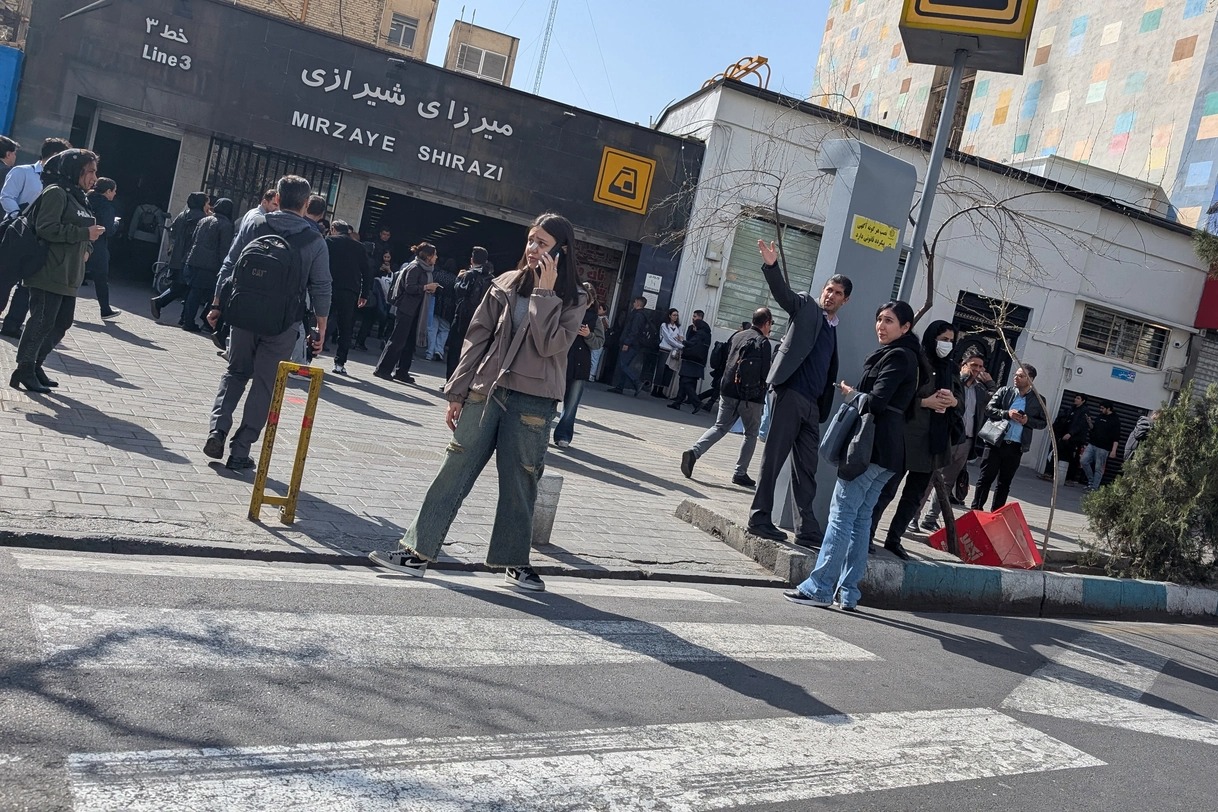
While Washington and Tel Aviv push for radical change, powers such as Russia and China warn of catastrophic consequences. Russia, through Dmitry Medvedev, questioned the expected outcome of the United States facing a Persian civilization that extends 2,500 years, describing the negotiations previously underway between Muscat and Geneva as mere 'cover' for the military operation.
China, which buys about 80% of Iranian oil, views the war as a direct threat to its energy security, which could prompt the country to take diplomatic or economic countermeasures.
The Dilemma of Regime Change
Are airstrikes sufficient to effect regime change in Iran? Trump explicitly called on Iranians to 'seize their government,' indicating that this might be 'their only opportunity that won't recur for generations.' However, military analyses suggest that the timeframe for achieving this goal might be much longer than the Americans expect.
Historically, air power has faced difficulties in 'controlling ground events' after intensifying raids. In Iran's case, experts from the Institute for the Study of War (ISW) and the Center for Strategic and International Studies (CSIS) argue that the clerical regime in Tehran is 'weak' and is losing its grip due to successive crises. Air raids are often referred to as a potential 'straw that breaks the camel's back.'
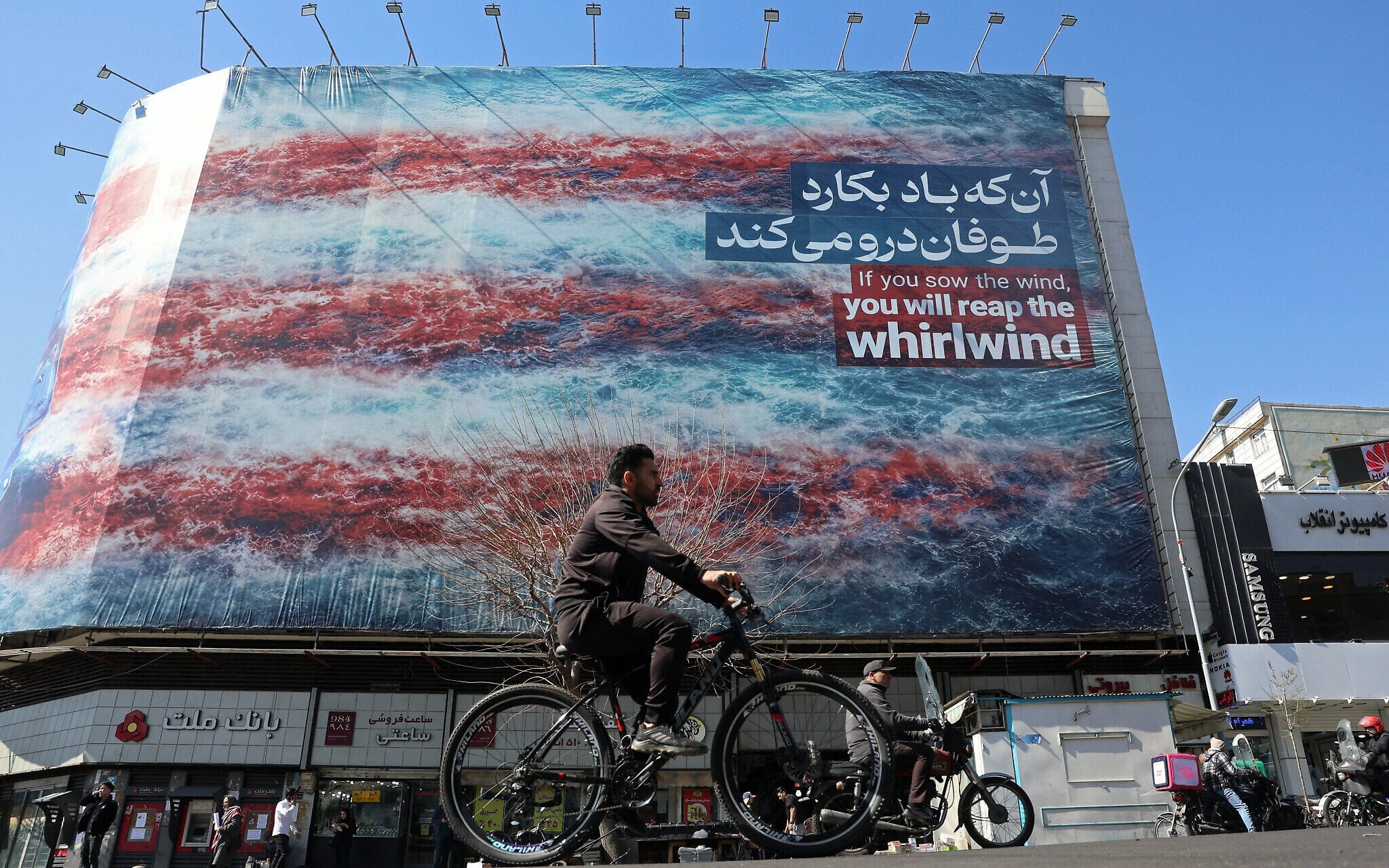
Airstrikes can accelerate regime change via two main mechanisms: first, they can encourage demonstrators to take to the streets, by weakening security apparatuses and reducing regime prestige; and second, they can incite defections, as holes in the top leadership, specifically Supreme Leader Ali Khamenei and President Masoud Pezeshkian, could create a leadership vacuum to be filled by western-minded elements.
Despite these expectations, others see that the Iranian regime possesses a 'stubborn' security structure, built on decades of asymmetric warfare practices. Changing the regime may require an aerial campaign that lasts weeks or months, far beyond the '12 Days War' that erupted in June 2025. If airstrikes do not translate into wide defections or popular uprising, the United States may have to consider more costly options, including deploying special forces to destroy deep bunkers, or even limited ground intervention, which analysts warned could be a potential 'quagmire.'
The Attrition Dilemma
Iran has demonstrated a remarkable capability to launch simultaneous missile attacks in multiple directions, towards Israel, and towards U.S. military bases in Iraq, Kurdistan, Bahrain, Qatar, and the UAE, posing a significant challenge to the assumption that airstrikes could decide the battle.
The problem for military planners in Washington and Tel Aviv is that Iran owns thousands of short- and medium-range missiles, distributed on mobile launch platforms. These platforms can be hidden in forest areas, under bridges, or in deep 'missile cities,' making it extremely difficult to destroy them by air in a short time. It’s worth noting that Trump claimed after the last war that his aircraft had completely destroyed Iran's nuclear program, an assessment administration officials repeatedly contradicted in the lead up to the recent strikes.

Moreover, after the June 2025 war, Iran replenished its stock of heavy missiles, increasing it to about 2,000 missiles capable of hitting Israel. Its ability to 'saturate' advanced air defenses by launching large numbers of missiles simultaneously increases the risks of significant casualties among U.S. and ally forces, which could lead to internal political pressure in the United States to end the war.
History shows that air wars not followed by quick political change often turn into conflicts of attrition. Additionally, the Iranian missile and cyber response, and the use of regional proxies (such as the Houthis, Iraqi militias, and possibly Hezbollah), may elevate the war's costs to unacceptable levels for U.S. base-hosting countries, potentially creating rifts in the anti-Iran regional alliance.
Alongside this, the absence of an organized alternative to the current regime could lead to Iran's fragmentation into warring factions, creating a new security threat characterized by chaos and the proliferation of rocket and nuclear weaponry among non-state actors.
The coming days will decide whether the Trump-Netanyahu duo's bet on overwhelming air power leads to the birth of a 'New Iran,' or plunges the region into a broader and more bloody conflict. In any case, Iran's ability to absorb the initial shock and respond in multiple directions suggests that the battle is still in its early stages, and the old deterrence equation is gone for good. The outlines of the new equation have yet to emerge.
Disclaimer: The opinions expressed by the writers are their own and do not necessarily represent the views of Annahar.