

Hezbollah’s Iran loyalty sparks tensions in Lebanon
As pressure mounts on Iran, Hezbollah’s leadership walks a fine line between ideological loyalty, Lebanese opposition, and the threat of a devastating new conflict.




 Messenger
 Whatsapp
 Threads
 Email
Email
 Print
Print
 X
X
 Facebook
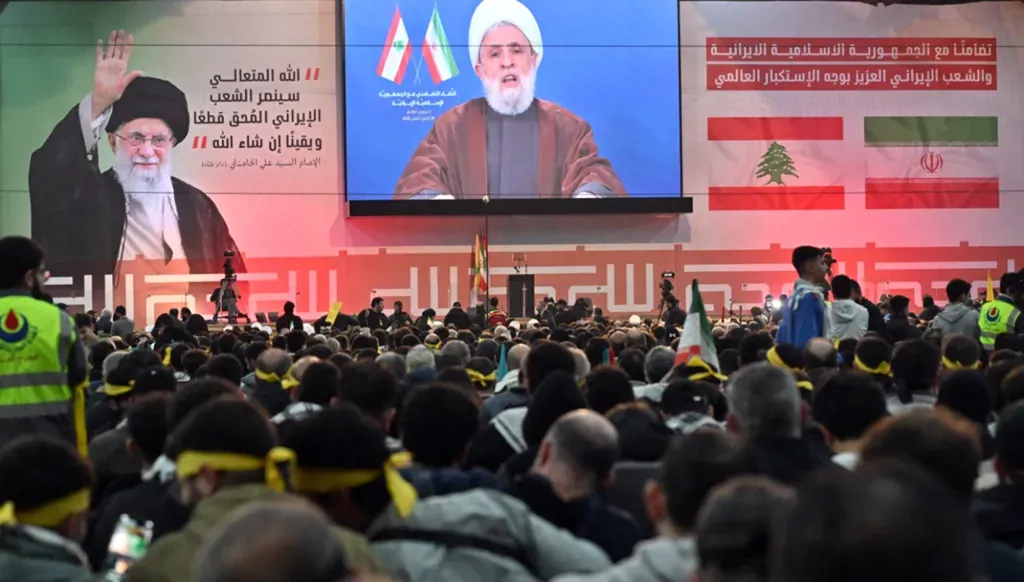


It is no surprise that Hezbollah announced it would not remain neutral toward Iran and its leader, Ali Khamenei, at a time when the Iranian state is facing existential threats unmatched since the 1979 revolution.
Had Sheikh Naim Qassem addressed his audience and pushed for neutrality, he would not have been believed. If the ongoing negotiations with Washington were to fail and result in significant military setbacks, the repercussions would extend beyond Iran and its immediate surroundings to Lebanon and the wider region—particularly as Benjamin Netanyahu continues to stress curbing nuclear ambitions, halting uranium enrichment, and dismantling the regime’s sources of power.
Qassem’s stances have not been accepted by many opponents of the party, particularly among Lebanese citizens, as a large segment of Shiites does not support Lebanon’s involvement in any potential confrontation between Iran and Israel. From the presidency to a significant number of government members, including Prime Minister Nawaf Salam, many reacted unfavorably to Qassem’s statements. Even his former ally, the Free Patriotic Movement, joined others in rejecting support for the so-called “Tehran Front” and warned against dragging Lebanon into another war with Israel—one Israel appears to seek—which, if it were to occur, would devastate what remains of Lebanon’s capabilities.
Although Qassem aligns with Khamenei’s school of thought and its ideological literature, he deliberately left ambiguity regarding the party’s participation in a hypothetical war should Iran be attacked by the United States or Israel, making it contingent on appropriate actions and the eventual outcome, whether positive or negative. At the same time, he called for the mobilization of the “free world” if the Supreme Leader were to be targeted—aware that both the party and the Shiite community are deeply concerned about confronting any threat against Iran and Khamenei, who is regarded by the party’s followers not merely as a state leader, but as a religious authority whose endangerment would demand action.
For the party’s supporters, from a principled perspective and in line with their beliefs, the leadership cannot claim to be detached from developments in Iran if events escalate into a confrontation. As a result, the party is experiencing anxiety stemming from its association with the “Wilayat al-Faqih” project.
The late Sayyed Hassan Nasrallah once hinted in an interview with an Iranian journalist that Hezbollah members in Lebanon express adherence to the principles of this project and are “more committed to it than you,” underscoring the deep linkage between the party and Tehran.
Nevertheless, Shiite voices and various groups in Lebanon, as well as members of the sect in other countries, all sense the threat facing Iran, plunging into uncertainty after a series of difficult tests—from Syria to southern Lebanon and Iraq—amid a fraying front. All are closely watching what Trump may do at decisive moments, with outcomes that could ripple from Tehran to Jabal Amel.
Disclaimer: The opinions expressed by the writers are their own and do not necessarily represent the views of Annahar.