

As axis of resistance crumbles, Hezbollah clings closer to Iran
The speeches of secretary-general Naim Qassem openly express subservience to Iran, emphasizing the long history of Iran's Guardianship over Shiite muslims.




 Messenger
 Whatsapp
 Threads
 Email
Email
 Print
Print
 X
X
 Facebook
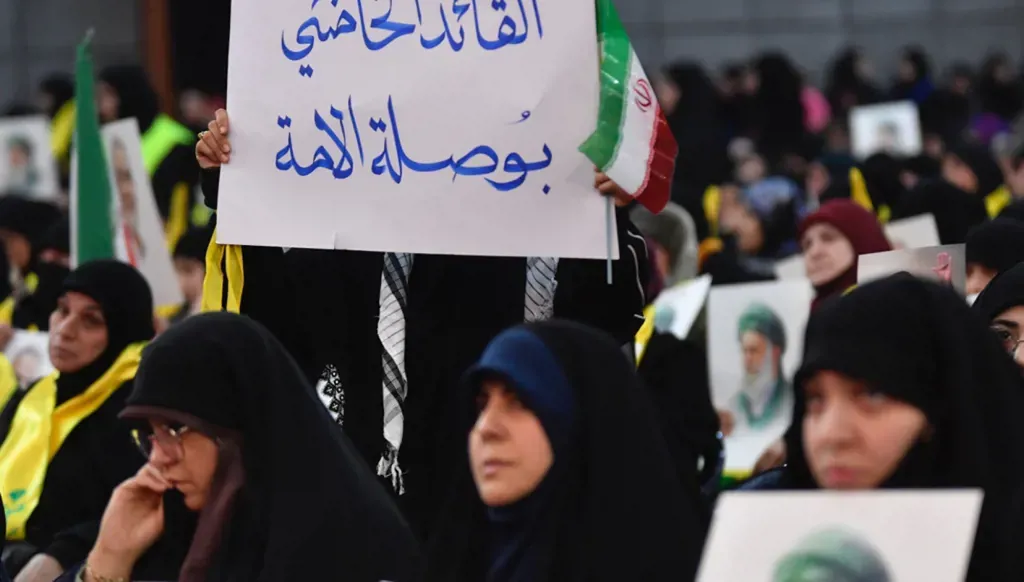


To comprehend the state of internal turmoil within Hezbollah, it is important to recognize that no leader in the party’s history maintained a closer relationship to Iran’s Guardianship of the Islamic Jurist than former secretary-general Hassan Nasrallah. His support for the system, in which a senior Shiite cleric holds supreme religious and political authority, manifested in speeches and interviews, and intensified following the 2006 war until the day of his assassination.
We should not fein surprise when Hassan Nasrallah's successor, Naim Qassem, tries, with all the rhetorical ability at his disposal, to rise to the occasion. As Iran's "Axis of Resistance" collapses, and Hezbollah approaches the final throes of confrontation with America and Israel, Qassem has chosen to cling ever closer to the Guardian Jurist, launching into digressive prose on the relationship, as he did in a speech delivered three days ago.
The substance of the speech, expressing unity with the Guardianship of the Islamic Jurist rather than mere solidarity, reveals the extent of the Lebanese group's subjugation to the Islamic Republic. To analysts tracking the direction of the party since Nasrallah’s assassination, it is particularly revealing.
Ideology and strategy coalesce behind the Guardian Jurist, allowing Hezbollah's oft-touted “blood and resistance” slogan—a phrase which emphasizes the fight with Israel—to assume doctrinal significance. The connection elevates the party's grievances on disarmament to new eschatological heights. What else can we expect at a moment when even the Islamic Jurists in Iran are under threat?
This posturing reveals weakness. If America were to proceed with a decisive attack against the regime in Iran, Hezbollah might, with whatever missile arsenal it still possesses, still choose to strike. But gone are the days when Hassan Nasrallah’s word alone could trigger military action.
Disclaimer: The opinions expressed by the writers are their own and do not necessarily represent the views of Annahar.