

Trump’s team pull in different directions on Iran
Trump’s team is divided on Iran. While the President favors diplomacy, some advisors push for military action. Sanctions, cyberattacks, and strikes are on the table—but can the U.S. influence Tehran without sparking wider conflict?



 Messenger
 Whatsapp
 Threads
 Email
Email
 Print
Print
 X
X
 Facebook
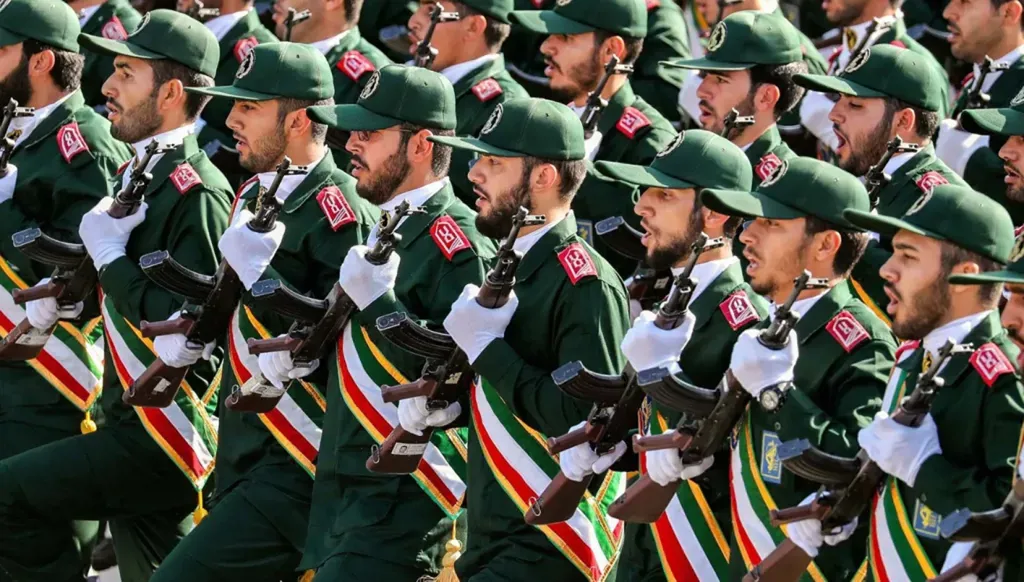


Is the U.S. national security establishment divided on next steps with the Islamic Republic of Iran? What would that mean in practical terms if true? An Asian-American researcher addresses these questions, noting, “Iran has always been a hot-button issue in the United States, especially now amid the negative developments currently unfolding there. Divisions run deep. On one hand, there is President Trump, who promised not to engage in new military interventions…”
That changed in Venezuela. An American military operation on Trump's orders captured the country's president and his wife who now face trial in the U.S. There are political figures within the U.S. administration, as well as in Trump’s supportive congressional and popular base, who wish to see regime change in Iran. Ultimately, Trump makes his own decisions, but his voice is influential and accepted by his administration, associates, and party. He favors a diplomatic solution over a military one for this issue. At least for now, he has blocked—or rather, temporarily closed—the path to military action. However, at the same time, he has canceled or halted all communications between his country and Iran.
By doing so, he placed the ball in their court. The question many are asking is whether Iran will ease their aggressive tactics as demonstrations stretch on. Another question is whether Iran’s regime will act in a way that allows it to find some common ground with the street protesters, encouraging them to leave the streets and return to their homes.
What options are the U.S. administration considering? According to public messaging, the president is exploring a wide range of measures, including increasing sanctions, executing cyberattacks, expanding the deployment of “Starlink,” the satellite system established by Elon Musk, and conducting military strikes. Even within direct confrontation there are several possibilities, such as remote strikes on Iranian military institutions, command and control nodes, or senior leaders of the Islamic Revolutionary Guard Corps. In short, a broad range of options is available.
Is there a realistic political deal on the table now, or does diplomacy remain the preferred stance? Much depends on the Iranians, responds the same non-Arab Asian diplomat. “Whatever happens,” he adds, “in my opinion, massive public demonstrations will eventually lead to change. This change might come more from within the system than from the opposition, the protesters, or the diaspora—that is, Iranians abroad. Most likely, it could be led by the Islamic Revolutionary Guard Corps. But which direction the change will take is very difficult to predict. They may follow the Venezuelan model, replacing the current leader and cooperating with the United States and other Western powers, or they may adopt a harsher stance.”
What about the Iranian diaspora? And what is said about it seeking to bring the deposed shah’s son, Reza Pahlavi, back to Iran and handing him power there—is that likely? How is the situation assessed today? The same non-Arab researcher responded that it is unlikely. Not all of the Iranian diaspora supports him, and the deposed shah has little backing within Iran. If any support exists, it is mainly among Persians, who make up about 50% of the Iranian population. Unlike Khomeini in 1979, who had ousted him from power and built a broad popular infrastructure, the shah lacks a network of institutions capable of promoting and supporting him. Moreover, his son does not have a clear vision for the post-revolution phase or for what a new Iran should look like. Hence, discussions about the shah’s son and his potential return are likely of symbolic value only.
What would be the strategic objective of military action against Iran, and would it be achievable? Its aim could be to pressure the Islamic regime to change its course, engage in serious dialogue with the protesters, and halt the suppression efforts—or, conversely, to suppress them forcefully and drive them away, preventing their return to the streets. The risk of such an approach lies in the possibility that it would give rise to popular—and perhaps not only popular—attempts to eliminate the regime. This could plunge Iran into a long-term, violent spiral similar to the one Syria entered under President Bashar al-Assad. Currently, ethnic minorities are in constant confrontation and clashes with government forces.
The regime’s core problem lies in the absence of structural solutions to recurrent economic crises, which are bound to intensify again and reignite street protests over time. There is no resolution to Iran’s economic crisis without an agreement with the Trump administration. Restructuring the Iranian economy and addressing the economic conditions that drove the masses to the streets requires some easing of sanctions. However, such relief will not come for free.
What will be the reactions of U.S. allies in the region in the event of war or diplomacy, and how will they act? Most of America’s allies seek a diplomatic solution, with the exception of Israel which notably favors regime change. The Gulf states, however, are deeply concerned about escalation, limiting the United States’ military options. Gulf states do not want to see U.S. intervention, making it unlikely that any military action against Iran would be launched from U.S. bases in the Gulf.
The United States does not have a group of aircraft carriers stationed in the Gulf. As a result, it would have to conduct airstrikes from bases located at extremely long distances from the theater of combat. For example, aircraft would have to fly from bases in Guam, in the Pacific Ocean, to strike Iran. However, the United States cannot sustain operations using bombers flying from Guam due to the vast distance involved.
Disclaimer: The opinions expressed by the writers are their own and do not necessarily represent the views of Annahar.