

Syria’s geopolitical shift sends shockwaves across the region
Lebanon may confront new challenges as Hezbollah’s influence wanes and strategic dynamics evolve.



 Messenger
 Whatsapp
 Threads
 Email
Email
 Print
Print
 X
X
 Facebook
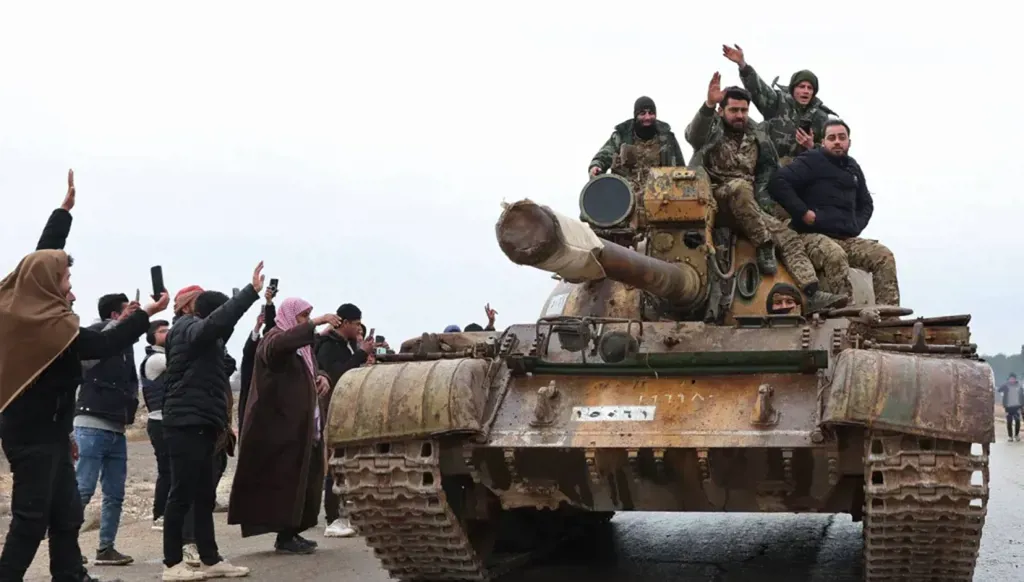


Over the weekend, Syria experienced a major shift in its geopolitical map, with areas under the influence of the Syrian Democratic Forces (SDF) shrinking west of the Euphrates and then east of the river, while government control from Damascus expanded. This clearly indicates that Syria is undergoing a gradual but significant transformation under the auspices of the U.S., Turkey, and Saudi Arabia. Despite its extensive record of cooperation with the United States, the SDF does not have enough room to maneuver to control 40 percent of Syria’s territory indefinitely. Regional maps could witness even deeper transformations if a U.S.-Israeli strike targets Iran to weaken the regime and accelerate its collapse. Practically, the SDF will not be eliminated from the Syrian and regional equation, but it will assume a more modest role than before, as political unity in Syria remains a regional necessity. Iraq could also face major changes if Iran is attacked to hasten the regime’s collapse.
It is crucial for Lebanese officials to grasp the significance of the current developments in Syria and their impact on Lebanon. Meanwhile, Hezbollah is creating the illusion that it can resume its regional role from Lebanese territory as if nothing has changed. This, however, is impossible. Both Israel, which continues to target the group and its military infrastructure, and the “new Syria,” pursuing its own strategic goals, oppose Hezbollah. The party could face a crippling blow at a moment when Israeli and Syrian interests intersect—or when circumstances require cooperation between the two on the Lebanese stage.
In practical terms, the region’s major transformation is becoming increasingly entrenched over time. Syria will not return to its past, and Lebanon—paralyzed by Hezbollah’s political and security blackmail—will not revert to the era of Iranian dominance through its local proxy. Instead, Lebanon may face a significant Israeli strike in the near future aimed at addressing Hezbollah’s weapons, particularly since the Lebanese state remains unable to confront the issue of illegal arms. This incapacity stems primarily from the political leadership’s reluctance to recognize that the times have changed, insisting instead on addressing the challenge through outdated approaches. Sadly, Lebanon’s political authorities continue to lack the courage and boldness needed to confront Hezbollah’s blackmail effectively.
In conclusion, anyone closely watching the regional scene must recognize that these changes are irreversible, and Lebanon is on the verge of significant transformation, with or without the consent of its ruling class. Time is running out, and the space for maneuver by the Lebanese elite—who once relied on cunning to handle existential challenges—is rapidly shrinking. The game is over.
Disclaimer: The opinions expressed by the writers are their own and do not necessarily represent the views of Annahar.