

This Is How Hezbollah's Response to the President Escalated from Diplomatic to Stern



 Messenger
 Whatsapp
 Threads
 Email
Email
 Print
Print
 X
X
 Facebook
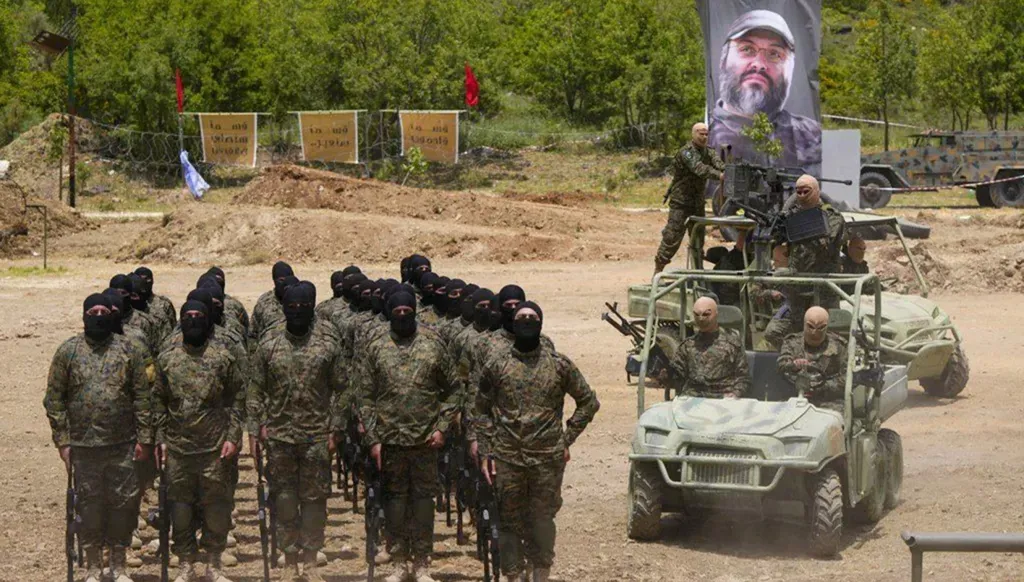


The debate that arose between the Lebanese presidency and 'Hezbollah', based on President Joseph Aoun's remarks on the first anniversary of entering Baabda Palace, is still ongoing.
Less than 24 hours after Aoun's media appearance, which primarily highlighted his intention to continue restricting weapons north of the Litani River under the premise that his mission had ended and it was time for its bearer and defender to 'become rational,' the veteran party leader and former minister and deputy Mohammad Fneish delivered a diplomatic response to the presidency's stance.
He reiterated a concise presentation of the reasons that led to the emergence of the resistance and its arms in the field, mainly due to the state's inability to perform its duty before and after 1978, concluding with mitigating reasons for the president's remarks against the party, saying, "The President of the Republic did not mean, as I know his orientations, to use any derogatory expression. We are a resistance movement with achievements and a record, and we are also a fundamental component with parliamentary and ministerial presence".
Fneish concluded by presenting the party's vision, mainly calling upon the presidency and the government to prevent making the issue one among the Lebanese components or between the government and a charter component in the government.
The party had decided that this response to Aoun would be the first and last, but it later appeared that this diplomatic response was insufficient for both its leadership and its base, as they found the president's remarks contained 'deep dimensions' that could not be ignored. Moreover, hostile forces to the party used the presidential statements' content to escalate their attacks on the party. Accordingly, a more direct and severe response followed, with the Deputy Head of the party's Political Council, former Minister Mahmoud Qomati, undertaking this urgent task, aiming to achieve two goals:
First: Absorbing the dissatisfaction within the party's environment that took issue with the presidential remarks.
Second: The party found itself compelled to send a message that it does not intend to be lenient or retreat and to remain silent about these remarks and prove its previous statements when it vowed that north of the Litani is different from its south, and that weapons should not be delivered in the southern area without guarantees and Israeli withdrawal.
Accordingly, Qomati's tone differed from Fneish's diplomacy, characterized by firmness and determination, and moreover, indicating readiness to go to the 'confrontation square' if necessary, a new path contrasting with another path the party followed in the past stage when preventing any clash with the army was paramount.
Thus, the party, through Qomati's words, seemed to send a sharp message to the presidency, and it was natural for the party's adversaries to seize upon Qomati's warnings of 'chaos and civil war' and launch a counter-campaign implying that the party sensed the heat and found its choices limited, resorting to this harsh discourse.
However, the party has a different perspective, grounded in the notion that it is not issuing threats but placing matters in their proper context, fearing reaching the stage it warns against, especially when there are forces pushing towards it, particularly when the president used the term 'the other party', a term typically used by enemies, not partners in the nation, and a president does not employ such a term to refer to a fundamental component of the country.
In any case, the same sources affirm that the party does not intend to declare a break with the presidency nor burn the bridges but aims to set matters in their natural context and remind the president of his commitment in the inaugural speech of "the national security strategy", and that it still adheres to this commitment.